
Catalogue Search | MBRL


Are you sure you want to remove the book from the shelf?

{{itemTitle}}
927,877
result(s) for
"Smith"
Sort by:

Patti Smith : camera solo
This captivating selection of 70 intimate black-and-white photographs conveys Patti Smith's singular experience as a photographer as it relates to many facets of her fascinating life and career.
Book

A placebo-controlled trial of simvastatin therapy in Smith-Lemli-Opitz syndrome
Smith-Lemli-Opitz syndrome (SLOS) is a multiple malformation/cognitive impairment syndrome characterized by the accumulation of 7-dehydrocholesterol, a precursor sterol of cholesterol. Simvastatin, a 3-hydroxy-3-methylglutaryl-coenzyme A reductase inhibitor that crosses the blood–brain barrier, has been proposed for the treatment of SLOS based on in vitro and in vivo studies suggesting that simvastatin increases the expression of hypomorphic DHCR7 alleles.
Safety and efficacy of simvastatin therapy in 23 patients with mild to typical SLOS were evaluated in a randomized, double-blind, placebo-controlled trial. The crossover trial consisted of two 12-month treatment phases separated by a 2-month washout period.
No safety issues were identified in this study. Plasma dehydrocholesterol concentrations decreased significantly: 8.9 ± 8.4% on placebo to 6.1 ± 5.5% on simvastatin (P < 0.005); we observed a trend toward decreased cerebrospinal fluid dehydrocholesterol concentrations. A significant improvement (P = 0.017, paired t-test) was observed on the irritability subscale of the Aberrant Behavior Checklist–C when subjects were taking simvastatin.
This article reports what is, to our knowledge, the first randomized, placebo-controlled trial designed to test the safety and efficacy of simvastatin therapy in SLOS. Simvastatin seems to be relatively safe in patients with SLOS, improves the serum dehydrocholesterol–to–total sterol ratio, and significantly improves irritability symptoms in patients with mild to classic SLOS.
Genet Med19 3, 297–305.
Journal Article

Stan Smith : some people think I'm a shoe!
\"The first definitive volume that celebrates the best-selling Adidas sneaker with a cultlike global following. Featuring original imagery, historical photos, an exclusive portrait series by artist Juergen Teller, and contributions from style arbiters such as Raf Simons and Pharrell, plus aninterview and anecdotes from the man behind the sneaker, Stan Smith.\" -- Amazon.com
Book
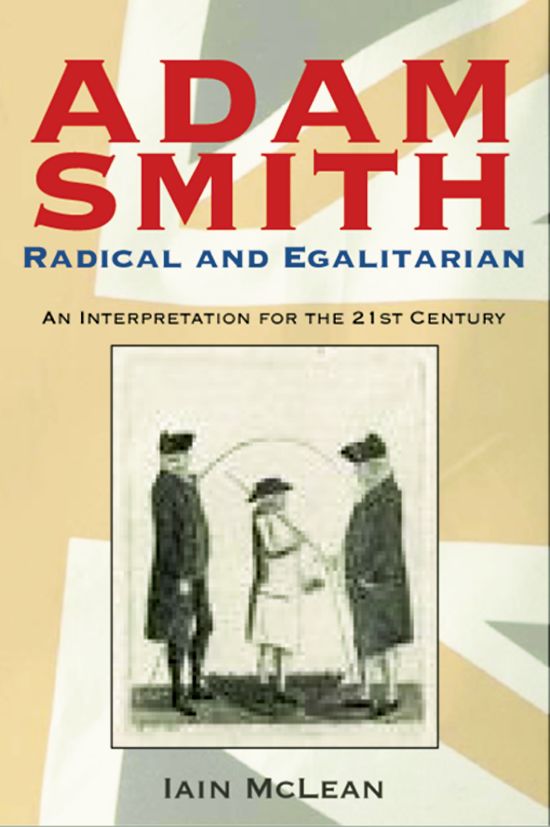
Adam Smith, Radical and Egalitarian
Foreword by the Rt. Hon. Gordon Brown, Chancellor of the ExchequerThis book aims to show that Adam Smith (1723-90), the author of The Wealth of Nations, was not the promoter of ruthless laissez-faire capitalism that is still frequently depicted. Smith’s “right-wing” reputation was sealed after his death when it was not safe to claim that an author may have influenced the French revolutionaries. But as the author, also, of The Theory of Moral Sentiments, which he probably regarded as his more important book, Smith sought a non-religious grounding for morals, and found it in the principle of sympathy, which should lead an impartial spectator to understand others’ problems. This book locates Smith in the Scottish Enlightenment; shows how the two books are perfectly consistent with one another; traces Smith’s influence in France and the United States; and draws out the lessons that Adam Smith can teach policy makers in the 21st Century. Although Smith was not a religious man, he was a very acute sociologist of religion. The book accordingly explains the Scottish religious context of Smith’s time, which was, as it remains, very different to the English religious context.The whole book is shot through with Iain McLean’s love for the Edinburgh of his birth, and for the Scottish Enlightenment. It begins and ends with poems by Smith’s great admirer Robert Burns.
eBook



Adam Smith : systematic philosopher and public thinker
This book treats Adam Smith as a systematic philosopher. Smith was a giant of the Scottish Enlightenment with polymath interests. The book explores Smith’s economics and ethics in light of his other commitments on the nature of knowledge, the theory of emotions, the theory of mind, his account of language, the nature of causation, and his views on methodology. It places Smith’s ideas in the context of a host of other philosophers, especially David Hume, Rousseau, and Isaac Newton; it draws on the reception of Smith’s ideas by Sophie de Grouchy, Mary Wollstonecraft, and other philosophers and economists to sketch the elements of and the detailed connections within Smith’s system. The book traces out Smith’s system and puts it in the context of his highly developed views on the norms that govern responsible speech. In particular, the book articulates Smith’s concerns with the impact of his public policy recommendations, especially on the least powerful in society. In so doing, the book offers new interpretations of Smith’s views on the invisible hand, Wealth of Nations, his treatment of virtue, the nature of freedom, the individual’s relationship to society, his account of the passions, the moral roles of religion, and his treatment of the role of mathematics in economics. While the book offers a single argument, it is organized in modular fashion and includes a helpful index; readers with a more focused interest in Smith’s achievements can skip ahead to the section of interest.
eBook