
Catalogue Search | MBRL


Are you sure you want to remove the book from the shelf?

{{itemTitle}}
47
result(s) for
"Soccer Europe History."
Sort by:

Female football players and fans : intruding into a man's world
This edited collection draws on social science approaches to provide insights into the world of women's football and female fans. Providing in-depth analysis of the development of the women's game in different European countries, it examines both the experiences of female fans of men's football and women's views, perceptions and evaluations of women's football. 'Female Football Players and Fans' will be of interest to students and scholars in a range of fields, including sports sociology, sport sciences, gender studies, women's studies and fandom and cultural studies.
Book
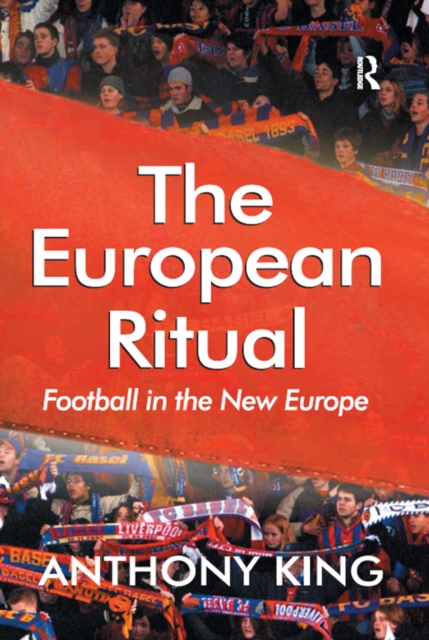
The European Ritual
Football constitutes a vivid public ritual in contemporary European culture through which emergent social solidarities and new economic networks have come into being. This fascinating and unique volume traces the transformation of European football from the 1950s to the present, focusing in particular on the dramatic changes that have occurred in the last decade and linking them to the wider process of European integration. The examination of football illuminates how the growing dominance of the free market has changed European society from an international order in which the nation-state was dominant to a more complex transnational regime in which cities and regions are becoming more prominent than in the past. The study is supported by detailed ethnographic accounts emerging from the author's fieldwork at Manchester United and interview data with some of the most important figures in European football at clubs including Juventus, Milan, Bayern Munich, Schalke and Barcelona. It also includes a highly topical examination of racism in European football.
Contents: Part I: The Transformation of a Ritual: From 1968 to 1999; The new Europe: cities, states or superstate? Part II: Football in the Old Europe: The early years of the European Cup: 1955-70; Eurosclerosis. Part III: Football in the New Europe: Bosman; The television; The new business of football; The League of Champions. Part IV: Football Fans in the New Europe: The politics of football; Localism; Racism; The contours of a new Europe; Bibliography; Index.
Dr Anthony King is a Reader in Sociology at the University of Exeter, UK. He is the author of The End of the Terraces (1998).
eBook

Soccer under the Swastika
In the heart of the twentieth century, the game of soccer was becoming firmly established as the sport of the masses across Europe, even as war was engulfing the continent.Intimately woven into the war was the genocide perpetrated by Nazi Germany and its collaborators, genocide on a scale never seen before.
eBook

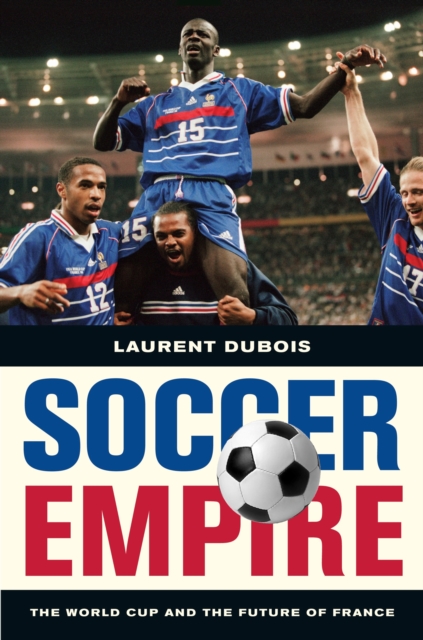
Soccer Empire
When France both hosted and won the World Cup in 1998, the face of its star player, Zinedine Zidane, the son of Algerian immigrants, was projected onto the Arc de Triomphe. During the 2006 World Cup finals, Zidane stunned the country by ending his spectacular career with an assault on an Italian player. In Soccer Empire, Laurent Dubois illuminates the connections between empire and sport by tracing the story of World Cup soccer, from the Cup's French origins in the 1930s to Africa and the Caribbean and back again. As he vividly recounts the lives of two of soccer's most electrifying players, Zidane and his outspoken teammate, Lilian Thuram, Dubois deepens our understanding of the legacies of empire that persist in Europe and brilliantly captures the power of soccer to change the nation and the world.
eBook

Arcady's goal
When twelve-year-old Arcady is sent to a children's home after his parents are declared enemies of the state in Soviet Russia, soccer becomes a way to secure extra rations, respect, and protection but it may also be his way out if he can believe in and love another person--and himself.
Book
Bigotry, football and Scotland
This title presents academic perspectives and analysis of recent controversies relating to football and bigotry in Scottish society.
eBook

Spartak Moscow
In the informative, entertaining, and generously illustratedSpartak Moscow, a book that will be cheered by soccer fans worldwide, Robert Edelman finds in the stands and on the pitch keys to understanding everyday life under Stalin, Khrushchev, and their successors. Millions attended matches and obsessed about their favorite club, and their rowdiness on game day stood out as a moment of relative freedom in a society that championed conformity. This was particularly the case for the supporters of Spartak, which emerged from the rough proletarian Presnia district of Moscow and spent much of its history in fierce rivalry with Dinamo, the team of the secret police. To cheer for Spartak, Edelman shows, was a small and safe way of saying \"no\" to the fears and absurdities of high Stalinism; to understand Spartak is to understand how soccer explains Soviet life.
Champions of the Soviet Elite League twelve times and eleven-time winner of the USSR Cup, Spartak was founded and led for seven decades by the four Starostin brothers, the most visible of whom were Nikolai and Andrei. Brilliant players turned skilled entrepreneurs, they were flexible enough to constantly change their business model to accommodate the dramatic shifts in Soviet policy. Whether because of their own financial wheeling and dealing or Spartak's too frequent success against state-sponsored teams, they were arrested in 1942 and spent twelve years in the gulag. Instead of facing hard labor and likely death, they were spared the harshness of their places of exile when they were asked by local camp commandants to coach the prisoners' football teams. Returning from the camps after Stalin's death, they took back the reins of a club whose mystique as the \"people's team\" was only enhanced by its status as a victim of Stalinist tyranny.
Edelman covers the team from its days on the wild fields of prerevolutionary Russia through the post-Soviet period. Given its history, it was hardly surprising that Spartak adjusted quickly to the new, capitalist world of postsocialist Russia, going on to win the championship of the Russian Premier League nine times, the Russian Cup three times, and the CIS Commonwealth of Independent States Cup six times. In addition to providing a fresh and authoritative history of Soviet society as seen through its obsession with the world's most popular sport, Edelman, a well-known sports commentator, also provides biographies of Spartak's leading players over the course of a century and riveting play-by-play accounts of Spartak's most important matches-including such highlights as the day in 1989 when Spartak last won the Soviet Elite League on a Valery Shmarov free kick at the ninety-second minute. Throughout, he palpably evokes what it was like to cheer for the \"Red and White.\"
eBook
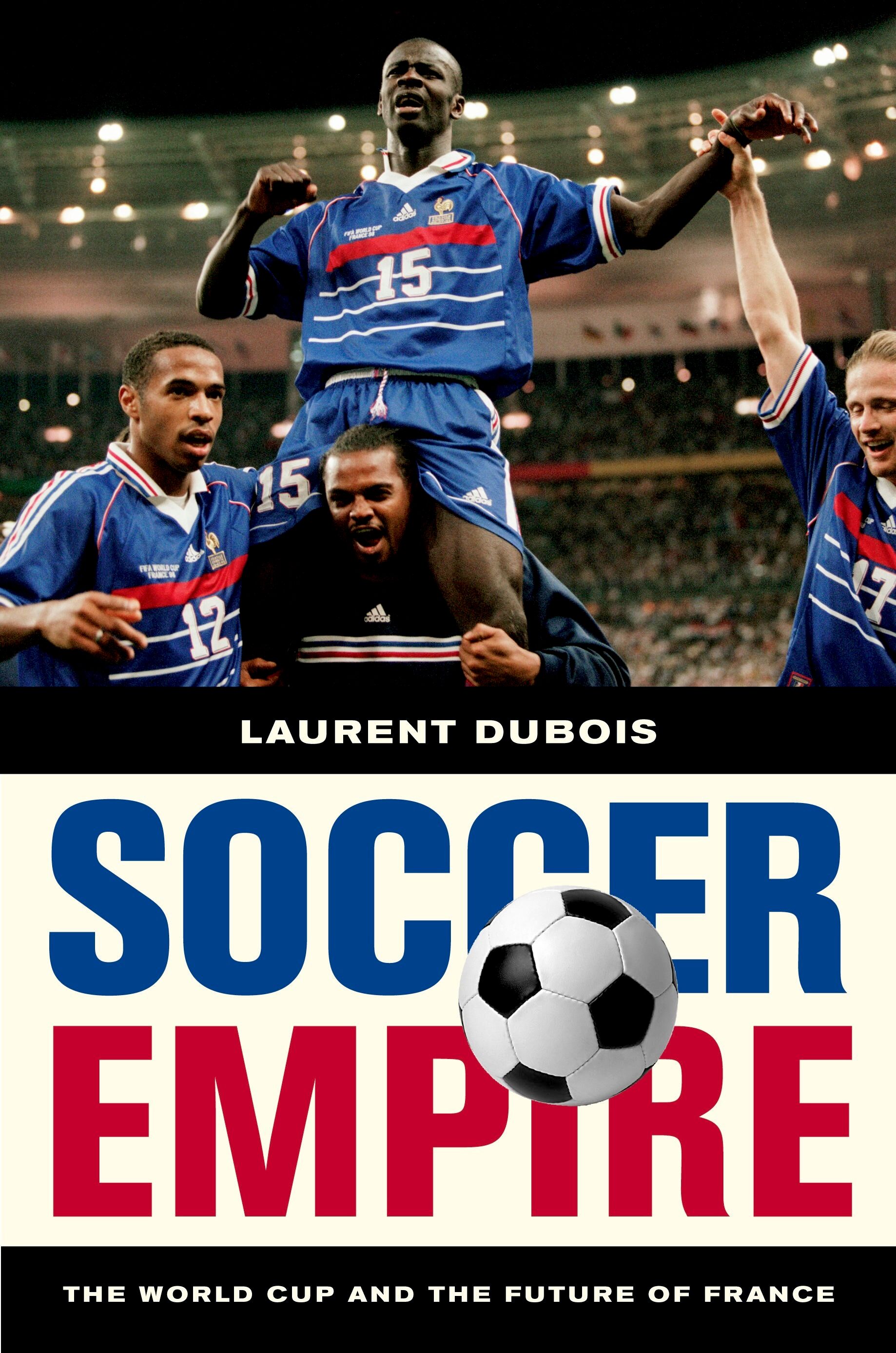
Soccer Empire
When France both hosted and won the World Cup in 1998, the face of its star player, Zinedine Zidane, the son of Algerian immigrants, was projected onto the Arc de Triomphe. During the 2006 World Cup finals, Zidane stunned the country by ending his spectacular career with an assault on an Italian player. In Soccer Empire, Laurent Dubois illuminates the connections between empire and sport by tracing the story of World Cup soccer, from the Cup’s French origins in the 1930s to Africa and the Caribbean and back again. As he vividly recounts the lives of two of soccer’s most electrifying players, Zidane and his outspoken teammate, Lilian Thuram, Dubois deepens our understanding of the legacies of empire that persist in Europe and brilliantly captures the power of soccer to change the nation and the world.
eBook