
Catalogue Search | MBRL


Are you sure you want to remove the book from the shelf?

{{itemTitle}}
28,565
result(s) for
"Soccer fans."
Sort by:


English National Identity and Football Fan Culture
In recent years, scholars have understood the increasing use of the St George's Cross by football fans to be evidence of a rise in a specifically 'English' identity. This has emerged as part of a wider 'national' response to broader political processes such as devolution and European integration which have fragmented identities within the UK. Using the controversial figurational sociological approach advocated by the twentieth-century theorist Norbert Elias, this book challenges such a view, drawing on ethnographic research amongst fans to explore the precise nature of the relationship between contemporary English national identity and football fan culture. Examining football fans' expressions of Englishness in public houses and online spaces, the author discusses the effects of globalization, European integration and UK devolution on English society, revealing that the use of the St George's Cross does not signal the emergence of a specifically 'English' national consciousness, but in fact masks a more complex, multi-layered process of national identity construction. A detailed and grounded study of identity, nationalism and globalization amongst football fans, English National Identity and Football Fan Culture will appeal to scholars and students of politics, sociology and anthropology with interests in ethnography, the sociology of sport, fan cultures, globalization and contemporary national identities.
eBook

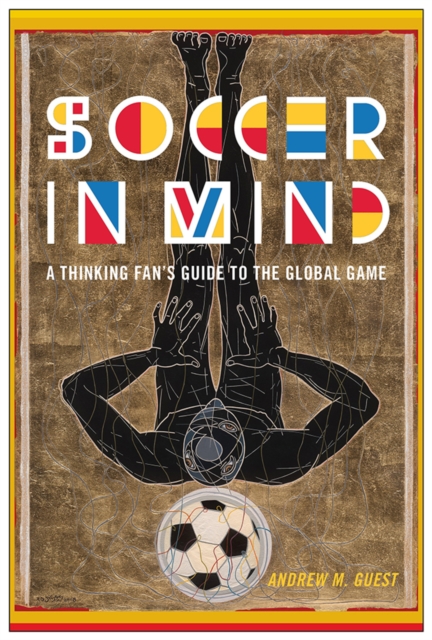
Soccer in Mind
From the FIFA World Cup to pick-up games at your local park, soccer is the closest thing in our world to a universal entertainment. Many writers use this global popularity to describe the game's winners and losers, but what happens when we use social science to explore how soccer intersects with culture, society, and the self? This book provides a thinking fan's guide to the world's most popular game, proposing a way of engaging soccer that sparks intellectual curiosity and employs critical consciousness. Using stories and data, along with ideas from sociology, psychology, and across the social sciences, it provides readers with new ways of understanding fanaticism, peak performance, talent development, and more. Drawing on concepts ranging from cognitive bias to globalization, it illuminates meanings of the game for players and fans while investigating impacts on our lives and communities. While it considers soccer cultures across the globe, the book also analyzes what makes U.S. soccer culture special, including its embrace of the women's game. As a scholar, former minor league player and coach, and fan, Andrew Guest offers a distinctive perspective on soccer in society. Whatever name you call it, and whatever your interest in it, Soccer in Mind will enrich your own view of the one truly global game.
eBook


How does spectator presence affect football? Home advantage remains in European top-class football matches played without spectators during the COVID-19 pandemic
The present paper investigates factors contributing to the home advantage, by using the exceptional opportunity to study professional football matches played in the absence of spectators due to the COVID-19 pandemic in 2020. More than 40,000 matches before and during the pandemic, including more than 1,000 professional matches without spectators across the main European football leagues, have been analyzed. Results support the notion of a crowd-induced referee bias as the increased sanctioning of away teams disappears in the absence of spectators with regard to fouls (p < .001), yellow cards (p < .001), and red cards (p < .05). Moreover, the match dominance of home teams decreases significantly as indicated by shots (p < .001) and shots on target (p < .01). In terms of the home advantage itself, surprisingly, only a non-significant decrease is found. While the present paper supports prior research with regard to a crowd-induced referee bias, spectators thus do not seem to be the main driving factor of the home advantage. Results from amateur football, being naturally played in absence of a crowd, provide further evidence that the home advantage is predominantly caused by factors not directly or indirectly attributable to a noteworthy number of spectators.
Journal Article


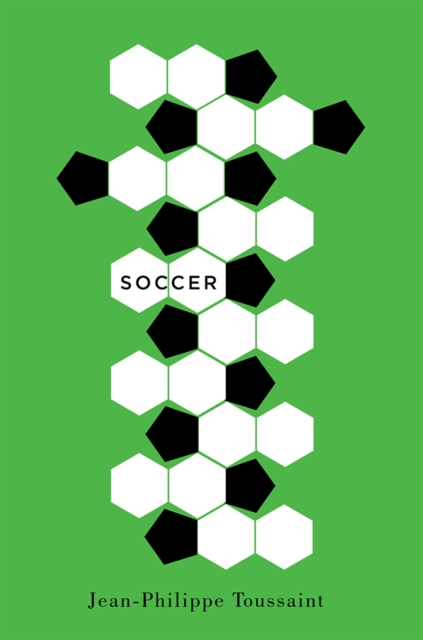
Soccer
Growing up in Belgium, soccer was Jean-Philippe Touissant's life, a passion not shared by his bookish family. Now an acclaimed novelist, essayist, and filmmaker, he reflects upon his lifelong love for the game with an intellectual's keen mind and a sports fan's heart. What, he ponders, has a lifetime of soccer fandom taught him about life and the passage of time itself. Soccer takes readers on an idiosyncratic journey that delves deep into the author's childhood memories, but also transports us to World Cup matches in Japan, Germany, South Africa, and Brazil. Along the way, it kicks around such provocative questions as: How does soccer fandom both support and transcend nationalism? How are our memories of soccer matches both collective and distinctly personal? And how can a game this beautiful and this ephemeral be adequately captured in words? Part travelogue, part memoir, and part philosophical essay, Soccer is entirely unique, a thrilling departure from the usual clichs of sports writing. Even readers with little knowledge of the game will be enthralled by Touissant's profound musings and lyrical prose.
eBook