
Catalogue Search | MBRL


Are you sure you want to remove the book from the shelf?

{{itemTitle}}
4
result(s) for
"Sociaal realisme."
Sort by:

Blueprints and blood : the Stalinization of Soviet architecture, 1917-1937
Analyzing \"totalitarianism from below\" in a crucial area of Soviet culture, Hugh Hudson shows how Stalinist forces within the architectural community destroyed an avant-garde movement of urban planners and architects, who attempted to create a more humane built environment for the Soviet people. Through a study of the ideas and constructions of these visionary reformers, Hudson explores their efforts to build new forms of housing and \"settlements\" designed to free the residents, especially women, from drudgery, allowing them to participate in creative work and to enjoy the \"songs of larks.\" Resolving to obliterate this movement of human liberation, Stalinists in the field of architecture unleashed a \"little\" terror from below, prior to Stalin's Great Terror. Using formerly secret Party archives made available by perestroika, Hudson finds in the rediscovered theoretical work of the avant-garde architects a new understanding of their aims. He shows, for instance, how they saw the necessity of bringing elite desires for a transformed world into harmony with the people's wish to preserve national culture. Such goals brought their often divided movement into conflict with the Stalinists, especially on the subject of collectivization. Hudson's provocative work offers evidence that in spite of the ultimate success of the Stalinists, the Bolshevik Revolution was not monolithic: at one time it offered real architectural and human alternatives to the Terror.
Book


William James, Pragmatism, and American Culture
William James, Pragmatism, and American Culture focuses on the work of William James and the relationship between the development of pragmatism and its historical, cultural, and political roots in 19th-century America. Deborah Whitehead reads pragmatism through the intersecting themes of narrative, gender, nation, politics, and religion. As she considers how pragmatism helps to explain the United States to itself, Whitehead articulates a contemporary pragmatism and shows how it has become a powerful and influential discourse in American intellectual and popular culture.
eBook
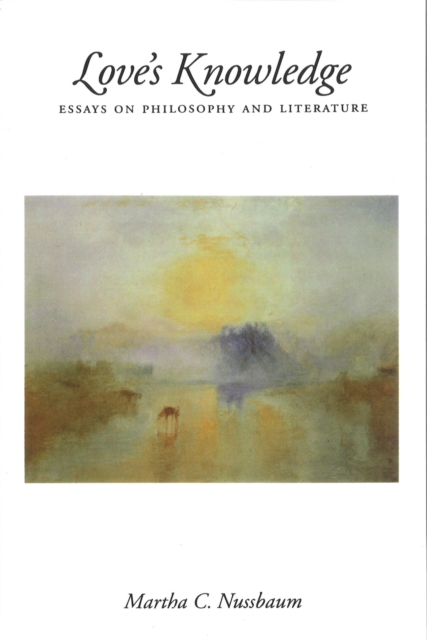
Love’s Knowledge
This volume brings together Martha Nussbaum's published papers, some revised for this collection, on the relationship between literature and philosophy, especially moral philosophy. It also includes two new essays and a substantial Introduction. The papers, many of them previously not readily available to non-specialist readers, explore such fundamental issues as the relationship between style and content in the exploration of ethical questions; the nature of ethical attention and ethical knowledge and their relationship to written forms and style; and the role of the emotions in deliberation and self-knowledge. The author investigates and defends a conception of ethical understanding which involves emotional as well as intellectual activity, and which gives a certain type of priority to the perception of particular people and situations rather than to abstract rule.
eBook