
Catalogue Search | MBRL


Are you sure you want to remove the book from the shelf?

{{itemTitle}}
89,763
result(s) for
"Social Work - education"
Sort by:

Internationalizing social work education : insights from leading figures across the globe
Though the aims of social work tend to be fairly similar in different contexts around the world, the ways in which social workers are educated and trained vary widely from place to place and nation to nation. This book gathers a dozen interviews with leading social workers and educators from countries including India, the United States, the United Kingdom, Sweden, Mexico, and Switzerland to explore points of similarity and difference and see what lessons we might be able to learn from the successes or limitations of the different approaches.
Book

Innovations in Practice Learning
As a practice educator, do you sometimes encounter difficulties in supporting individual students through placement? This book is a handy companion of innovative practice to help you through those times.
eBook

Experiential learning for professional helpers : a residential workshop innovation
This book describes a series of ground-breaking residential workshops in therapeutic counselling in the 1960s, for people working in mental health and social care disciplines seeking to expand and deepen their reach. The work is unique in the scope of its research into the process and outcomes of such active immersive enquiry in this area. Besides a wealth of more systematic features, the author invites us into the initial conversations in the meeting room, and then follows the group members back into their lives, allowing us to see both early outcomes and the impact of participation up to ten years later. Finally, Barrett-Lennard reflects on the extended history of the intensive workshops and the related group work in other contexts they led into. He makes a compelling argument that such an intensive participatory process is as powerful today as it was in the 1960s.
Book
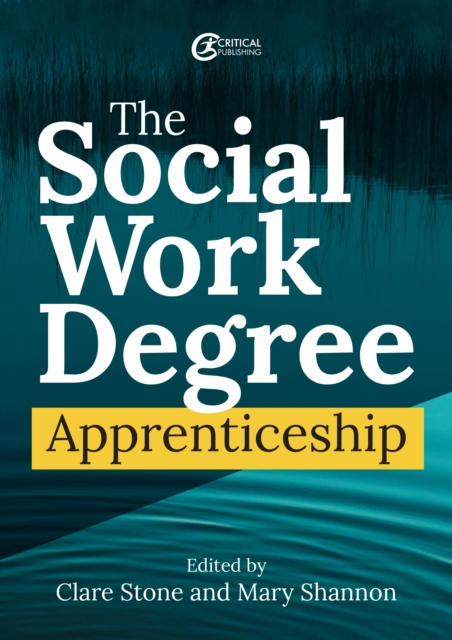
The Social Work Degree Apprenticeship
Developed specifically for the social work degree apprenticeship, this book guides apprentices through the unique requirements of this new qualifying route. With contributions from academics, employers and students, it provides a broad and inclusive perspective to build effective working relationships. The social work degree apprenticeship is unlike any other qualifying route to become a professional social worker. Apprentices have to juggling a number of competing demands, balancing their work and learning commitments, the expectations of their employer and those of their university. It can be intense, high-paced and stressful, and very often apprentices are mature students who may not have been in formal learning environment for many years. This book has been written specifically with apprentices in mind and by a range of stakeholders, not just academics, who draw upon their experience and expertise to help apprentices successfully navigate this qualification. Key theoretical concepts are introduced throughout, practical advice given and learning features encourage reflection and application, making this a go-to textbook, whether it's your first time taking a degree or you're a mature student returning to study - this is an essential companion to your learning journey, helping you manage your relationship with your university and employer.
eBook


The use of flipped classroom as an active learning approach improves academic performance in social work: A randomized trial in a university
The flipped classroom (FC) is a pedagogical approach that means that the activities that have traditionally taken place within the classroom are carried out outside the classroom. Fundamentally it implies the way in which the student studies the subject. This change of perspective in teaching-learning has raised many questions regarding its effectiveness and student satisfaction in the university studies in the degree of Social Work.
The main objective of this study was to evaluate the effectiveness of a Flipped Classroom methodology in the academic performance of students of the Social Work Degree.
An educational study, with two parallel groups was developed. The randomization was carried out by class groups. Group 1 was assigned an active teaching methodology of Flip Teaching and it was implemented during theoretical teaching hours. The other group of students, Group 2, was assigned a traditional lecturer-based learning (LB) methodology. The participants were all the students of the morning shift who studied the subject Social Work with Groups of the Social Work Degree during the academic year 2017-2018. The sample was composed of 110 subjects, with 60 subjects who developed an active teaching methodology and 50 subjects who received a LB.
In terms of the academic performance result variable, the FT group had a mean of 6.56 (SD: 1.58) and the LB group had a mean of 5.42 (SD: 1.97) (p-value: 0.002). The FT group also had a higher percentage of students receiving merit and outstanding scores (34.5% and 6.9% respectively) and a lower percentage of students who failed (19%) as compared to the LB group in which 20.9% and 2.3% of the students received merit or outstanding grades and 46.5% failed (p-value = 0.025). No significant differences were found with regards to satisfaction with the subject and the methodology used, long-term learning and time spent preparing for the exam.
The FC teaching methodology in comparison with the LB methodology has shown to be a more effective tool regarding academic performance evaluated in a quantitative and qualitative way with regards to Social Work education at university level.
Journal Article

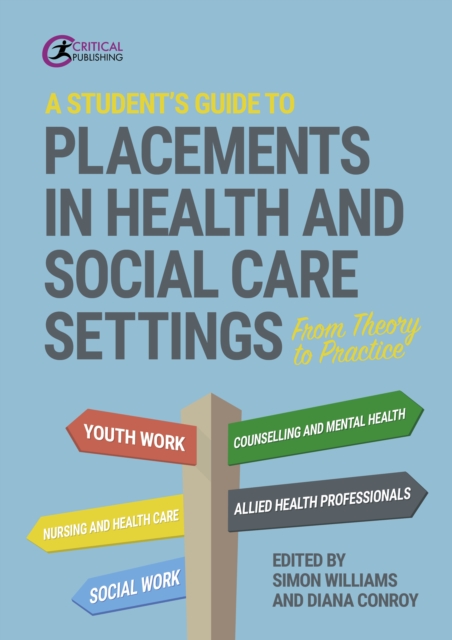
A Student's Guide to Placements in Health and Social Care Settings: From Theory to Practice
Supporting students on placements in health and social care settings, this accessible guide provides a framework for understanding the theory behind successful practice as well as the critical skills needed to apply it. A Student's Guide to Placements in Health and Social Care Settings takes theory beyond the classroom and apply it to real settings, enabling students to recognise their own learning journey and develop their own distinct professional identity within a wider interprofessional context.This is a key resource for placement experience with insights from experts and advice direct from students who have already been on placement. With clear guidelines, and structured so that you can dip into different chapters as needed, it responds to the unique nature of placement opportunities and is the first line resource students should turn to.Whatever course you're studying in the caring profession - Social Work, Health and Social Care, Youth Work, Nursing or Counselling - this is essential reading to help understand how theory can support and improve your placement experience, ensuring you get the very most out of it.
eBook


Indigenous Social Work around the World
This volume brings together prominent international scholars involved in both Western and indigenous social work across the globe - including James Midgley, Linda Briskman, Alean Al-Krenawi and John R. Graham - to discuss some of the most significant global trends and issues relating to indigenous and cross-cultural social work.
eBook