
Catalogue Search | MBRL


Are you sure you want to remove the book from the shelf?

{{itemTitle}}
52,663
result(s) for
"Social adaptation"
Sort by:

Impasse : climate change and the limits of progress
\"Extreme heat, fires, floods, and storms are transforming our planet. Yet instead of serious responses from world leaders, we get increasing emissions, divisive politics, and ersatz solutions that offer more of the same: more capitalism, more complexity, more \"progress.\" The impasse we face is not only political and institutional, but cognitive, existential, and narrative. We're incapable of grasping the scale, speed, and impact of global warming. Our brains can't make sense of how radically our world is changing. And we optimistically cling to a civilizational narrative that promises a better tomorrow if we just keep doing what we're doing. It's well past time, Roy Scranton argues, to free ourselves from our dangerous and dogmatic faith in progress. Such unwarranted optimism will only accelerate our collective disintegration. If we want to have any hope at all for the future, it must be grounded in a recognition of human limits-a view Scranton calls ethical pessimism. Drawing from psychology, philosophy, history, and politics, as well as film, literature, and personal experience, Scranton describes the challenges we face in making sense of our predicament, from problems in communication to questions of justice, from the inherent biases in human perception to the difficulties of empirical knowledge. What emerges is a challenging but ultimately hopeful proposition: if we have the courage to accept our limits, we may find a way to embrace our unknowable future\"-- Provided by publisher.
BOOK

Together : the rituals, pleasures and politics of cooperation
Living with people who differracially, ethnically, religiously, or economicallyis the most urgent challenge facing civil society today. We tend socially to avoid engaging with people unlike ourselves, and modern politics encourages the politics of the tribe rather than of the city. In this thought-provoking book, Richard Sennett discusses why this has happened and what might be done about it.Sennett contends that cooperation is a craft, and the foundations for skillful cooperation lie in learning to listen well and discuss rather than debate. In Together he explores how people can cooperate online, on street corners, in schools, at work, and in local politics. He traces the evolution of cooperative rituals from medieval times to today, and in situations as diverse as slave communities, socialist groups in Paris, and workers on Wall Street. Divided into three parts, the book addresses the nature of cooperation, why it has become weak, and how it could be strengthened. The author warns that we must learn the craft of cooperation if we are to make our complex society prosper, yet he reassures usand#160;that we can do this, for the capacity for cooperation is embedded in human nature.
eBook

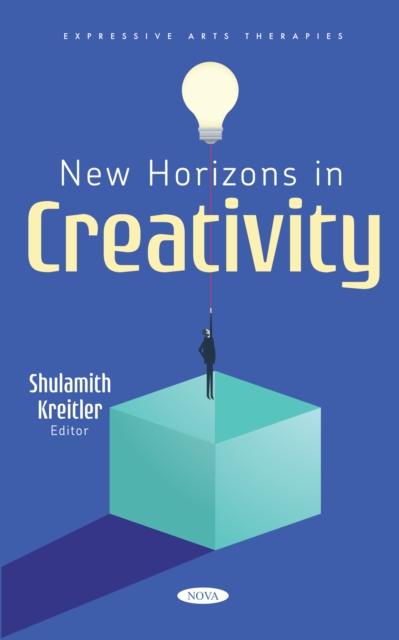
New Horizons in Creativity
The book is devoted to exploring creativity from several points of view and in a variety of domains that are mostly not discussed in the common approaches to creativity. An endeavor of this kind is of particular importance at the present time which is marked by the occurrence and necessity of changes in many domains of life and social functioning. Creativity is probably a major resource for dealing with the changes in a manner that minimizes suffering and maximizes growth for the individual and for humanity at large. The book includes 13 chapters by world-renowned experts in creativity which present new viewpoints about major processes of creativity and main domains in which it is manifested and needs to be explored. Two of the chapters are devoted to health and wellbeing, dealing with the role of intuition in medicine (chapter 7), of technology in nursing (chapter 9) and of mindfulness and related techniques in mental wellbeing (chapter 8). The emotional aspect is counterbalanced by the cognitively-grounded explorations dealing with problem-solving (chapter 11), science and education in mathematics (chapter 10) and with humor (chapter 12) which contributes its share for moderating excessive seriousness in most domains of life. Three chapters deal with organization in terms of work, production (chapters 2 and 3) and perhaps unexpectedly with diplomacy (chapter 4) which provides the overall framework for social and administrative functioning. Creativity in the external environment is the dominant theme of the chapter that deals with the landscape (chapter 5) and ecology (chapter 6). The book is framed by two chapters in the beginning (chapter 1) and at the end (chapter 13). The first chapter provides an introduction to the study of creativity based on the major developmental trends in theory and methodology in the past up to the present (chapter 1). The last chapter provides an integrative introduction for development of creativity in the future, based on motivation, cognition and emotion, characterizing the producers of creativity and those who benefit from it through experiencing and implementation (chapter 13). Each chapter contributes its share to highlighting the role and potential contribution of creativity to enhancing the meaningfulness of our life and being in the world.
eBook


A study of the effects of social adaptation training program on the social adaptation of children of immigrant families
Due to the problems experienced by immigrant children before, during and after migration, efforts to increase their social adaptation are considered important. In this study, it was aimed at investigating the social adaptation of the children of immigrant families who study in 6th and 7th grade in the schools determining whether the social adaptation training affect the social adaptation of the children of immigrant families studying in 6th and 7th grade. The data of the study were collected via “
Need Recognition Form
”, “
Social Adaptation Scale
” and “
General Information Form
” developed by the researcher. The social adaptation training program which was prepared to increase the immigrant children’s social adaptation was applied to experimental group total 24 sessions; during three months, twice a week and an hour a day. Also, the children in the control group continued their usual education. It was determined that the social adaptation scores of the experimental group increased significantly after the application and the effect of the program was permanent. No significant difference was found between the pretest–posttest scores of the control group. The obtained findings showed the social adaptation training program is effective on developing social adaptation of the children of immigrant families. This result reveals the necessity of supporting the social adaptation of immigrant children.
Journal Article

The ecology of pastoralism
\"In The Ecology of Pastoralism, a diverse group of contributions from archaeologists and ethnographers address pastoralism's significant impact on humanity's basic subsistence and survival, focusing on the network of social, political, and religious institutions existing within various societies dependent on animal husbandry. Pastoral peoples, both past and present, have organized their relationship with certain animals to maximize their ability to survive and adapt to a wide range of conditions over time. Despite differences in landscape, environment, and administrative and political structures, contributors show these societies share a major similar characteristic--high flexibility. Based partially on the adaptability of various domestic animals to difficult environments and partially on the ability of people to establish networks allowing them to accommodate political, social, and economic needs, this flexibility is key to survival of complex pastoral systems and serves as the connection among the varied cultures in the volume. Using archaeological and contemporary data, the wide variety of cases from a broad geographic sampling in The Ecology of Pastoralism offer a new perspective on the study of pastoralism that makes this volume a valuable contribution to current research in the area\"-- Provided by publisher.
Book

The Evaluation of Individuals with Low Back Pain in Terms of Social Adaptation
Objective: The aim of the present study is to assess individuals with low back pain in terms of social adaptation. Materials and Methods: The population of this descriptive study included individuals with low back pain who were older than 18 years old. 372 individuals suffering from this pain were reached between 02.20.2021 and 03.18.2021 by using the snowball sampling method, one of the non-probabilistic sampling methods. A Personal Information Form, the Oswestry Disability index, and the Social Adaptation Self-Evaluation Scale were used to collect data. Data were gathered through a web-based survey. Results: It was found that 32.5% of the participants suffering from low back pain were aged between 18-29 years and 60.9% of them were female. The Social Adaptation Self-Evaluation scale mean score of all participants was 40.81±8.86 and their Oswestry Disability index mean score was 15.81±9.43. There was a moderate negative correlation between the Social Adaptation Self-Evaluation scale and the Oswestry Disability index scores of the participants (r=-0.528, p=0.000). Conclusion: Consequently, as low back pain increased, the level of social adaptation decreased, and this in turn affected the daily lives of people with low back pain. Knowing the risk factors for low back pain and social maladaptation is important for taking the associated measures, and it is thought that it would be beneficial to repeat the related studies in a more comprehensive and multi-centered manner.
Journal Article

The vicarious brain, creator of worlds
Groping around a familiar room in the dark, relearning to read after a brain injury, navigating a virtual landscape through an avatar: all are expressions of vicariance--when the brain substitutes one process or function for another. Alain Berthoz shows that this capacity allows humans to think creatively in an increasingly complex world.-- Provided by publisher.
Book

Critical Neuroscience
Critical Neuroscience: A Handbook of the Social and Cultural Contexts of Neuroscience brings together multi-disciplinary scholars from around the world to explore key social, historical and philosophical studies of neuroscience, and to analyze the socio-cultural implications of recent advances in the field. This text's original, interdisciplinary approach explores the creative potential for engaging experimental neuroscience with social studies of neuroscience while furthering the dialogue between neuroscience and the disciplines of the social sciences and humanities. Critical Neuroscience transcends traditional skepticism, introducing novel ideas about 'how to be critical' in and about science.
eBook