
Catalogue Search | MBRL


Are you sure you want to remove the book from the shelf?

{{itemTitle}}
597
result(s) for
"Social anthropology/ethnography"
Sort by:

Christianity, Islam, and Orisa-Religion
The Yoruba of southwestern Nigeria are exceptional for the copresence among them of three religious traditions: Islam, Christianity, and the indigenousorisareligion. In this comparative study, at once historical and anthropological, Peel explores the intertwined character of the three religions and the dense imbrication of religion in all aspects of Yoruba history up to the present. For over 400 years, the Yoruba have straddled two geocultural spheres: one reaching north over the Sahara to the world of Islam, the other linking them to the Euro-American world via the Atlantic. These two external spheres were the source of contrasting cultural influences, notably those emanating from the world religions. However, the Yoruba not only imported Islam and Christianity but also exported their ownorisareligion to the New World. Before the voluntary modern diaspora that has brought many Yoruba to Europe and the Americas, tens of thousands were sold as slaves in the New World, bringing with them the worship of theorisa. Peel offers deep insight into important contemporary themes such as religious conversion, new religious movements, relations between world religions, the conditions of religious violence, the transnational flows of contemporary religion, and the interplay between tradition and the demands of an ever-changing present. In the process, he makes a major theoretical contribution to the anthropology of world religions.
eBook

Why Do We Quote?
Quoting is all around us. But do we really know what it means? How do people actually quote today, and how did our present systems come about? This book brings together a down-to-earth account of contemporary quoting with an examination of the comparative and historical background that lies behind it and the characteristic way that quoting links past and present, the far and the near. Drawing from anthropology, cultural history, folklore, cultural studies, sociolinguistics, literary studies and the ethnography of speaking, Ruth Finnegan’s fascinating study sets our present conventions into cross-cultural and historical perspective. She traces the curious history of quotation marks, examines the long tradition of quotation collections with their remarkable recycling across the centuries, and explores the uses of quotation in literary, visual and oral traditions. The book tracks the changing definitions and control of quoting over the millennia and in doing so throws new light on ideas such as 'imitation', 'allusion', 'authorship', 'originality' and 'plagiarism'.
eBook
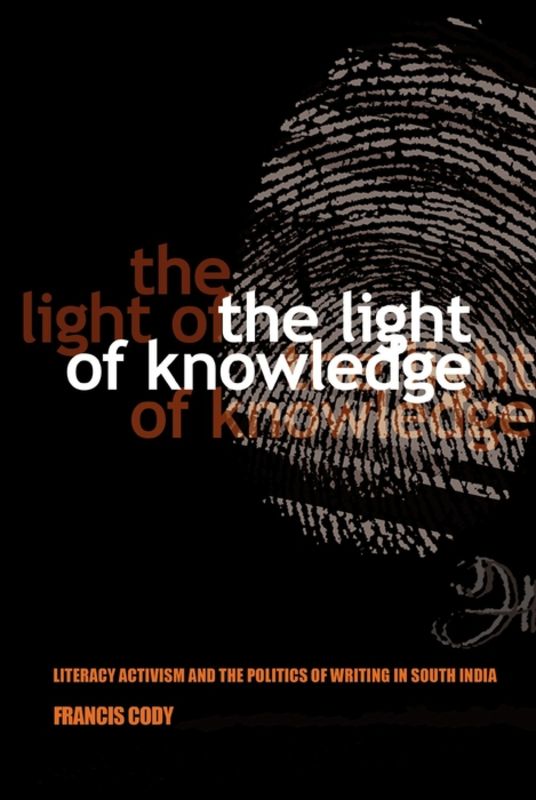
The Light of Knowledge
Since the early 1990s hundreds of thousands of Tamil villagers in southern India have participated in literacy lessons, science demonstrations, and other events designed to transform them into active citizens with access to state power. These efforts to spread enlightenment among the oppressed are part of a movement known as the Arivoli Iyakkam (the Enlightenment Movement), considered to be among the most successful mass literacy movements in recent history. In The Light of Knowledge, Francis Cody's ethnography of the Arivoli Iyakkam highlights the paradoxes inherent in such movements that seek to emancipate people through literacy when literacy is a power-laden social practice in its own right.
The Light of Knowledge is set primarily in the rural district of Pudukkottai in Tamil Nadu, and it is about activism among laboring women from marginalized castes who have been particularly active as learners and volunteers in the movement. In their endeavors to remake the Tamil countryside through literacy activism, workers in the movement found that their own understanding of the politics of writing and Enlightenment was often transformed as they encountered vastly different notions of language and imaginations of social order. Indeed, while activists of the movement successfully mobilized large numbers of rural women, they did so through logics that often pushed against the very Enlightenment rationality they hoped to foster. Offering a rare behind-the-scenes look at an increasingly important area of social and political activism, The Light of Knowledge brings tools of linguistic anthropology to engage with critical social theories of the postcolonial state.
eBook

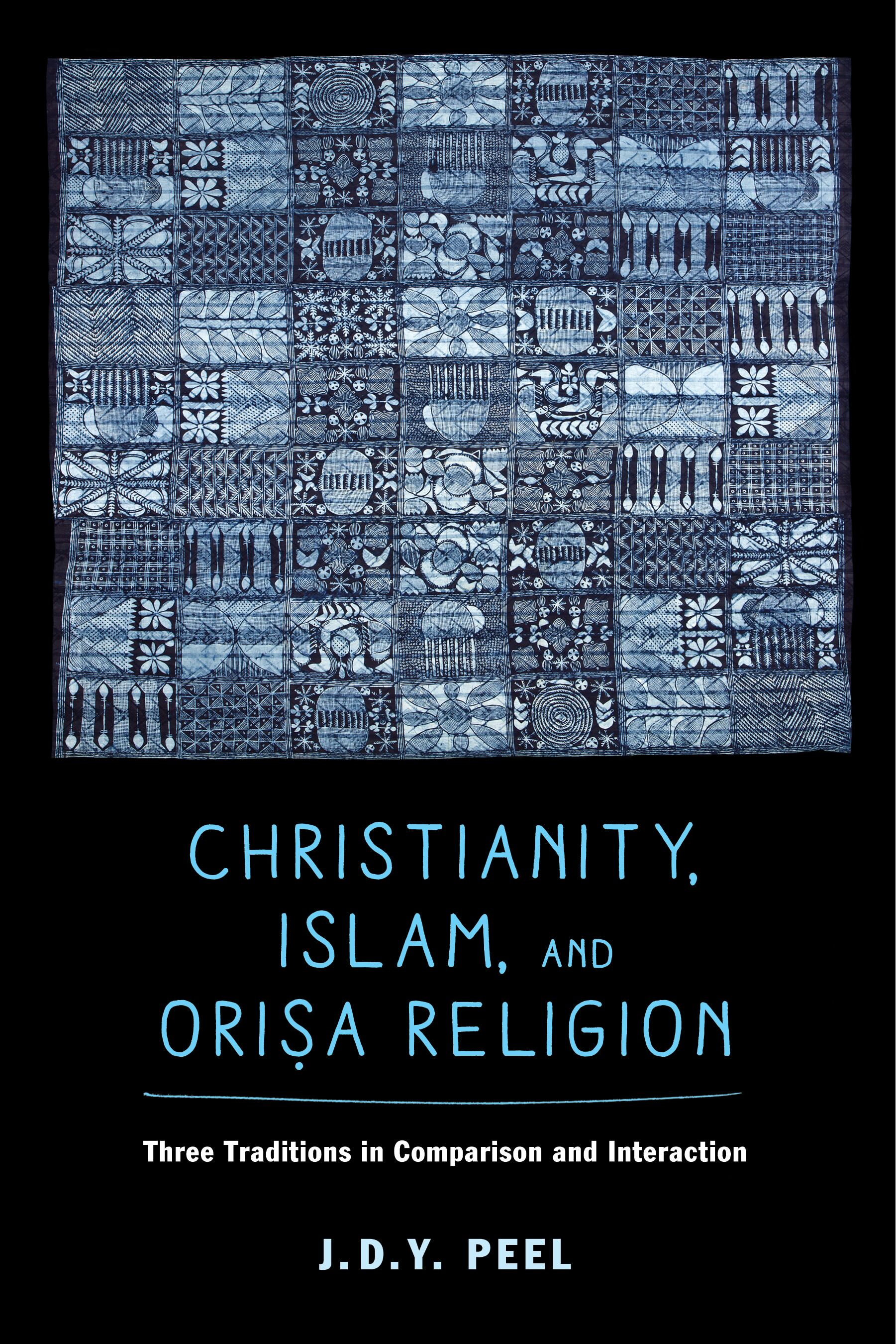
Christianity, Islam, and Oriṣa Religion: Three Traditions in Comparison and Interaction
\"The Yoruba of southwestern Nigeria are exceptional for the copresence among them of three religious traditions: Islam, Christianity, and the indigenous oriṣa religion. In this comparative study, at once historical and anthropological, Peel explores the intertwined character of the three religions and the dense imbrication of religion in all aspects of Yoruba history up to the present. For over 400 years, the Yoruba have straddled two geocultural spheres: one reaching north over the Sahara to the world of Islam, the other linking them to the Euro-American world via the Atlantic. These two external spheres were the source of contrasting cultural influences, notably those emanating from the world religions. However, the Yoruba not only imported Islam and Christianity but also exported their own oriṣa religion to the New World. Before the voluntary modern diaspora that has brought many Yoruba to Europe and the Americas, tens of thousands were sold as slaves in the New World, bringing with them the worship of the oriṣa. Peel offers deep insight into important contemporary themes such as religious conversion, new religious movements, relations between world religions, the conditions of religious violence, the transnational flows of contemporary religion, and the interplay between tradition and the demands of an ever-changing present. In the process, he makes a major theoretical contribution to the anthropology of world religions.\"
eBook
A Good Life
This book is a story. It’s a story about ordinary people in very different parts of the world dealing with rapid change in the late twentieth and early twenty-first centuries. It’s about times of turbulent and violent social upheaval and rupture with the past. It’s about modern times. It’s also about being human; what it is to be human in a modernising and globalising world; how, in responding to the circumstances of their times, different groups define, redefine, and attempt to put into practice their understandings of the good and of what constitutes a good life. And it’s about how human rights have come to be not abstract universal principles but a practical source of consciousness and practice for real people. Drawing on the author’s experience as an anthropologist, the book examines different groups over the last three decades of the twentieth century and the first years of the twenty-first: Thai factory workers over a period of two coups in the 1970s; Spanish nuns in the 1980s, in the aftermath of the Second Vatican Council and the end of the Franco dictatorship; Aboriginal people in the remote Pilbara region of Western Australia dealing with the impact of late colonialism and moves towards self-determination, from the 1980s to the present. Each of these groups has its own stories, illuminating ways in which, despite the assault of modernisation on deeply held traditional beliefs and practices, particular cultural understandings and practices continue to shape people’s responses to their novel circumstances. The very diversity of the studies presented in the book raises some of the most compelling moral and social questions of our time and invites the reader, both academic and lay, to focus on what it is that makes us human; whether there are human universals as well as cultural particularities; whether human rights provide universal norms and practices; what unites as well as divides us; and where morality, and understandings of a good life, can be sourced in a secular modern world. “This is a book about hope, the hope that we have ways to live together in a rapidly changing world which will enable us to ‘live a good life in the modern world.’” Hon. Fred Chaney AO.
eBook
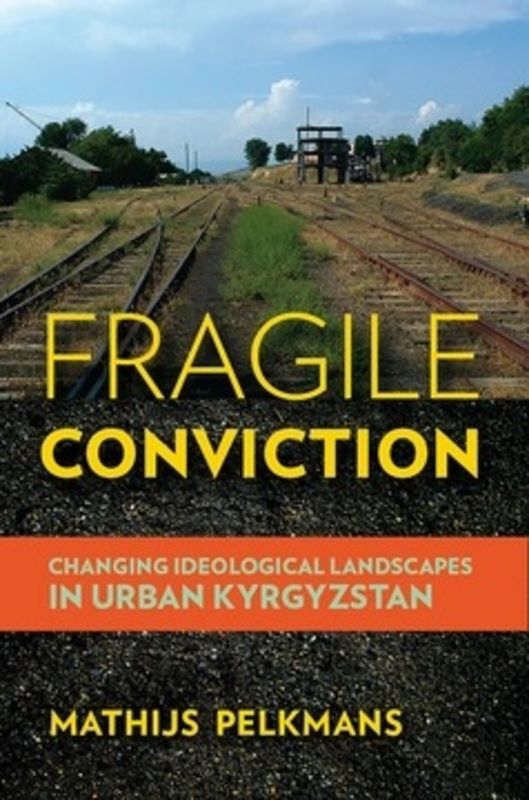
Fragile Conviction
How do specific secular and religious ideologies—such as nationalism, neoliberalism, atheism, Pentecostalism, Tablighi Islam, and shamanism—gain popularity and when do they lose traction? To answer these questions, Mathijs Pelkmans critically examines the trajectories of a range of ideologies as they move into the post-Soviet frontier in Central Asia. Ethnographically rooted in the everyday life of a former mining town in southern Kyrgyzstan, Fragile Conviction shows how residents have dealt with the existential and epistemic crises that arose after the collapse of the Soviet Empire. Residents became enchanted by the truths of Muslim and Christian missionaries, embraced the teachings of neoliberal and nationalist ideologues, and were riveted by the visions of shamanic healers. But no matter how much enthusiasm and hope these ideas first engendered, the commitment to any of them rarely lasted very long.Pelkmans finds that there is an inverse relationship between the tenacity and the effervescence of collective ideas, between their strength to persist and their ability to trigger committed action. Introducing the concept of pulsation, he argues in Fragile Conviction that ideational power must be understood in relation to three aspects: the voicing of the idea, its tension with everyday reality, and its reverberation within groups of listeners. The conclusion that the power of conviction is rooted in the instability of sociocultural contexts is a message that has relevance far beyond urban Central Asia.
eBook

A Good Life
This book is a story. It’s a story about ordinary people in very different parts of the world dealing with rapid change in the late twentieth and early twenty-first centuries. It’s about times of turbulent and violent social upheaval and rupture with the past. It’s about modern times. It’s also about being human; what it is to be human in a modernising and globalising world; how, in responding to the circumstances of their times, different groups define, redefine, and attempt to put into practice their understandings of the good and of what constitutes a good life. And it’s about how human rights have come to be not abstract universal principles but a practical source of consciousness and practice for real people. Drawing on the author’s experience as an anthropologist, the book examines different groups over the last three decades of the twentieth century and the first years of the twenty-first: Thai factory workers over a period of two coups in the 1970s; Spanish nuns in the 1980s, in the aftermath of the Second Vatican Council and the end of the Franco dictatorship; Aboriginal people in the remote Pilbara region of Western Australia dealing with the impact of late colonialism and moves towards self-determination, from the 1980s to the present. Each of these groups has its own stories, illuminating ways in which, despite the assault of modernisation on deeply held traditional beliefs and practices, particular cultural understandings and practices continue to shape people’s responses to their novel circumstances. The very diversity of the studies presented in the book raises some of the most compelling moral and social questions of our time and invites the reader, both academic and lay, to focus on what it is that makes us human; whether there are human universals as well as cultural particularities; whether human rights provide universal norms and practices; what unites as well as divides us; and where morality, and understandings of a good life, can be sourced in a secular modern world. “This is a book about hope, the hope that we have ways to live together in a rapidly changing world which will enable us to ‘live a good life in the modern world.’” Hon. Fred Chaney AO.
eBook

Fragile Conviction
The Allied occupation of Japan is remembered as the \"good occupation.\" An American-led coalition successfully turned a militaristic enemy into a stable and democratic ally. Of course, the story was more complicated, but the occupation did forge one of the most enduring relationships in the postwar world. Recent events, from the occupations of Iraq and Afghanistan to protests over American bases in Japan to increasingly aggressive territorial disputes between Asian nations over islands in the Pacific, have brought attention back to the subject of the occupation of Japan.
InArchitects of Occupation , Dayna L. Barnes exposes the wartime origins of occupation policy and broader plans for postwar Japan. She considers the role of presidents, bureaucrats, think tanks, the media, and Congress in policymaking. Members of these elite groups came together in an informal policy network that shaped planning. Rather than relying solely on government reports and records to understand policymaking, Barnes also uses letters, memoirs, diaries, and manuscripts written by policymakers to trace the rise and spread of ideas across the policy network. The book contributes a new facet to the substantial literature on the occupation, serves as a case study in foreign policy analysis, and tells a surprising new story about World War II.
eBook
Fragile Conviction
How does ideology function during periods of political and economic turmoil? This book, based on long-term ethnographic research in a destitute former mining town in Kyrgyzstan, testifies to the precariousness of life in the former Soviet republics in the decades after the collapse of the USSR. It follows inhabitants as they make sense of a radically changing world and as they try to imbue their lives with relevance and direction, while concentrating in depth on their engagement with a range of religious ideas and other ideological currents, including scientific atheism, evangelical Christianity, Sunni Islamic revivalism, and traditional shamanistic beliefs. By examining such a broad variety of belief systems and how they manifest themselves in daily life, the author provides new insights into how ideology works (or fails to work) and how cultural and religious convictions are collectively produced and shaped.
eBook