
Catalogue Search | MBRL


Are you sure you want to remove the book from the shelf?

{{itemTitle}}
2,239
result(s) for
"Social change England."
Sort by:


Caribbean Exchanges
English colonial expansion in the Caribbean was more than a matter of migration and trade. It was also a source of social and cultural change within England. Finding evidence of cultural exchange between England and the Caribbean as early as the seventeenth century, Susan Dwyer Amussen uncovers the learned practice of slaveholding.As English colonists in the Caribbean quickly became large-scale slaveholders, they established new organizations of labor, new uses of authority, new laws, and new modes of violence, punishment, and repression in order to manage slaves. Concentrating on Barbados and Jamaica, England's two most important colonies, Amussen looks at cultural exports that affected the development of race, gender, labor, and class as categories of legal and social identity in England. Concepts of law and punishment in the Caribbean provided a model for expanded definitions of crime in England; the organization of sugar factories served as a model for early industrialization; and the construction of the \"white woman\" in the Caribbean contributed to changing notions of \"ladyhood\" in England. As Amussen demonstrates, the cultural changes necessary for settling the Caribbean became an important, though uncounted, colonial export.
eBook

Sleep in early modern England
\"Drawing on diverse archival sources and material artifacts, Handley reveals that the way we sleep is as dependent on culture as it is on biological and environmental factors. After 1660 the accepted notion that sleepers lay at the mercy of natural forces and supernatural agents was challenged by new medical thinking about sleep's relationship to the nervous system. This breakthrough coincided with radical changes shaping everything from sleeping hours to bedchambers. Handley's illuminating work documents a major evolution in our conscious understanding of the unconscious\"-- Provided by publisher.
Book

The other empire
This is a detailed study of the various ways in which London and India were imaginatively constructed by British observers during the nineteenth century. This process took place within a unified field of knowledge that brought together travel and evangelical accounts to exert a formative influence on the creation of London and India for the domestic reading public. Their distinct narratives, rhetoric and chronologies forged homologies between representations of the metropolitan poor and colonial subjects - those constituencies that were seen as the most threatening to imperial progress. Thus the poor and particular sections of the Indian population were inscribed within discourses of western civilization as regressive and inferior peoples. Over time these discourses increasingly promoted notions of overt and rigid racial hierarchies, the legacy of which remains to this day. This comparative analysis looks afresh at the writings of observers such as Henry Mayhew, Patrick Colquhoun, Charles Grant, Pierce Egan, James Forbes and Emma Roberts, thereby seeking to rethink the location of the poor and India within the nineteenth-century imagination. Drawing upon cultural and intellectual history it also attempts to extend our understanding of the relationship between 'centre' and 'periphery'. The other empire will be of value to students and scholars of modern imperial and urban history, cultural studies, and religious studies.
eBook

The making of English popular culture
\"The Making of English Popular Culture provides an account of the making of popular culture in the nineteenth century. While a form of what we might describe as popular culture existed before this period, John Storey has assembled a collection that demonstrates how what we now think of as popular culture first emerged as a result of the enormous changes that accompanied the industrial revolution. Particularly significant are the technological changes that made the production of new forms of culture possible and the concentration of people in urban areas that created significant audiences for this new culture. Consisting of fourteen original chapters that cover diverse topics ranging from seaside holidays and the invention of Christmas tradition, to advertising, music and popular fiction, the collection aims to enhance our understanding of the relationship between culture and power, as explored through areas such as 'race', ethnicity, class, sexuality and gender. It also aims to encourage within cultural studies a renewed historical sense when engaging critically with popular culture by exploring the historical conditions surrounding the existence of popular texts and practices. Written in a highly accessible style The Making of English Popular Culture is an ideal text for undergraduates studying cultural and media studies, literary studies, cultural history and visual culture\"--Provided by publisher.
Book

Unequal City
Unequal City examines some of the dramatic economic and social changes that have taken place in London over the last forty years. It describes how London's changing industrial structure, particularly the shift from an industrial to a services-based city, and the associated changes in occupational class structure and in the structure of earnings and incomes, have worked through to the housing market and the gentrification of large parts of inner London. Unequal City relates to the literature on global cities. The book has a wide sweep and summarises a wide range of literature on occupational and industrial change, earnings and incomes and the housing market and gentrification. It provides a wealth of original data, figures, maps and tables and will be a valuable reference for anyone interested in the changes that have reshaped the social structure of London in recent decades.
eBook

Dialect Matters : respecting vernacular language : Columns from the Eastern Daily Press
\"Based on Peter Trudgill's weekly column in the Eastern Daily Press newspaper, this book has two overall messages. The first is that language is a fascinating and enjoyable phenomenon which not enough people know enough about. The second is that we should not discriminate negatively against individuals and groups because of their accent, dialect or native language. Linguistic prejudice, known as 'linguicism', is more publicly and shamelessly demonstrated than racism and sexism, as is 'prescriptivism', the practice of elevating one language or language variety as 'better' than another. Written in an entertaining and accessible style, Trudgill's columns support the language of ordinary people and explore topics such as nonstandard versus standard dialects; vernacular (everyday) language as opposed to politically correct language; informal vocabulary as opposed to business-school jargon; and minority versus majority languages. Each article is also accompanied by notes designed for students and those unfamiliar with the East Anglian setting\"-- Provided by publisher.
Book
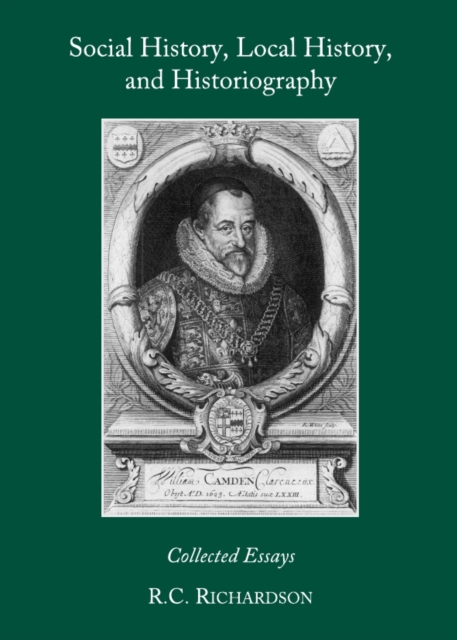
Social History, Local History, and Historiography
This wide-ranging volume collects together twelve of the authors longer essays, mainly drawn from those first published in the last two decades. Chiefly consisting of micro-studies of a variety of different aspects of early modern English history, the book concerns itself with social and economic change, the period of the English Revolution and its long-lasting impact, with Puritanism, with the family as a social institution, and with historical consciousness and different forms of historica.
eBook

Urban redevelopment and modernity in Liverpool and Manchester, 1918-1939
\"Uses Liverpool and Manchester as case studies to uncover the programmes of urban regeneration that transformed cityscapes and revitalised local economies and cultures between the wars\"-- Provided by publisher.
Book
