
Catalogue Search | MBRL


Are you sure you want to remove the book from the shelf?

{{itemTitle}}
1,807
result(s) for
"Social change Italy."
Sort by:


The Aurelian Wall and the Refashioning of Imperial Rome, AD 271–855
This book explores the relationship between the city of Rome and the Aurelian Wall during the six centuries following its construction in the 270s AD, a period when the city changed and contracted almost beyond recognition, as it evolved from imperial capital into the spiritual center of Western Christendom. The Wall became the single most prominent feature in the urban landscape, a dominating presence which came bodily to incarnate the political, legal, administrative, and religious boundaries of urbs Roma, even as it reshaped both the physical contours of the city as a whole and the mental geographies of 'Rome' that prevailed at home and throughout the known world. With the passage of time, the circuit took on a life of its own as the embodiment of Rome's past greatness, a cultural and architectural legacy that dwarfed the quotidian realities of the post-imperial city as much as it shaped them.
eBook

Italian Venice : a history
\"In this elegant book Richard Bosworth explores Venice--not the glorious Venice of the Venetian Republic, but from the fall of the Republic in 1797 and the Risorgimento up through the present day. Bosworth looks at the glamour and squalor of the belle âepoque and the dark underbelly of modernization, the two world wars, and the far-reaching oppressions of the fascist regime, through to the 'Disneylandification' of Venice and the tourist boom, the worldwide attention of the biennale and film festival, and current threats of subsidence and flooding posed by global warming. He draws out major themes--the increasingly anachronistic but deeply embedded Catholic Church, the two faces of modernization, consumerism versus culture. Bosworth interrogates not just Venice's history but its meanings, and how the city's past has been co-opted to suit present and sometimes ulterior aims. Venice, he shows, is a city where its histories as well as its waters ripple on the surface\"-- Provided by publisher.
Book
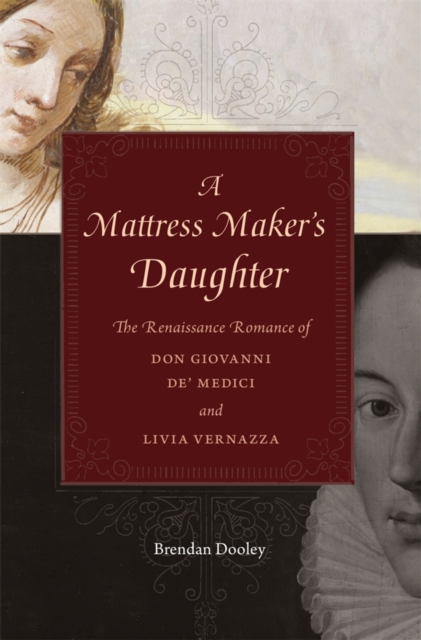
A mattress maker's daughter : the Renaissance romance of Don Giovanni de' Medici and Livia Vernazza
In explaining an improbable liaison and its consequences, A Mattress Maker's Daughter explores changing concepts of love and romance, new standards of public and private conduct, and emerging attitudes toward property and legitimacy just as the age of Renaissance humanism gives way to the Counter Reformation and Early Modern Europe.
eBook


The Aurelian wall and the refashioning of Imperial Rome, A.D. 271-855
\"This book explores the relationship between the city of Rome and the Aurelian wall during the six centuries following its construction in the 270s AD, a period when the city changed and contracted almost beyond recognition, as it evolved from imperial capital into the spiritual center of Western Christendom. The wall became the single most prominent feature in the urban landscape, a dominating presence which came bodily to incarnate the political, legal, administrative, and religious boundaries of urbs Roma, even as it reshaped both the physical contours of the city as a whole and the mental geographies of 'Rome' that prevailed at home and throughout the known world. With the passage of time, the circuit took on a life of its own as the embodiment of Rome's past greatness, a cultural and architectural legacy that dwarfed the quotidian realities of the post-imperial city as much as it shaped them\"--Provided by publisher.
Book

Italian Venice
In this elegant book Richard Bosworth explores Venice-not the glorious Venice of the Venetian Republic, but from the fall of the Republic in 1797 and the Risorgimento up through the present day. Bosworth looks at the glamour and squalor of the belle époque and the dark underbelly of modernization, the two world wars, and the far-reaching oppressions of the fascist regime, through to the \"Disneylandification\" of Venice and the tourist boom, the worldwide attention of the biennale and film festival, and current threats of subsidence and flooding posed by global warming. He draws out major themes-the increasingly anachronistic but deeply embedded Catholic Church, the two faces of modernization, consumerism versus culture.Bosworth interrogates not just Venice's history but its meanings, and how the city's past has been co-opted to suit present and sometimes ulterior aims. Venice, he shows, is a city where its histories as well as its waters ripple on the surface.
eBook


Ostia in Late Antiquity
Ostia Antica was Rome's ancient harbor. Its houses and apartments, taverns and baths, warehouses, shops and temples have long contributed to a picture of daily life in ancient Rome. Recent investigations have revealed, however, that life in Ostia did not end with a bang but with a whimper. Only on the cusp of the Middle Ages did the town's residents entrench themselves in a smaller settlement outside the walls. What can this new evidence tell us about life in the later Roman Empire, as society navigated an increasingly Christian world? Ostia in Late Antiquity, the first academic study on Ostia to appear in English in almost 20 years and the first to treat the Late Antique period, tackles the dynamics of this transformative time. Drawing on new archaeological research, including the author's own, and incorporating both material and textual sources, it presents a social history of the town from the third through the ninth century.
eBook