
Catalogue Search | MBRL


Are you sure you want to remove the book from the shelf?

{{itemTitle}}
2,431
result(s) for
"Social classes Fiction."
Sort by:

The garden party
A frivolous, wealthy family's garden party continues uninterrupted by the death of a working-class neighbor. Includes an analysis of the story and a biography of the author.
Book
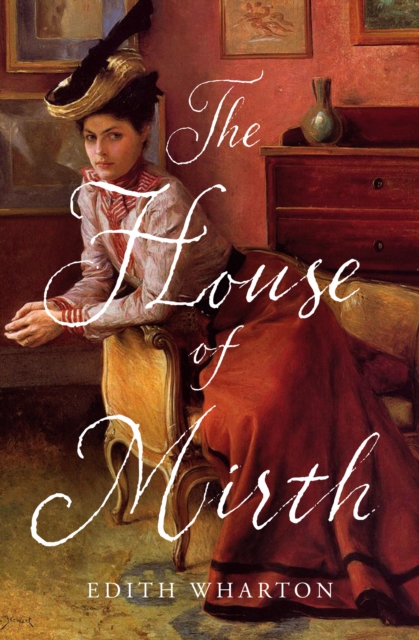
The House of Mirth
The classic tale of a young woman's struggle for love and money from the Pulitzer Prize–winning author of Ethan Frome and The Age of Innocence. Raised among New York's high society, Lily Bart is beautiful, charming, and entirely without means. Determined to maintain the extravagant lifestyle to which she is accustomed, Lily embarks on a mission to marry a wealthy man who can secure her station. However, the businesslike proposals from her many suitors remain fruitless, and her thoughts keep returning to the one man she truly loves. Bedeviled by debt, betrayal, and vicious gossip, she is forced to confront the tragic cruelty just beneath the surface of the Gilded Age. First appearing in Scribner's Magazine as a monthly serial, House of Mirth was a runaway bestseller upon its release as a full-length novel in 1905. Hailed as \"a fireworks display of brilliantly sardonic social satire deepened by a story of thwarted love\" by the Wall Street Journal, it was the first popular and critical success for Edith Wharton, who went on to become the first female author to win the Pulitzer Prize. Since its initial publication, House of Mirth has been adapted into two feature films and continues to captivate modern readers. This ebook has been professionally proofread to ensure accuracy and readability on all devices.
eBook


Sparkers
\"Marah, an underclass 'sparker' in a society ruled by magicians, works with her friend Azariah to find a cure for a mysterious disease that turns its victims' eyes black\"-- Provided by publisher.
Book

Everless
In a land where the rich are able to hoard time, Jules Ember returns to the estate where she and her father used to be servants and where the youngest son of an aristocratic family is planning to marry the daughter of the queen.
Book
Tess of the D'Urbervilles
A young woman struggles against tradition and circumstance in this novel of love, class, and deceit from the author of Far from the Madding Crowd.Convinced that his impoverished family has noble connections, John Durbeyfield implores his daughter, Tess, to visit the wealthy Mrs.D'Urberville and claim kin.
eBook


Social Fiction: Leavy Pioneers a Genre
In this article Sleeter details how Patricia Leavy pioneered the genre of social fiction. She details the method and the publication of the landmark Social Fictions book series, the first and only series of its kind. Sleeter reviews a handful of Leavy’s acclaimed novels, her own fiction, and other titles in the series. She explains how and why social fiction is significant for the qualitative research community.
Journal Article