
Catalogue Search | MBRL


Are you sure you want to remove the book from the shelf?

{{itemTitle}}
258
result(s) for
"Social conflict - Cambodia"
Sort by:
Cambodia's Neoliberal Order
Neoliberal economics have emerged in the post-Cold War era as the predominant ideological tenet applied to the development of countries in the global south. For much of the global south, however, the promise that markets will bring increased standards of living and emancipation from tyranny has been an empty one. Instead, neoliberalisation has increased the gap between rich and poor and unleashed a firestorm of social ills.
This book deals with the post-conflict geographies of violence and neoliberalisation in Cambodia. Applying a geographical analysis to contemporary Cambodian politics, the author employs notions of neoliberalism, public space, and radical democracy as the most substantive components of its theoretical edifice. He argues that the promotion of unfettered marketisation is the foremost causal factor in the country’s inability to consolidate democracy following a United Nations sponsored transition. The book demonstrates Cambodian perspectives on the role of public space in Cambodia's process of democratic development and explains the implications of violence and its relationship with neoliberalism.
Taking into account the transition from war to peace, authoritarianism to democracy, and command economy to a free market, this book offers a critical appraisal of the political economy in Cambodia.
1. Introduction: Setting the Stage for Neoliberalisation 2. Caught in the Headlights of Culture and Neoliberalism: Public Space as a Vision for Democracy and Development from Below in the Global South 3. From Genocide to Elections to Coup d’État: Public Space in Cambodia’s Transitional Political Economy 4. Cambodia’s Battle for Public Space: The Neoliberal Doctrine or Order versus the Democratic Expression of the People’s Will 5. Conclusion: Sowing the Seeds of a New Revolution?
Simon Springer is Assistant Professor in the Department of Geography at the National University of Singapore. His ongoing research focuses on the intersections between neoliberalism and violence.
eBook

The effect of social capital on collective action in community forest management in Cambodia
Over the last two decades, an increasing number of developing countries have decentralised the management of their forests, which has spawned community- based forest management, also known as community forestry (CF). While CF has been promoted in many countries, few studies have provided persuasive empirical evidence of the factors that help community forest users organise collective action to manage the community forests. Furthermore, in the existing studies which link social capital with collective action, few examine whether community forest users’ social capital, depleted by past armed conflicts, can be restored. In addition, scant attention has been paid to the importance of social capital in promoting collective action as the basis for community forest management in post- conflict societies. This case study comprised 35 CF communities from Siem Reap Province in Cambodia (a post-conflict society). Using exploratory sequential mixed methods, the study empirically examined whether registered community forest users’ (CF members’) social capital, severely depleted by past armed conflicts, could be restored and whether existing social capital helped CF members organise collective action to manage community forests. Based on household, village and CF management committee-level data, this study revealed that existing social capital such as social networks and cooperative norms between CF members, which had been depleted by Cambodia’s prolonged armed conflicts, helped to organise collective action, although the forms of social capital varied according to the type of collective action involved.
Journal Article

Ferryman of Memories
Ferryman of Memories: The Films of Rithy Panh is an
unconventional book about an unconventional filmmaker. Rithy Panh
survived the Cambodian genocide and found refuge in France where he
discovered in film a language that allowed him to tell what
happened to the two million souls who suffered hunger, overwork,
disease, and death at the hands of the Khmer Rouge. His innovative
cinema is made with people, not about them-even
those guilty of crimes against humanity. Whether he is directing
Isabelle Huppert in The Sea Wall , following laborers
digging trenches, or interrogating the infamous director of S-21
prison, aesthetics and ethics inform all he does. With remarkable
access to the director and his work, Deirdre Boyle introduces
readers to Panh's groundbreaking approach to perpetrator cinema and
dazzling critique of colonialism, globalization, and the refugee
crisis. Ferryman of Memories reveals the art of one of the
masters of world cinema today, focusing on nineteen of his
award-winning films, including Rice People, The Land of
Wandering Souls, S-21: The Khmer Rouge Killing Machine, and
The Missing Picture.
eBook

The Khmer Rouge Tribunal
From 1975 to 1979, while Cambodia was ruled by the brutal Communist Party of Kampuchea (Khmer Rouge) regime, torture, starvation, rape, and forced labor contributed to the death of at least a fifth of the country's population. Despite the severity of these abuses, civil war and international interference prevented investigation until 2004, when protracted negotiations between the Cambodian government and the United Nations resulted in the establishment of the Extraordinary Chambers in the Courts of Cambodia (ECCC), or Khmer Rouge tribunal. The resulting trials have been well scrutinized, with many scholars seeking to weigh the results of the tribunal against the extent of the offenses. Here, Julie Bernath takes a different tack, deliberately decentering the trials in an effort to understand the ECCC in its particular context-and, by extension, the degree to which notions of transitional justice generally must be understood in particular social, cultural, and political contexts. She focuses on \"sites of resistance\" to the ECCC, including not only members of the elite political class but also citizens who do not, for a variety of tangled reasons, participate in the tribunal-and even resistance from victims of the regime and participants in the trials. Bernath demonstrates that the ECCC both shapes and is shaped by long-term contestation over Cambodia's social, economic, and political transformations, and thereby argues that transitional justice must be understood locally rather than as a homogenous good that can be implanted by international actors.
eBook
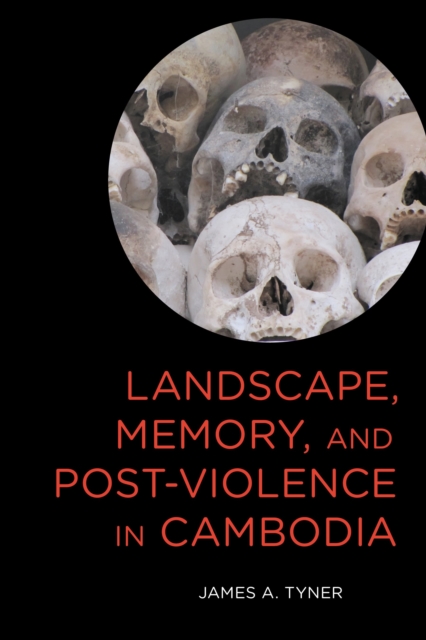
Landscape, memory, and post-violence in Cambodia
Between 1975 and 1979 the Khmer Rouge regime in Cambodia enacted a program of organized mass violence that resulted in the deaths of approximately one quarter of the country’s population. Over two million people died from torture, execution, disease and famine. From the commodification of the ‘killing fields’ of Choeung Ek to the hundreds of unmarked mass graves scattered across the country, violence continues to shape the Cambodian landscape.
Landscape, Memory, and Post-Violence in Cambodia explores the on-going memorialization of violence. As part of a broader engagement with war, violence and critical heritage studies, it explores how a legacy of organized mass violence becomes part of a cultural heritage and, in the process, how this heritage is ‘produced’. Existing literature has addressed explicitly the impact of war and armed conflict on cultural heritage through the destruction of heritage sites. This book inverts this concern by exploring what happens when sites of ‘heritage violence’ are under threat. It argues that the selective memorialization of Cambodia’s violent heritage negates the everyday lived experiences of millions of Cambodians and diminishes the efforts to bring about social justice and reconciliation. In doing so, it develops a grounded conceptual understanding of post-violence in conflict zones internationally.
eBook

A Set Pair Analysis Method for Assessing and Forecasting Water Conflict Risk in Transboundary River Basins
Water conflicts (WACT) in shared river basins have become one of the factors that restrict regional economic development and social stability. Therefore, it is necessary to evaluate water conflict risk (WACR) when managing transboundary river basins. In this research article, in order to accurately and effectively forecast the water conflict risk level, a three-stage process is implemented. Firstly, an evaluation framework for WACR was constructed. The framework consists of four drivers of water conflict: conflict because of water quantity reduction, conflict as a result of differences in water use efficiency, conflict due to disparities in economic and social value of water, and conflict caused by the differences on the amount of water allocated to ensure the integrity of the ecological environment. Secondly, a conflict risk evaluation model was established based on subtraction set pair potential to assess the static evaluation of the WACR. Thirdly, the Grey correlation model is used to forecast data to dynamically predict WACR in the future. The Mekong River Basin (MRB) was selected as a case study to test the validity of the framework. Hence, the following results are obtained: (1) The risk of water conflict in the MRB is always at a medium level. (2) China has the highest risk of water quantity conflict. Laos and Myanmar have a very high water efficiency conflict risk. The risk of economic and social conflict in Cambodia, Myanmar, and Vietnam is at a medium degree. The risk of ecological environmental conflict in Laos and Thailand is at a medium level. (3) From 2022 to 2027, WACT in the MRB decreased to a low risk. Based on this, risk prevention measures are put forward for water cooperation in the MRB.
Journal Article

How do health workers experience and cope with shocks? Learning from four fragile and conflict-affected health systems in Uganda, Sierra Leone, Zimbabwe and Cambodia
This article is grounded in a research programme which set out to understand how to rebuild health systems post-conflict. Four countries were studied—Uganda, Sierra Leone, Zimbabwe and Cambodia—which were at different distances from conflict and crisis, as well as having unique conflict stories. During the research process, the Ebola epidemic broke out in West Africa. Zimbabwe has continued to face a profound economic crisis. Within our research on health worker incentives, we captured insights from 128 life histories and in-depth interviews with a variety of staff that had remained in service. This article aims to draw together lessons from these contexts which can provide lessons for enhancing staff and therefore health system resilience in future, especially in similarly fragile and conflict-affected contexts. We examine the reported effects, both personal and professional, of the three different types of shock (conflicts, epidemics and prolonged political-economic crises), and how staff coped. We find that the impact of shocks and coping strategies are similar between conflict/post-conflict and epidemic contexts—particularly in relation to physical threats and psychosocial threats—while all three contexts create challenges and staff responses for working conditions and remuneration. Health staff showed considerable inventiveness and resilience, and also benefited from external assistance of various kinds, but there are important gaps which point to ways in which they should be better protected and supported in the future. Health systems are increasingly fragile and conflict-prone, and shocks are often prolonged or repeated. Resilience should not be taken for granted or used as an excuse for abandoning frontline health staff. Strategies should be in place at local, national and international levels to prepare for predictable crises of various sorts, rather than waiting for them to occur and responding belatedly, or relying on personal sacrifices by staff to keep services functioning.
Journal Article

Framing, truth-telling, and the limits of local transitional justice
Transitional justice (TJ) is undergoing a legitimacy crisis. While recent critical TJ scholarship has touted the transformative potential of locally rooted mechanisms as a possible means to emancipate TJ, this burgeoning literature rests on shaky assumptions about the purported benefits of local TJ and provides inadequate attention to local-national power dynamics. By taking these factors into consideration, this article contends that local TJ efforts can be used to deflect justice in manners that paradoxically allow ruling parties to avoid human rights accountability and to conceal the truth about wartime violations. It further argues that the principal method by which justice is subverted is not through overt manipulation by abusive governments, but rather, through subtle and indirect ‘distortional framing’ practices, which ruling parties use to set discursive limits around discussions of conflict-related events and to obfuscate their own serious crimes. After developing this argument theoretically, the case study of Cambodia is considered in detail to reveal and to trace the processes by which distortional framing has been used as a technique to deflect justice.
Journal Article

State Terror and Long-Run Development: The Persistence of the Khmer Rouge
Does mass repression have a long-term economic legacy, and if so, what explains persistence? I argue repression can undermine development by delimiting human capital. I study the aftermath of the Khmer Rouge in Cambodia. The regime implemented a campaign of violence to reorganize society, yet governing elites varied across the communist ideological spectrum. I exploit an arbitrary border that allocated villages to either the loyalist Mok or the relatively moderate Sy in Kampong Speu province. Using a regression discontinuity design, I find villages in the more extremist Southwest zone are poorer today compared with villages in the adjacent West zone, and had lower human capital immediately after the regime. Exposure to more intense repression shapes labor markets and child health, explaining intergenerational persistence. I find no conclusive evidence for other persistence channels. My findings add a novel pathway to the library of mechanisms which explain why historical coercion undermines development.
Journal Article

Does foreign aid promote foreign direct investment in post-conflict Cambodia?
Post-conflict Cambodia has experienced a significant increase in foreign aid and foreign direct investment (FDI) inflows since the early 1990s. This paper investigates whether (aggregate, donor-specific, and sectoral-based disaggregate) foreign aid has any short- and long-run crowding-in effects on FDI inflows using autoregressive distributed lag (ARDL) bound test for cointegration over the 1992-2018 post-conflict period. Robust findings reveal that aggregate development aid and 'donor-specific' aid from Australia and United Nations Development Programme (UNDP) crowding-in FDI in the long run. Donor-specific aid from the EU, the US, Japan and France, and sectoral- based 'governance aid' and 'other aid' either have non-robust positive or no significant long-run effects on FDI. In the short run, however, only EU-aid and other-aid have crowding-in effects on FDI. Foreign development aid can catalyse FDI inflows in post- conflict Cambodia, especially in the long run.
Journal Article