
Catalogue Search | MBRL


Are you sure you want to remove the book from the shelf?

{{itemTitle}}
126
result(s) for
"Social interaction Asia History."
Sort by:

Sites of Asian interaction : ideas, networks and mobility
\"Develops the rich historical literature on port cities across Asia, the quintessential sites of Asian cosmopolitanism, as well as more recent work on the 'moving metropolises' and 'mobile cities' of contemporary Asia\"--Provided by publisher.
Book

The black hole of empire
When Siraj, the ruler of Bengal, overran the British settlement of Calcutta in 1756, he allegedly jailed 146 European prisoners overnight in a cramped prison. Of the group, 123 died of suffocation. While this episode was never independently confirmed, the story of \"the black hole of Calcutta\" was widely circulated and seen by the British public as an atrocity committed by savage colonial subjects.The Black Hole of Empirefollows the ever-changing representations of this historical event and founding myth of the British Empire in India, from the eighteenth century to the present. Partha Chatterjee explores how a supposed tragedy paved the ideological foundations for the \"civilizing\" force of British imperial rule and territorial control in India.
Chatterjee takes a close look at the justifications of modern empire by liberal thinkers, international lawyers, and conservative traditionalists, and examines the intellectual and political responses of the colonized, including those of Bengali nationalists. The two sides of empire's entwined history are brought together in the story of the Black Hole memorial: set up in Calcutta in 1760, demolished in 1821, restored by Lord Curzon in 1902, and removed in 1940 to a neglected churchyard. Challenging conventional truisms of imperial history, nationalist scholarship, and liberal visions of globalization, Chatterjee argues that empire is a necessary and continuing part of the history of the modern state.
Some images inside the book are unavailable due to digital copyright restrictions.
eBook
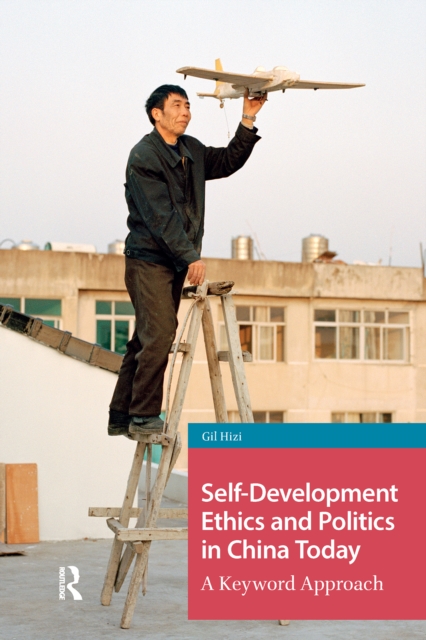
Self-Development Ethics and Politics in China Today
This volume takes readers on a journey into a central aspect of life in China, so-called \"self-development.\" Whether prompted by the cultural values of educational success, capitalist competition for wealth, or the Chinese Communist Party's prescriptions for \"good\" citizenship, few people in China are immune to the impetus to \"improve\" themselves and thus bring about a better future. Contributors to this volume, interdisciplinary sinologists, draw on materials from practices in education, labor, and self-help as they spotlight \"keywords\" by which individuals make sense of their selfdevelopment journeys - including new forms of resistance to social norms. Rather than simply classify self-development by different activities or groups, the chapters map together ethical features that cut across Chinese society. Contributors explore the nuanced and ambivalent attitudes towards self-development of individuals navigating various requirements and pursuing more complete forms of existence. In so doing, they offer a snapshot of China that intersects with timely global concerns.
eBook

The everlasting empire
Established in 221 BCE, the Chinese empire lasted for 2,132 years before being replaced by the Republic of China in 1912. During its two millennia, the empire endured internal wars, foreign incursions, alien occupations, and devastating rebellions--yet fundamental institutional, sociopolitical, and cultural features of the empire remained intact.The Everlasting Empiretraces the roots of the Chinese empire's exceptional longevity and unparalleled political durability, and shows how lessons from the imperial past are relevant for China today.
Yuri Pines demonstrates that the empire survived and adjusted to a variety of domestic and external challenges through a peculiar combination of rigid ideological premises and their flexible implementation. The empire's major political actors and neighbors shared its fundamental ideological principles, such as unity under a single monarch--hence, even the empire's strongest domestic and foreign foes adopted the system of imperial rule. Yet details of this rule were constantly negotiated and adjusted. Pines shows how deep tensions between political actors including the emperor, the literati, local elites, and rebellious commoners actually enabled the empire's basic institutional framework to remain critically vital and adaptable to ever-changing sociopolitical circumstances. As contemporary China moves toward a new period of prosperity and power in the twenty-first century, Pines argues that the legacy of the empire may become an increasingly important force in shaping the nation's future trajectory.
eBook

Local histories/global designs
Local Histories/Global Designsis an extended argument about the \"coloniality\" of power by one of the most innovative Latin American and Latino scholars. In a shrinking world where sharp dichotomies, such as East/West and developing/developed, blur and shift, Walter Mignolo points to the inadequacy of current practices in the social sciences and area studies. He explores the crucial notion of \"colonial difference\" in the study of the modern colonial world and traces the emergence of an epistemic shift, which he calls \"border thinking.\" Further, he expands the horizons of those debates already under way in postcolonial studies of Asia and Africa by dwelling in the genealogy of thoughts of South/Central America, the Caribbean, and Latino/as in the United States. His concept of \"border gnosis,\" or sensing and knowing by dwelling in imperial/colonial borderlands, counters the tendency of occidentalist perspectives to manage, and thus limit, understanding.
In a new preface that discussesLocal Histories/Global Designsas a dialogue with Hegel's Philosophy of History, Mignolo connects his argument with the unfolding of history in the first decade of the twenty-first century.
eBook

The modern spirit of Asia
The Modern Spirit of Asiachallenges the notion that modernity in China and India are derivative imitations of the West, arguing that these societies have transformed their ancient traditions in unique and distinctive ways. Peter van der Veer begins with nineteenth-century imperial history, exploring how Western concepts of spirituality, secularity, religion, and magic were used to translate the traditions of India and China. He traces how modern Western notions of religion and magic were incorporated into the respective nation-building projects of Chinese and Indian nationalist intellectuals, yet how modernity in China and India is by no means uniform. While religion is a centerpiece of Indian nationalism, it is viewed in China as an obstacle to progress that must be marginalized and controlled.
The Modern Spirit of Asiamoves deftly from Kandinsky's understanding of spirituality in art to Indian yoga and Chinese qi gong, from modern theories of secularism to histories of Christian conversion, from Orientalist constructions of religion to Chinese campaigns against magic and superstition, and from Muslim Kashmir to Muslim Xinjiang. Van der Veer, an outspoken proponent of the importance of comparative studies of religion and society, eloquently makes his case in this groundbreaking examination of the spiritual and the secular in China and India.
eBook

Son Preference in Rural China: Patrilineal Families and Socioeconomic Change
This article draws on a survey conducted in six provinces in summer 2008 to investigate the determinants of son preference in rural China. The analysis confirms the conventional wisdom that son preference is embedded within patrilineal family structures and practices. We extend our analysis by exploring specific aspects of variation within patrilineal family culture. We find that the patrilineal group (clan) composition of villages and family participation in practices such as building ancestral halls and updating genealogies significantly influence son preference. Yet even though son preference is embedded within patrilineal family culture, our analysis suggests that over time the attenuation of son preference is likely. This is because determinants associated with socioeconomic change—for instance, higher levels of education, direct exposure to official policy education materials, higher income (a proxy for rural industrialization), and agricultural mechanization—all attenuate son preference. Being younger and female are also associated with weaker son preference, and both characteristics are likely to interact with education and industrialization to further dilute son preference in the longer term. Nevertheless, our findings suggest that concerted efforts are needed to ameliorate institutional discrimination against rural people in welfare provisioning and in labor markets, and to promote multiple dimensions of gender equality, including in land rights, wage rates, and education.
Journal Article
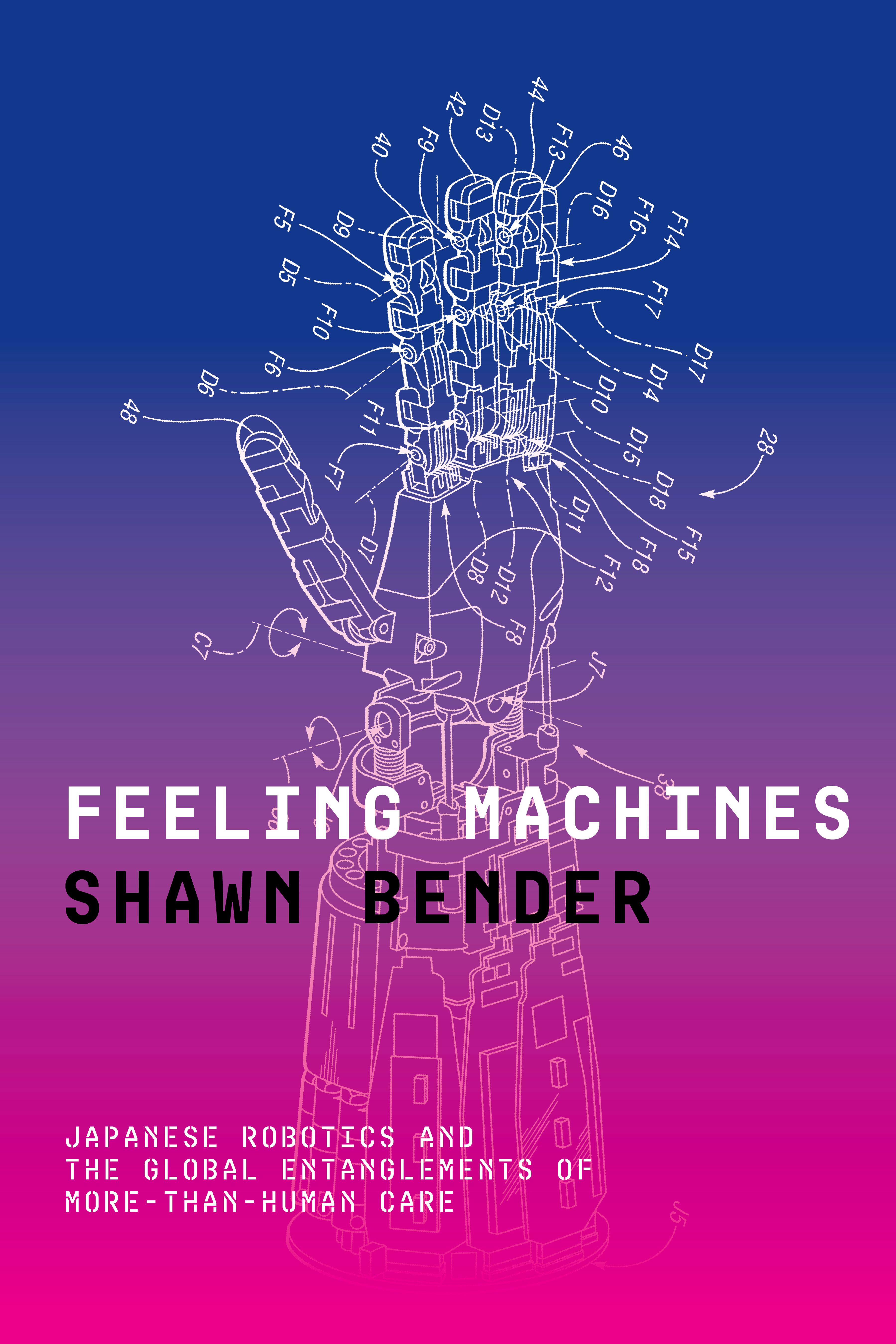
Feeling machines : Japanese robotics and the global entanglements of more-than-human care
In recent years, debates over healthcare have accompanied rapid advances in technology, from the expansion of telehealth services to artificial intelligence driven diagnostics. In this book, Shawn Bender delves into the world of Japanese robots engineered for care. Care robots (kaigo robotto) emerged early in the 21st century, when roboticists began converting assembly line technologies into responsive machines for older adults and people with disabilities. These robots are meant to be felt and programmed to feel. While some greet them with enthusiasm, others fear that they might replace a fundamentally human task. Based on fieldwork in Japan, Denmark, and Germany, Bender traces the emergence of care robots in Japan and examines their impact on therapeutic practice around the world.
Social science scholarship on robotics tends to be either speculative—imagining life together with robots—or experimental—observing robot-human interaction in laboratories or through short-term field studies. Instead, Bender follows roboticists developing technologies in Japan, and travels with the robots themselves into everyday sites of care, tracking the integration of robots into institutional care and the connection of care practice to robotics development. By exploring the application of Japanese robotics across the globe, Feeling Machines highlights the entanglements of therapeutic practice and technological innovation in an age of more-than-human care.
eBook

Wild profusion
Wild Profusiontells the fascinating story of biodiversity conservation in Indonesia in the decade culminating in the great fires of 1997-98--a time when the country's environment became a point of concern for social and environmental activists, scientists, and the many fishermen and farmers nationwide who suffered from degraded environments and faced accusations that they were destroying nature. Celia Lowe argues that biodiversity, in 1990s Indonesia, implied a particular convergence of nature, nation, science, and identity that made Indonesians' mapping of the concept distinct within transnational practices of nature conservation at the time.
Lowe recounts the efforts of Indonesian biologists to document the species of the Togean Islands, to \"develop\" Togean people, and to turn this archipelago off the coast of Sulawesi into a national park. Indonesian scientists aspired to a conservation biology that was both internationally recognizable and politically effective in the Indonesian context. Simultaneously, Lowe describes the experiences of Togean Sama people who had their own understandings of nature and nation. To place Sama and scientist into the same conceptual frame, Lowe studies Sama ideas in the context of transnational thought rather than local knowledge.
In tracking the practice of conservation biology in a postcolonial setting,Wild Profusionexplores what in nature can count as important and for whom.
eBook

Farming and Language in Island Southeast Asia
Current portrayals of Island Southeast Asia (ISEA) over the past 5,000 years are dominated by discussion of the Austronesian “farming/language dispersal,” with associated linguistic replacement, genetic clines, Neolithic “packages,” and social transformations. The alternative framework that we present improves our understanding of the nature of the Austronesian language dispersal from Taiwan and better accords with the population genetics, archaeological evidence, and crop domestication histories for ISEA. Genetic studies do not demonstrate that the dispersal of Austronesian languages through ISEA was associated with large‐scale displacement, replacement, or absorption of preexisting populations. Linguistic phylogenies for Austronesian languages do not support staged movement from Taiwan through the Philippines into Indo‐Malaysia; in addition, the lexical and grammatical structure of many Austronesian languages suggests significant interaction with pre‐Austronesian languages and cultures of the region. Archaeological evidence, including domestication histories for major food plants, indicates that ISEA was a zone of considerable maritime interaction before the appearance of Austronesian languages. Material culture dispersed through ISEA from multiple sources along a mosaic of regional networks. The archaeological evidence helps us to shape a new interpretative framework of the social and historical processes that more parsimoniously accounts for apparent discrepancies between genetic phylogenies and linguistic distributions and allows for more nuanced models of the dispersal of technologies and societies without reference to the farming/language dispersal hypothesis.
Journal Article