
Catalogue Search | MBRL


Are you sure you want to remove the book from the shelf?

{{itemTitle}}
8,022
result(s) for
"Social justice in literature."
Sort by:


Ethnic Studies and Youth Literature
Brings together scholars and practitioners to present
an ethnic studies framework for studying and teaching youth
literature.
For decades, youth literature has been reckoning with its
role in systemic racism and oppression. In this landmark edited
volume, Marilisa Jiménez García and Sonia Alejandra
Rodríguez assemble a cadre of well-known women of color
scholars and practitioners to make a case for ethnic studies as
a path for pursuing racial justice in the field. Ethnic
studies, they argue, demands that we go beyond seeing race,
ethnicity, culture, and diversity as questions of identity and
difference. Instead, it shows us how marginalized
positionalities create epistemologies that shape our
understanding of age, craft, genre, and knowledge production.
Multidisciplinary and intersectional in its approach,
Ethnic Studies and Youth Literature analyzes US
imperialism through the lens of youth literature and vice
versa, shedding light on the roots of our current culture wars
and curriculum battles.
eBook

Howling for justice : new perspectives on Leslie Marmon Silko's Almanac of the dead
\"This book is a collection of essays by international scholars celebrating the twentieth anniversary of Silko's novel, Almanac of the Dead, and addressing those ongoing demands for justice. It offers new responses to Almanac's sociocultural, historical, and political contexts, and includes a new interview with Silko in which she reflects on the twenty years since the novel's publication\"-- Provided by publisher.
Book

Fictions of Dignity
Over the past fifty years, debates about human rights have assumed an increasingly prominent place in postcolonial literature and theory. Writers from Salman Rushdie to Nawal El Saadawi have used the novel to explore both the possibilities and challenges of enacting and protecting human rights, particularly in the Global South. InFictions of Dignity, Elizabeth S. Anker shows how the dual enabling fictions of human dignity and bodily integrity contribute to an anxiety about the body that helps to explain many of the contemporary and historical failures of human rights, revealing why and how lives are excluded from human rights protections along the lines of race, gender, class, disability, and species membership. In the process, Anker examines the vital work performed by a particular kind of narrative imagination in fostering respect for human rights. Drawing on phenomenology, Anker suggests how an embodied politics of reading might restore a vital fleshiness to the overly abstract, decorporealized subject of liberal rights.
Each of the novels Anker examines approaches human rights in terms of limits and paradoxes. Rushdie'sMidnight's Childrenaddresses the obstacles to incorporating rights into a formerly colonized nation's legal culture. El Saadawi'sWoman at Point Zerotakes up controversies over women's freedoms in Islamic society. InDisgrace, J. M. Coetzee considers the disappointments of post-apartheid reconciliation in South Africa. And inThe God of Small Things, Arundhati Roy confronts an array of human rights abuses widespread in contemporary India. Each of these literary case studies further demonstrates the relevance of embodiment to both comprehending and redressing the failures of human rights, even while those narratives refuse simplistic ideals or solutions.
eBook

World literature and dissent
\"World Literature and Dissent reconsiders the role of dissent in the contemporary aesthetics of globalisation. Bringing together scholars from postcolonial and world literatures, the collection addresses themes of knowledge and the epistemology of ignorance, the rhetoric of innocence and enchantment, translation and global justice, and the aesthetics of revolution. The essays reframe the field of contemporary world literature in relation to dissenting politics and aesthetics, asking how we might theorise a world literature that cultivates radical thought and supports uncompromising resistance to the apparatuses of global inequality, furthers social justice and values human expression\"-- Provided by publisher.
Book

Abolition Time
How Black Atlantic literature can challenge conventions
and redefine literary scholarship Abolition Time
is an invitation to reenvision abolitionist justice through
literary studies. Placing critical race theory, queer theory,
critical prison studies, and antiprison activism in conversation
with an archive of Black Atlantic literatures of slavery, Jess A.
Goldberg reveals how literary studies can help undo carceral
epistemologies embedded in language and poetics.
Goldberg examines poetry, drama, and novels from the nineteenth
century through the twenty-first-such as William Wells Brown's
The Escape, Angelina Weld Grimké's Rachel, Toni
Morrison's A Mercy, and Claudia Rankine's
Citizen -to consider literature and literary scholarship's
roles in shaping societal paradigms. Focusing on how Black Atlantic
literature disrupts the grammar of law and order, they show how
these texts propose nonlinear theories of time that imagine a queer
relationality characterized by care rather than inheritance,
property, or biology.
Abolition Time offers a framework for thinking
critically about what is meant by the term justice in the
broadest and deepest sense, using close reading to inform the
question of abolishing prisons or the police and to think seriously
about the most fundamental questions at the heart of the
abolitionist movement.
eBook


Ethics and Children's Literature
Exploring the ethical questions posed by, in, and about children's literature, this collection examines the way texts intended for children raise questions of value, depict the moral development of their characters, and call into attention shared moral presuppositions. The essays in Part I look at various past attempts at conveying moral messages to children and interrogate their underlying assumptions. What visions of childhood were conveyed by explicit attempts to cultivate specific virtues in children? What unstated cultural assumptions were expressed by growing resistance to didacticism? How should we prepare children to respond to racism in their books and in their society?
Part II takes up the ethical orientations of various classic and contemporary texts, including 'prosaic ethics' in the Hundred Acre Wood, moral discernment in Narnia, ethical recognition in the distant worlds traversed by L'Engle, and virtuous transgression in recent Anglo-American children's literature and in the emerging children's literature of 1960s Taiwan. Part III's essays engage in ethical criticism of arguably problematic messages about our relationship to nonhuman animals, about war, and about prejudice. The final section considers how we respond to children's literature with ethically focused essays exploring a range of ways in which child readers and adult authorities react to children's literature. Even as children's literature has evolved in opposition to its origins in didactic Sunday school tracts and moralizing fables, authors, parents, librarians, and scholars remain sensitive to the values conveyed to children through the texts they choose to share with them.
eBook

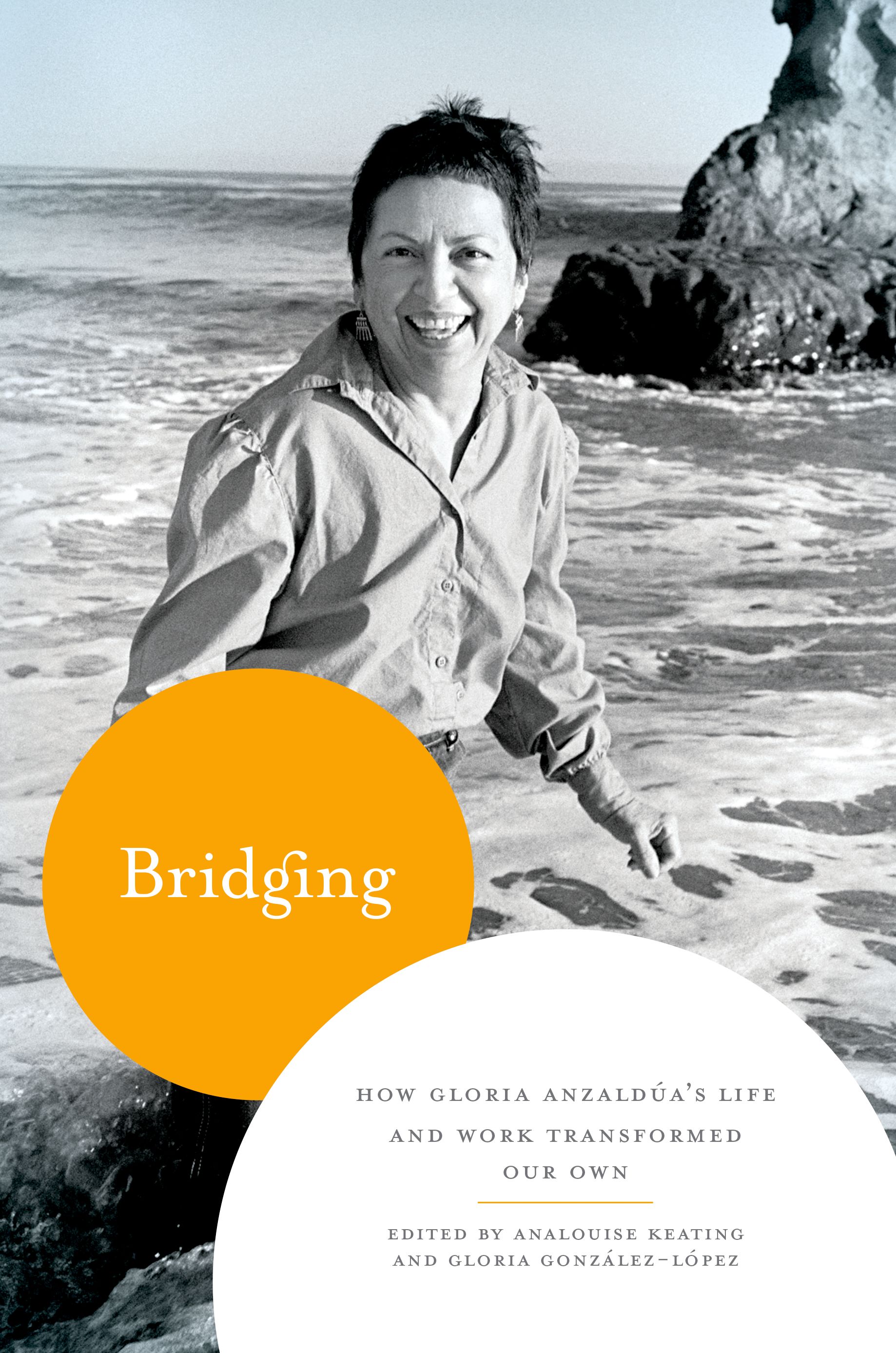
Bridging
The inspirational writings of cultural theorist and social justice activist Gloria Anzaldúa have empowered generations of women and men throughout the world. Charting the multiplicity of Anzaldúa's impact within and beyond academic disciplines, community trenches, and international borders, Bridging presents more than thirty reflections on her work and her life, examining vibrant facets in surprising new ways and inviting readers to engage with these intimate, heartfelt contributions. Bridging is divided into five sections: The New Mestizas: \"transitions and transformations\"; Exposing the Wounds: \"You gave me permission to fly in the dark\"; Border Crossings: Inner Struggles, Outer Change; Bridging Theories: Intellectual Activism with/in Borders; and \"Todas somos nos/otras\": Toward a \"politics of openness.\" Contributors, who include Norma Elia Cantú, Elisa Facio, Shelley Fisher Fishkin, Aída Hurtado, Andrea Lunsford, Denise Segura, Gloria Steinem, and Mohammad Tamdgidi, represent a broad range of generations, professions, academic disciplines, and national backgrounds. Critically engaging with Anzaldúa's theories and building on her work, they use virtual diaries, transformational theory, poetry, empirical research, autobiographical narrative, and other genres to creatively explore and boldly enact future directions for Anzaldúan studies. A book whose form and content reflect Anzaldúa's diverse audience, Bridging perpetuates Anzaldúa's spirit through groundbreaking praxis and visionary insights into culture, gender, sexuality, religion, aesthetics, and politics. This is a collection whose span is as broad and dazzling as Anzaldúa herself.
eBook