
Catalogue Search | MBRL


Are you sure you want to remove the book from the shelf?

{{itemTitle}}
3,233
result(s) for
"Social media United States History."
Sort by:


Golden State, Golden Youth
Seen as a land of sunshine and opportunity, the Golden State was a mecca for the post-World War II generation, and dreams of the California good life came to dominate the imagination of many Americans in the 1950s and 1960s.Nowhere was this more evident than in the explosion of California youth images in popular culture.
eBook

Telethons : spectacle, disability, and the business of charity
\"Marshaling two decades' worth of painstaking research, Paul Longmore's book provides the first cultural history of the telethon, charting its rise and profiling the key figures--philanthropists, politicians, celebrities, corporate sponsors, and recipients--involved\"-- Provided by publisher.
Book

Golden State, Golden Youth
Seen as a land of sunshine and opportunity, the Golden State was a mecca for the post-World War II generation, and dreams of the California good life came to dominate the imagination of many Americans in the 1950s and 1960s. Nowhere was this more evident than in the explosion of California youth images in popular culture. Disneyland, television shows such asThe Mickey Mouse Club,Gidgetand other beach movies, the music of the Beach Boys--all these broadcast nationwide a lifestyle of carefree, wholesome fun supposedly enjoyed by white, middle-class, suburban young people in California.Tracing the rise of the California teen as a national icon, Kirse May shows how idealized images of a suburban youth culture soothed the nation's postwar nerves while denying racial and urban realities. Unsettling challenges to this mass-mediated picture began to arise in the mid-1960s, however, with the Free Speech Movement's campus revolt in Berkeley and race riots in Watts. In his 1966 campaign for the governorship of California, Ronald Reagan transformed the backlash against the \"dangerous\" youths who fueled these actions into political triumph. As May notes, Reagan's victory presaged a rising conservatism across the nation.
eBook

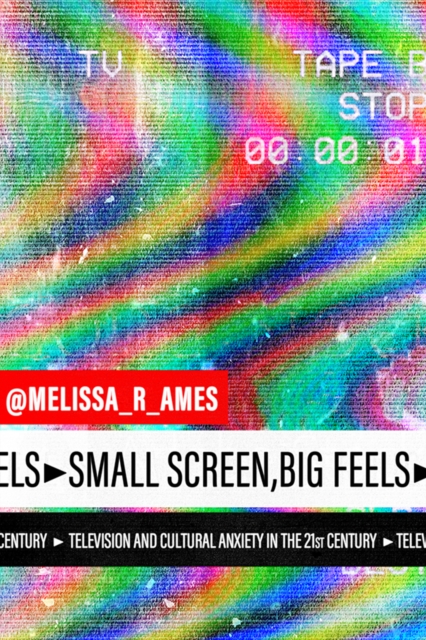
Small screen, big feels : television and cultural anxiety in the twenty-first century
While television has always played a role in recording and curating history, shaping cultural memory, and influencing public sentiment, the changing nature of the medium in the post-network era finds viewers experiencing and participating in this process in new ways. They skim through commercials, live tweet press conferences and award shows, and tune into reality shows to escape reality. This new era, defined by the heightened anxiety and fear ushered in by 9/11, has been documented by our media consumption, production, and reaction.
In Small Screen, Big Feels, Melissa Ames asserts that TV has been instrumental in cultivating a shared memory of emotionally charged events unfolding in the United States since September 11, 2001. She analyzes specific shows and genres to illustrate the ways in which cultural fears are embedded into our entertainment in series such as The Walking Dead and Lost or critiqued through programs like The Daily Show. In the final section of the book, Ames provides three audience studies that showcase how viewers consume and circulate emotions in the post-network era: analyses of live tweets from Shonda Rhimes's drama, How to Get Away with Murder (2010–2020), ABC's reality franchises, The Bachelor (2002–present) and The Bachelorette (2003–present), and political coverage of the 2016 Presidential Debates.
Though film has been closely studied through the lens of affect theory, little research has been done to apply the same methods to television. Engaging an impressively wide range of texts, genres, media, and formats, Ames offers a trenchant analysis of how televisual programming in the United States responded to and reinforced a cultural climate grounded in fear and anxiety.
eBook

Broken code : inside Facebook and the fight to expose its harmful secrets
\"A behind-the-scenes look at the manipulative tactics Facebook used to grow its business, how it distorted the way we connect online, and the company insiders who found the courage to speak out\"-- Provided by publisher.
BOOK


