
Catalogue Search | MBRL


Are you sure you want to remove the book from the shelf?

{{itemTitle}}
10,841
result(s) for
"Social problems United States."
Sort by:


Elusive Togetherness
Many scholars and citizens alike have counted on civic groups to create broad ties that bind society. Some hope that faith-based civic groups will spread their reach as government retreats. Yet few studies ask how, if at all, civic groups reach out to their wider community. Can religious groups--long central in civic America--create broad, empowering social ties in an unequal, diverse society? Over three years, Paul Lichterman studied nine liberal and conservative Protestant-based volunteering and advocacy projects in a mid-sized American city. He listened as these groups tried to create bridges with other community groups, social service agencies, and low-income people, just as the 1996 welfare reforms were taking effect. Counter to long-standing arguments, Lichterman discovered that powerful customs of interaction inside the groups often stunted external ties and even shaped religion's impact on the groups. Comparing groups, he found that successful bridges outward depend on group customs which invite reflective, critical discussion about a group's place amid surrounding groups and institutions. Combining insights from Alexis de Tocqueville, John Dewey, and Jane Addams with contemporary sociology, Elusive Togetherness addresses enduring questions about civic and religious life that elude the popular \"social capital\" concept. To create broad civic relationships, groups need more than the right religious values, political beliefs, or resources. They must learn new ways of being groups.
eBook

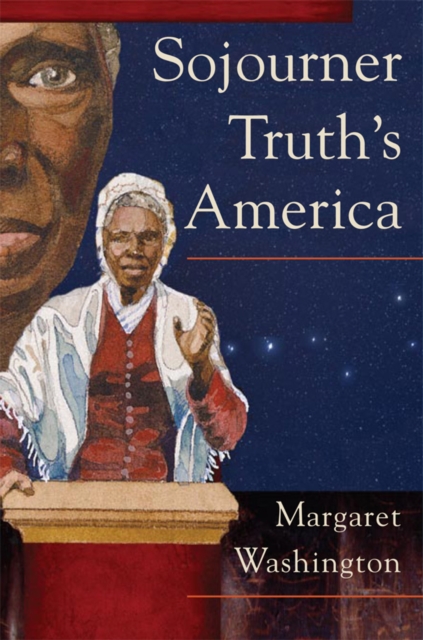
Sojourner Truth's America
This fascinating biography tells the story of nineteenth-century America through the life of one of its most charismatic and influential characters: Sojourner Truth. In an in-depth account of this amazing activist, Margaret Washington unravels Sojourner Truth's world within the broader panorama of African American slavery and the nation's most significant reform era. _x000B__x000B_Born into bondage among the Hudson Valley Dutch in Ulster County, New York, Isabella was sold several times, married, and bore five children before fleeing in 1826 with her infant daughter one year before New York slavery was abolished. In 1829, she moved to New York City, where she worked as a domestic, preached, joined a religious commune, and then in 1843 had an epiphany. Changing her name to Sojourner Truth, she began traveling the country as a champion of the downtrodden and a spokeswoman for equality by promoting Christianity, abolitionism, and women's rights._x000B__x000B_Gifted in verbal eloquence, wit, and biblical knowledge, Sojourner Truth possessed an earthy, imaginative, homespun personality that won her many friends and admirers and made her one of the most popular and quoted reformers of her times. Washington's biography of this remarkable figure considers many facets of Sojourner Truth's life to explain how she became one of the greatest activists in American history, including her African and Dutch religious heritage; her experiences of slavery within contexts of labor, domesticity, and patriarchy; and her profoundly personal sense of justice and intuitive integrity._x000B__x000B_Organized chronologically into three distinct eras of Truth's life, Sojourner Truth's America examines the complex dynamics of her times, beginning with the transnational contours of her spirituality and early life as Isabella and her embroilments in legal controversy. Truth's awakening during nineteenth-century America's progressive surge then propelled her ascendancy as a rousing preacher and political orator despite her inability to read and write. Throughout the book, Washington explores Truth's passionate commitment to family and community, including her vision for a beloved community that extended beyond race, gender, and socioeconomic condition and embraced a common humanity. For Sojourner Truth, the significant model for such communalism was a primitive, prophetic Christianity._x000B__x000B_Illustrated with dozens of images of Truth and her contemporaries, Sojourner Truth's America draws a delicate and compelling balance between Sojourner Truth's personal motivations and the influences of her historical context. Washington provides important insights into the turbulent cultural and political climate of the age while also separating the many myths from the facts concerning this legendary American figure.
eBook

This land is their land : reports from a divided nation
Denounces the twenty-first-century's first political decade as the cruelest in memory, in a report that analyzes such modern challenges as political and corporate corruption, the widening economic gap, and a rise in extreme conservatism.
Book

The social theory of W.E.B. Du Bois
W. E. B. Du Bois was a political and literary giant of the 20th century, publishing over twenty books and thousands of essays and articles throughout his life. In The Social Theory of W. E. B. Du Bois, editor Phil Zuckerman assembles Du Bois's work from a wide variety of sources, including articles Du Bois published in newspapers, speeches he delivered, selections from well-known classics such as The Souls of Black Folk and Darkwater, and lesser-known, hard-to-find material written by this revolutionary social theorist. This book offers an excellent introduction to the sociological theory of one of the 20th century's intellectual beacons.
eBook


Saving America?
On January 29, 2001, President George W. Bush signed an executive order creating the White House Office of Faith-Based and Community Initiatives. This action marked a key step toward institutionalizing an idea that emerged in the mid-1990s under the Clinton administration--the transfer of some social programs from government control to religious organizations. However, despite an increasingly vocal, ideologically charged national debate--a debate centered on such questions as: What are these organizations doing? How well are they doing it? Should they be supported with tax dollars?--solid answers have been few. In Saving America? Robert Wuthnow provides a wealth of up-to-date information whose absence, until now, has hindered the pursuit of answers. Assembling and analyzing new evidence from research he and others have conducted, he reveals what social support faith-based agencies are capable of providing. Among the many questions he addresses: Are congregations effective vehicles for providing broad-based social programs, or are they best at supporting their own members? How many local congregations have formal programs to assist needy families? How much money do such programs represent? How many specialized faith-based service agencies are there, and which are most effective? Are religious organizations promoting trust, love, and compassion? The answers that emerge demonstrate that American religion is helping needy families and that it is, more broadly, fostering civil society. Yet religion alone cannot save America from the broad problems it faces in providing social services to those who need them most. Elegantly written, Saving America? represents an authoritative and evenhanded benchmark of information for the current--and the coming--debate.
eBook

Religious interests in community conflict : beyond the culture wars
This volume investigates some of the most visible issues in American politics today, including gay marriage and race, along with ongoing concerns that often fly below the radar of the mass media, such as healthcare and homelessness. The book uncovers and explores the political motivations, effectiveness, and interplay of organized religious interests as they confront public problems in their local communities.
eBook