
Catalogue Search | MBRL


Are you sure you want to remove the book from the shelf?

{{itemTitle}}
143,178
result(s) for
"Social protests"
Sort by:


Protest on the Fly: Toward a Theory of Spontaneity in the Dynamics of Protest and Social Movements
This article reexamines spontaneity as an important, albeit neglected, mechanism in collective action dynamics, and elaborates on its operation and effects in protest events and social movements. We do not presume that spontaneity is routinely at play in all collective actions. Rather, based on our grounded analysis of historical and ethnographic data, we contend that spontaneity is triggered by certain conditions: nonhierarchical organization; uncertain/ambiguous moments and events; behavioral/emotional priming; and certain ecological/spatial factors. We conclude by elaborating why the activation of spontaneous actions matters in shaping the course and character of protest events and movements, and we suggest that spontaneity be resuscitated in the study of collective action and everyday life more generally.
Journal Article

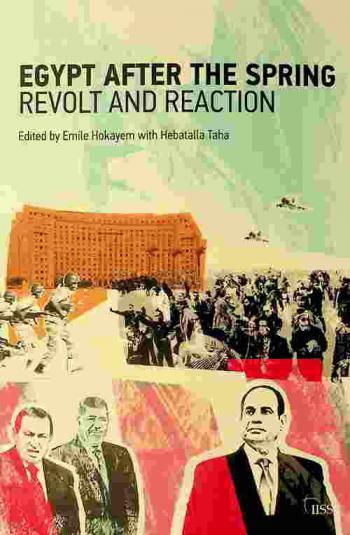
Chronicles of the Egyptian Revolution and its Aftermath : 2011-2016
\"This book is about the Egyptian people's 2011 Revolution for freedom, justice, and human dignity, and its aftermath. The Revolution succeeded in toppling the authoritarian Mubarak regime in less than three weeks. It was then co-opted by the Muslim Brotherhood through Egypt's first free and fair elections in 2012, which was in turn crushed in 2013 by a popularly supported military regime whose practices of repression negatively impacted the justice system and human rights. The problems facing the country and its people are daunting, particularly economic, demographic, and social pressures. The contextual analysis of these and other historic and contemporary issues give the reader a comprehensive understanding of what has occurred in the last five years and an insight into where the country is heading. Even though the Revolution has been suppressed and the promise of democracy shunted aside, the majority of the Egyptian people continue to hope for the unachieved dreams of social justice, human dignity, and freedom. Egypt's geopolitical importance makes it indispensable to the stability of the Middle East, and thus important to the world.\" -- Publisher's website.
BOOK

From Protest to Agenda Building: Description Bias in Media Coverage of Protest Events in Washington, D.C
Social movements often seek to draw attention to issues they deem important by organizing public demonstrations with the aim of attracting mass media coverage. But only a small proportion of all public demonstrations receives any media attention. This article asks whether even the minimal coverage that demonstrations receive reveal any influence of social movements in shaping how issues are framed by the mass media. Analyzing newspaper and television news stories on Washington, D.C. protests held during 1982 and 1991, we ask whether news reports on protests are framed in ways consistent with the aims of protesters. Do demonstrators receive media coverage that highlights the issues about which they are concerned, or does coverage focus on the protest event itself, to the exclusion of the social issues that movements target? Our results support much of the surmising among media scholars, that even when movements succeed at obtaining the attention of mass media outlets, media reports portray protests in ways that may undermine social movement agendas. Despite this obstacle to communicating protest messages through demonstrations, movements engage in other forms of communication that can affect public interpretations of mass media frames.
Journal Article
Demonstrating Power: How Protest Persuades Political Representatives
How do public opinion signals affect political representatives' opinion formation? To date, we have only limited knowledge about this essential representative process. In this article, we theorize and examine the signaling strength of one type of societal signal: protest. We do so by means of an innovative experiment conducted among Belgian national and regional politicians. Elected officials were exposed to manipulated television news items covering a protest demonstration. Following Tilly's previously untested WUNC claim, four features of the event were manipulated: the demonstrators' worthiness, unity, numerical strength, and commitment. We argue that these protest features present elected officials with useful cues about what (a segment of) the public wants. We find that these cues affect elected officials' beliefs. The salience they attach to the protest issue, the position they take, and their intended actions all change as a consequence of exposure. The size of a protest event (numbers) and whether the protesters agree among themselves (unity) are the most persuasive protest factors. The effects of the protest signals come on top of strong receiver effects. We find no evidence that elected officials' predispositions moderate the effects of the protest features.
Journal Article


Who Protests in Greece? Mass Opposition to Austerity
The widespread opposition to unprecedented austerity measures in Greece provides a unique opportunity to study the causes of mass protest. This article reports the results of a survey of the adult population in which two-thirds of the respondents supported protest and 29 per cent reported actual involvement in strikes and/or demonstrations during 2010. Relative deprivation is a significant predictor of potential protest, but does not play any role in terms of who takes part in strikes or demonstrations. Previous protest participation emerges as a key predictor of actual protest. This study seeks to place these results within a comparative context, contrasting Greece with other countries facing similar challenges, and discusses the implications for the future of austerity politics.
Journal Article

Cairo : memoir of a city transformed
Presents a firsthand account of the Egyptian revolution that traces the passionate, violent eighteen-day effort to overthrow the Mubarak regime, recalls the author's peaceful childhood, and appraises what the future holds for the country.
Book
The Use of Disruptive Tactics in Protest as as Trade-Off: The Role of Social Movement Claims
In protest, activists sometimes turn to disruptive and violent tactics to meet their goals. Doing so, however, can also undermine support for their claims. We argue that how protestors weigh this trade-off depends on their targets and the extent to which their claims appeal to diverse constituencies, which then factors greatly into their choice of protest tactics. We complement past work that suggests that forces of professionalization and counterpressure alter activists' tendency to use violent and disruptive tactics. With data on over 23,000 protest events in the United States between 1960 and 1995, we find that protest events characterized by broadly resonating claims are more likely to employ tactics that are disruptive but nonviolent. By contrast, events espousing narrower claims are more likely to employ disruptive tactics that are also violent. Moreover, when governmental entities are targeted, protests are less likely to witness the use of both violent and nonviolent disruptive tactics. We discuss the implications of our results for social movement theory and the dynamics of collective violence.
Journal Article