
Catalogue Search | MBRL


Are you sure you want to remove the book from the shelf?

{{itemTitle}}
50
result(s) for
"Social sciences -- Problems, exercises, etc"
Sort by:

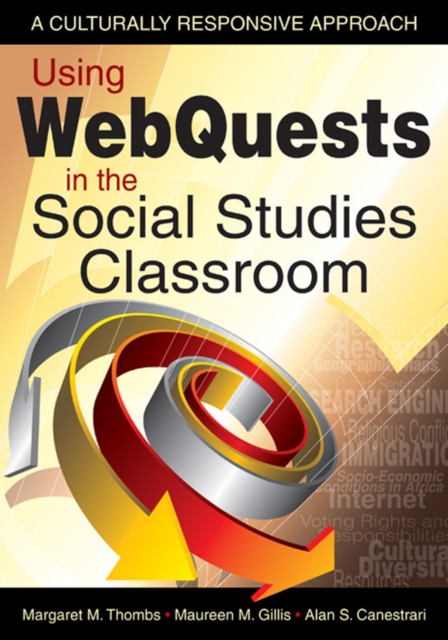
Using webquests in the social studies classroom : a culturally responsive approach
This unique guide offers practical strategies for using WebQuests to optimize learning in social studies, foster student inquiry and higher-level thinking, and promote greater intercultural understanding.
eBook
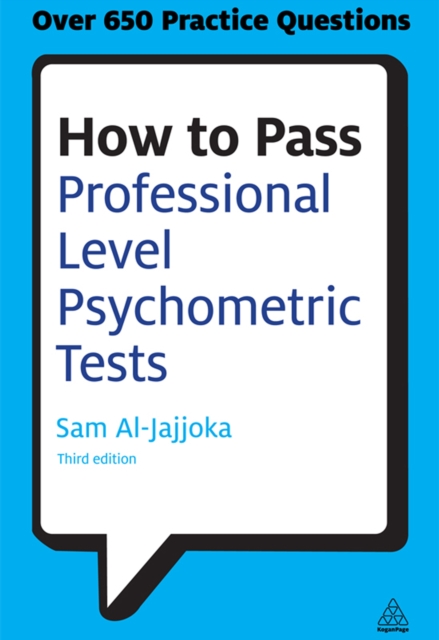
How to Pass Professional Level Psychometric Tests
How to Pass Professional Level Psychometric Tests contains a wealth of practice questions to help prepare you for exactly the type of tests you will face in recruitment assessments for professional careers. A staggering 650 questions and answers, consisting of 20 timed practice tests reflect real life exams favoured by the most popular organisations. It is particularly useful for those facing aggressive psychometric tests, particularly candidates for careers in IT, management and finance. Also including practice questions for common verbal reasoning and numerical tests, How to Pass Professional Level Psychometric Tests provides essential help and preparation to improve your score and gain the competitive edge over the competition.
eBook

A toolkit of motivational skills : how to help others reach for change
A Toolkit of Motivational Skills, Third Edition , draws on the latest research to show how the Motivational Interviewing approach can be effectively utilized to draw out and sustain an individual's internal motivation for behavioral change.
eBook

Indo-European Linguistics
The Indo-European language family consists of many of the modern and ancient languages of Europe, India and Central Asia, including Latin, Greek, Sanskrit, Russian, German, French, Spanish and English. Spoken by an estimated three billion people, it has the largest number of native speakers in the world today. This textbook provides an accessible introduction to the study of the Indo-European languages. It clearly sets out the methods for relating the languages to one another, presents an engaging discussion of the current debates and controversies concerning their classification, and offers sample problems and suggestions for how to solve them. Complete with a comprehensive glossary, almost 100 tables in which language data and examples are clearly laid out, suggestions for further reading, discussion points, and a range of exercises, this text will be an essential toolkit for all those studying historical linguistics, language typology and the Indo-European languages for the first time.
eBook

Therapeutic Effects of a WeChat Mini-Program on Metabolic Dysfunction–Associated Fatty Liver Disease: Randomized Controlled Trial
For patients with metabolic dysfunction-associated fatty liver disease (MAFLD), weight loss is advised but challenging in practice. In China, there is a pronounced shortage of tailored digital lifestyle interventions for this population.
This study aimed to assess the effects of a WeChat mini-program-delivered lifestyle intervention on weight loss and hepatic steatosis among individuals with MAFLD who were overweight or obese.
Adults who are overweight or obese and have clinically diagnosed MAFLD with transient elastography examination were enrolled in this prospective randomized controlled trial. Patients were randomly assigned to receive either WeChat mini-program management (intervention group) or standard care (control group) at a 1:1 ratio. The intervention was structured around the development and implementation of personalized diet and exercise plans, supplemented by guided exercise video courses and reinforced through continuous monitoring and informational support. Body weight and clinical parameters were assessed at baseline and then at 6 months.
A total of 89 patients met the inclusion criteria and were randomly assigned to the intervention group (n=45) or control group (n=44). Among the 89 patients with MAFLD, 60% (27/45) of them achieved a weight loss of ≥5%, and 24.4% (11/45) of them had a weight loss of ≥10% in the intervention group, which was greater than those in the control group (27/45 vs 7/44; relative risk [RR] 3.771, 95% CI 1.836-7.748; P<.001; 11/45 vs 3/44, RR 3.585, 95% CI 1.072-11.988; P=.02). Importantly, patients receiving the intervention were significantly more likely to achieve a ≥10% reduction or normalization of controlled attenuation parameter (CAP) than those in the control group (26/45 vs 14/44; RR 1.816, 95% CI 1.102-2.992; P=.01). After adjusting for key baseline covariates, multivariate analysis confirmed the intervention's positive effect on achieving a weight loss of ≥5% (OR [odds ratio] 8.380, 95% CI 2.886-24.331; P<.001) of ≥10% (OR 4.612, 95% CI 1.138-18.686; P=.03), as well as on CAP reduction of ≥10 % or normalization (OR 2.853, 95% CI 1.092-7.456; P=.03). In parallel, the intervention group presented greater reductions in liver enzymes (alanine aminotransferase, aspartate aminotransferase, and γ-glutamyl transpeptidase) and metabolic parameters (fasting insulin, hemoglobin A1c, and triglyceride) than the control group (all P<.05). According to the fibrosis assessment, only the FibroScan-aspartate aminotransferase score decreased more in the intervention group than in the control group (median difference -0.06, 95% CI -0.13 to -0.01; P=.02), as compared to other non-invasive indicators.
Readily scalable in primary care and varied-resource settings, our WeChat mini-program-based intervention extends beyond weight loss to reduce hepatic steatosis and improve metabolic parameters, thereby addressing the critical gap in targeted MAFLD management in China with a low-cost model for high-burden populations. Nevertheless, larger future studies are needed to confirm these findings with greater precision and assess long-term sustainability.
Journal Article

Homework Assignments and Handouts for LGBTQ+ Clients
Featuring over 70 affirming interventions in the form of homework assignments, handouts, and activities, this comprehensive volume helps novice and experienced counselors support LGBTQ+ community members and their allies.
Each chapter includes an objective, indications and contraindications, a case study, suggestions for follow-up, professional resources, and references. The book’s social justice perspective encourages counselors to hone their skills in creating change in their communities while helping their clients learn effective coping strategies in the face of stress, bullying, microaggressions, and other life challenges. The volume also contains a large section on training allies and promoting greater cohesion within LGBTQ+ communities.
Counseling and mental health services for LGBTQ+ clients require between-session activities that are clinically focused, evidence based, and specifically designed for one or more LGBTQ+ sub-populations. This handbook gathers together the best of such LGBTQ+ clinically focused material. As such, it will appeal both to students learning affirmative LGBTQ+ psychotherapy/counseling and to experienced practitioners. Offering practical tools used by clinicians worldwide, the volume is particularly useful for courses in clinical and community counseling, social work, and psychology. Those new to working with LGBTQ+ clients will appreciate the book’s accessible foundation to guide interventions.
eBook

The Role of Schools in Obesity Prevention
Mary Story, Karen Kaphingst, and Simone French argue that U.S. schools offer many opportunities for developing obesity-prevention strategies by providing more nutritious food, offering greater opportunities for physical activity, and providing obesity-related health services. Meals at school are available both through the U.S. Department of Agriculture's school breakfast and lunch programs and through \"competitive foods\" sold à la carte in cafeterias, vending machines, and snack bars. School breakfasts and school lunches must meet federal nutrition standards, but competitive foods are exempt from such requirements. And budget pressures force schools to sell the popular but nutritionally poor foods à la carte. Public discomfort with the school food environment is growing. But can schools provide more healthful food options without losing money? Limited evidence shows that they can. Although federal nutrition regulations are inadequate, they permit state and local authorities to impose additional restrictions. And many are doing so. Some states limit sales of nonnutritious foods, and many large school districts restrict competitive foods. Several interventions have changed school food environments, for example, by reducing fat content of food in vending machines and making more fruits and vegetables available. Interventions are just beginning to target the availability of competitive foods. Other pressures can also compromise schools' efforts to encourage physical activity. As states use standardized tests to hold schools and students academically accountable, physical education and recess have become a lower priority. But some states are now mandating and promoting more physical activity in schools. School health services can also help address obesity by providing screening, health information, and referrals to students, especially low-income students, who are at high risk of obesity, tend to be underinsured, and may not receive health services elsewhere.
Journal Article
Modern Social Work Practice
Modern Social Work Practice is an interactive book designed to provide readers with an opportunity to engage with key aspects of current social work practice. It also provides an excellent digest of the significant literature. Each chapter is introduced with an activity or exercise designed to aid student learning in discrete aspects of practice, building up to a complete curriculum for practice learning. The book builds upon the success and style of Social Work Practice (1993) and The New Social Work Practice (1998). Mark Doel and Steven M. Shardlow have shaped the book to take account of the National Occupational Standards for Social Work, aiming to provide a creative, practical and up-to-date resource for teaching and learning in line with current practices.
Contents: Introduction. Part I Foundations of practice: new opportunities for practice learning: Knowing the service user and carer; Knowing your self; Knowing the role. Part II Direct practice: inter-professional learning and practice: Preparation; Generating options; Making assessments in partnership; Working in and with groups; Working in difficult situations. Part III Agency practice: creative practice and procedural requirements; Making priorities; Managing resources; Accountability; Whistleblowing. Part IV Themes of practice: evidence-based practice; Working with risk; Anti-oppressive practice; Law-informed practice; Generalist and specialist practice; Comparative practice; Appendix: National Occupational Standards; Glossaries; Bibliography; Index.
Mark Doel is Research Professor of Social Work at Sheffield Hallam University, England. He is co-editor of Groupwork Journal and author of many books on practice teaching and learning, groupwork and task-centred practice. He has directed a university undergraduate social work programme, and has fourteen years’ experience as a practice teacher (student supervisor), working in a variety of social work settings, including the United States. Steven M. Shardlow is Professor of Social Work at the University of Salford, England and is Professor II at Bodø University College, Norway. He is Director of Salford Centre for Social Work Research and edits the Journal of Social Work. Previously, he has directed a university postgraduate social work programme; managed a multi-disciplinary team of health and social care practitioners, and practised as a field and residential social worker.
eBook
Human Behavior and the Social Environment, Micro Level
Unique to Human Behavior and the Social Environment, Micro Level is the focus on trauma and resilience in its exploration of human behavior across the life span. Illustrations are drawn from the arts as well as recent brain research from recent biological research.
eBook