
Catalogue Search | MBRL


Are you sure you want to remove the book from the shelf?

{{itemTitle}}
48,124
result(s) for
"Social sciences -- Statistical methods"
Sort by:


Applying the Rasch Model
Recognised as the most influential publication in the field, ARM facilitates deep understanding of the Rasch model and its practical applications. The authors review the crucial properties of the model and demonstrate its use with examples across the human sciences. Readers will be able to understand and critically evaluate Rasch measurement research, perform their own Rasch analyses and interpret their results. The glossary and illustrations support that understanding, and the accessible approach means that it is ideal for readers without a mathematical background.
Intended as a text for graduate courses in measurement, item response theory, (advanced) research methods or quantitative analysis taught in psychology, education, human development, business and other social and health sciences. Professionals in these areas will also appreciate the book's accessible introduction.
Highlights of the new edition include:
More learning tools to strengthen readers' understanding including chapter introductions, boldfaced key terms, chapter summaries, activities and suggested readings.
Greater emphasis on the use of R packages; readers can download the R code from the Routledge website.
Explores the distinction between numerical values, quantity and units, to understand the measurement and the role of the Rasch logit scale (Chapter 4).
A new four-option data set from the IASQ (Instrumental Attitude toward Self-assessment Questionnaire) for the Rating Scale Model (RSM) analysis exemplar (Chapter 6).
Clarifies the relationship between Rasch measurement, path analysis and SEM, with a host of new examples of Rasch measurement applied across health sciences, education and psychology (Chapter 10).
eBook

The uncounted
\"What we count matters, and in a world where policies and decisions are underpinned by numbers, statistics and data, if you're not counted, you don't count. In this book, Alex Cobham argues that systematic gaps in economic and demographic data not only lead us to understate a wide range of damaging inequalities, but also to actively exacerbate them\"-- Provided by publisher.
Book

Structural Equation Modeling with Mplus
[This book] reviews the basic concepts and applications of SEM using Mplus Version 6. ... The first two chapters introduce the fundamental concepts of SEM and important basics of the Mplus program. The remaining chapters focus on SEM applications and include a variety of SEM models presented within the context of three sections: Single-group analyses, Multiple-group analyses, and other important topics, the latter of which includes the multitrait-multimethod, latent growth curve, and multilevel models. (DIPF/Orig.).
eBook


Data mining for the social sciences
We live in a world of big data: the amount of information collected on human behavior each day is staggering, and exponentially greater than at any time in the past. Additionally, powerful algorithms are capable of churning through seas of data to uncover patterns. Providing a simple and accessible introduction to data mining, Paul Attewell and David B. Monaghan discuss how data mining substantially differs from conventional statistical modeling familiar to most social scientists. The authors also empower social scientists to tap into these new resources and incorporate data mining methodologies in their analytical toolkits. Data Mining for the Social Sciences demystifies the process by describing the diverse set of techniques available, discussing the strengths and weaknesses of various approaches, and giving practical demonstrations of how to carry out analyses using tools in various statistical software packages.
eBook

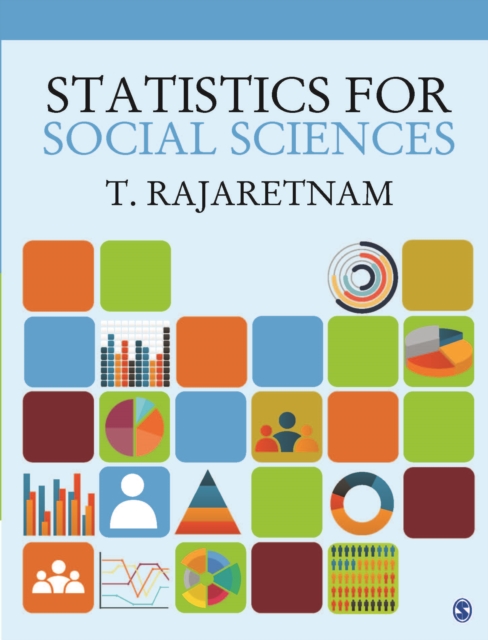
Statistics for social sciences
A comprehensive guide to the practical applications of statistics in social sciences This book brings out the relevance of statistical tools and methods in social sciences. Describing the various statistical techniques, it highlights their purpose and application along with a brief overview on how to interpret results and draw inferences. Topical and up-to-date, it examines: * different types of statistical variables and their treatment * tabulation and graphical presentation of data * theoretical distributions and common parametric and non-parametric tests, including analysis of variance and correlation ratio * linear regression including checking for violation of assumptions, transformations of variables and predictions * inequality measures such as Lorenz curve, Gini coefficient, dissimilarity index and human development index among others. It will be indispensable for students and scholars of statistics, econometrics, psychology and those interested in the application of statistics in social sciences.
eBook

Multivariate analysis for the biobehavioral and social sciences
An insightful guide to understanding and visualizing multivariate statistics using SAS®, STATA®, and SPSS® Multivariate Analysis for the Biobehavioral and Social Sciences: A Graphical Approach outlines the essential multivariate methods for understanding data in the social and biobehavioral sciences. Using real-world data and the latest software applications, the book addresses the topic in a comprehensible and hands-on manner, making complex mathematical concepts accessible to readers. The authors promote the importance of clear, well-designed graphics in the scientific process, with visual representations accompanying the presented classical multivariate statistical methods . The book begins with a preparatory review of univariate statistical methods recast in matrix notation, followed by an accessible introduction to matrix algebra. Subsequent chapters explore fundamental multivariate methods and related key concepts, including: Factor analysis and related methods Multivariate graphics Canonical correlation Hotelling's T-squared Multivariate analysis of variance (MANOVA) Multiple regression and the general linear model (GLM) Each topic is introduced with a research-publication case study that demonstrates its real-world value. Next, the question \"how do you do that?\" is addressed with a complete, yet simplified, demonstration of the mathematics and concepts of the method. Finally, the authors show how the analysis of the data is performed using Stata®, SAS®, and SPSS®. The discussed approaches are also applicable to a wide variety of modern extensions of multivariate methods as well as modern univariate regression methods. Chapters conclude with conceptual questions about the meaning of each method; computational questions that test the reader's ability to carry out the procedures on simple datasets; and data analysis questions for the use of the discussed software packages. Multivariate Analysis for the Biobehavioral and Social Sciences is an excellent book for behavioral, health, and social science courses on multivariate statistics at the graduate level. The book also serves as a valuable reference for professionals and researchers in the social, behavioral, and health sciences who would like to learn more about multivariate analysis and its relevant applications.
eBook