
Catalogue Search | MBRL


Are you sure you want to remove the book from the shelf?

{{itemTitle}}
491
result(s) for
"Social stratification Fiction"
Sort by:

Freefall
Cam's eager to leave Earth with the rest of the elite 1% until he connects with one of the 99%, Sofie, and joins her in the fight for Lowerworld rights.
Book

Mary Shelley's The Last Man: Existentialism and IR meet the post-apocalyptic pandemic novel
Mary Shelley mined the ideas of international thought to help develop three new subgenres of modern political science fiction (‘poliscifi’): post-apocalyptic, existential, and dystopian. Her two great works of poliscifi, Frankenstein (1818), and The Last Man (1826) – confront the social problems that arise from humanity's technological and cultural interventions in the wider environment. This article recovers The Last Man not only as the first modern post-apocalyptic pandemic novel, but also as an important source for the existentialist tradition, dystopian literature, and their intersections with what I call ‘Literary IR’. Comparing The Last Man with its probable sources and influences – from Thucydides and Vattel to Orwell and Camus – reveals Shelley's ethical and political concerns with the overlapping problems of interpersonal and international conflict. The Last Man dramatises how interpersonal conflict, if left unchecked, can spiral into the wider sociopolitical injustices of violence, war, and other human-made disasters such as species extinction, pandemics, and more metaphorical ‘existential’ plagues like loneliness and despair. Despite these dark themes and legacies, Shelley's authorship of the great plague novel of the nineteenth century also inspired a truly hopeful post-apocalyptic existential response to crisis and conflict in feminist poliscifi by Margaret Atwood, Octavia Butler, and Emily St. John Mandel.
Journal Article

Recognising the edible urban commons
Across urbanising Asia, edible commons surprise, contradict or challenge social norms of being in public. Their presence provokes new adjudications of approaching, governing and managing shared and living property, prompting thought on how public and private realms of life may converge into informal modes of co-governance for green place-making and flourishing. Starting with an anecdote of stealing in a short-lived urban farm in Singapore, I conceptualise edible urban commons as ‘active moments’. Specifically, they are active moments where a generative form of friction and fiction emerges, and as such, are allegorical packages that transmit latent capacities. I suggest that closer attention to forms of regulatory slippage in these spaces generates insight about latent capacities for transformation. Finally, I propose a preliminary set of latent capacities for transformative governance towards an ecological identity that supports edible commoning in cities.
在正在城市化的亚洲,可食用公共空间(edible commons)出人意料、与公共社会规范相冲突、并对其形成了挑战。它们的存在引发了对待、管理和治理共享生物资产的新观点,促使人们思考公共和私人生活领域如何融入非正式的共同治理模式,以促进绿色地方营造和繁荣。从一个短命的新加坡城市农场发生的偷窃事件开始,我将可食用城市公共空间概念化为“活跃时刻”。具体来说,它们处于活跃时刻,其中出现了摩擦和虚构的生成形式,因此,是传递潜在能力的寓言包。我建议更密切关注这些空间中的监管滑点形式,这可以让我们了解潜在的转型能力。最后,我提出了一套初步的潜在转型治理能力,以实现支持城市可食用公共空间的生态认同。
Journal Article

The record keeper
\"After World War III, Earth is in ruins, and the final armies have come to a reluctant truce. Everyone must obey the law--in every way--or risk shattering the fragile peace and endangering the entire human race. Arika Cobane is on the threshold of taking her place of privilege as a member of the Kongo elite after ten grueling years of training. But everything changes when a new student arrives speaking dangerous words of treason: What does peace matter if innocent lives are lost to maintain it? As Arika is exposed to new beliefs, she realizes that the laws she has dedicated herself to uphold are the root of her people's misery. If Arika is to liberate her people, she must unearth her fierce heart and discover the true meaning of freedom: finding the courage to live--or die--without fear.\"--Provided by publisher.
Book
On being Chinese and being complexified: Chinese IR as a transcultural project
While proponents of Chinese IR pursue a national school based on the identification of Chineseness with the Chinese national culture, its critics find a limited value in the ‘Chinese’ school as a mere temporary site for non-Western agencies. In contrast, I argue a distinctive and enduring Chinese IR is possible if it adopts a non-national and non-essentialised transcultural conception of Chineseness. This transcultural Chinese IR is based first on the contested and transcultural conception of Chineseness and second on the ontology of Chineseness as immanent humanity. Chineseness has been a fiction of a privileged descent from antiquity, which various contestants claimed by redefining the meaning of Chineseness. The shi elites, in particular, developed Chineseness as an aspirational ethos that propelled it to transcend its cultural boundary by incorporating foreign influences and thereby rendered Chineseness transcultural. Also, drawing on the ontological turn and Roy Wagner's work in anthropology, I show how Chineseness as immanent humanity transcends the category of culture, transforming the division of innate nature and constructed culture. The transcultural Chinese IR, with its own complexity and universal aspiration, uses its history and ontology to complexify both its tradition internally and other IR traditions externally, promoting the pluralisation of IR.
Journal Article

Rebel
As Day and Eden struggle with who they've become since their time in the Republic, a new danger creeps into the distance between them, and Eden finds himself drawn into Ross City's dark side, where his legendary brother may not be able to save him.
Book

Reform acts : Chartism, social agency, and the Victorian novel, 1832-1867
How Victorian novels imagined the idea of social agency.
Reform Acts offers a new approach to prominent questions raised in recent studies of the novel. By examining social agency from a historical rather than theoretical perspective, Chris R. Vanden Bossche investigates how particular assumptions involving agency came into being. Through readings of both canonical and noncanonical Victorian literature, he demonstrates that the Victorian tension between reform and revolution framed conceptions of agency in ways that persist in our own time.
Vanden Bossche argues that Victorian novels sought to imagine new forms of social agency evolving from Chartism, the dominant working-class movement of the time. Novelists envisioned alternative forms of social agency by employing contemporary discourses from Chartism's focus on suffrage as well as the means through which it sought to obtain it, such as moral versus physical force, land reform, and the cooperative movement.
Each of the three parts of Reform Acts begins with a chapter that analyzes contemporary conversations and debates about social agency in the press and in political debate. Succeeding chapters examine how novels envision ways of effecting social change, for example, class alliance in Barnaby Rudge; landed estates as well as finely graded hierarchy and politicians in Coningsby and Sybil; and reforming trade unionism in Mary Barton and North and South. By including novels written from a range of political perspectives, Vanden Bossche discovers patterns in Victorian thinking that are easily recognized in today's assumptions about social hierarchy.
eBook
The divergent series. insurgen
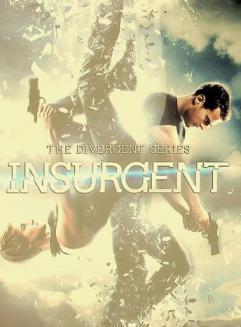
Tris and Four are now fugitives on the run, hunted by Jeanine, the leader of the power-hungry Erudite elite. Racing against time, they must find out what Tris's family sacrificed their lives to protect, and why the Erudite leaders will do anything to stop them. Haunted by her past choices but desperate to protect the ones she loves, Tris, with Four at her side, faces one impossible challenge after another as they unlock the truth about the past and ultimately the future of their world.
DVD

Class and Social Inequality in Ian Mcewan’s Atonement
Atonement, perhaps Ian McEwan’s best-known novel, is considered an epic of British postmodernist literature because it touches on a variety of contemporary topics. Although Atonement focuses primarily on themes such as love and repentance, it also deals with social class, status, and power, which are analysed in this paper. Furthermore, social stratification and inequality form the crux of this analysis. Using Max Weber’s theory of social stratification, and the characters as examples, this research considers how much social division truly exists in the novel, which serves as a mirror to British society. Moreover, various forms of social mobility are examined, as well as the solutions to those problems which are not only present in fiction, but also in reality. Ian McEwan’s Atonement talks about these issues and more, he sets problems and poses questions that challenge our lives’ perspectives, hence making it a unique literary gem.
Journal Article