
Catalogue Search | MBRL


Are you sure you want to remove the book from the shelf?

{{itemTitle}}
227
result(s) for
"Social values France History."
Sort by:


Imperfect Garden
Available in English for the first time,Imperfect Gardenis both an approachable intellectual history and a bracing treatise on how we should understand and experience our lives. In it, one of France's most prominent intellectuals explores the foundations, limits, and possibilities of humanist thinking. Through his critical but sympathetic excavation of humanism, Tzvetan Todorov seeks an answer to modernity's fundamental challenge: how to maintain our hard-won liberty without paying too dearly in social ties, common values, and a coherent and responsible sense of self.
Todorov reads afresh the works of major humanists--primarily Montaigne, Rousseau, and Constant, but also Descartes, Montesquieu, and Toqueville. Each chapter considers humanism's approach to one major theme of human existence: liberty, social life, love, self, morality, and expression. Discussing humanism in dialogue with other systems, Todorov finds a response to the predicament of modernity that is far more instructive than any offered by conservatism, scientific determinism, existential individualism, or humanism's other contemporary competitors. Humanism suggests that we are members of an intelligent and sociable species who can act according to our will while connecting the well-being of other members with our own. It is through this understanding of free will, Todorov argues, that we can use humanism to rescue universality and reconcile human liberty with solidarity and personal integrity.
Placing the history of ideas at the service of a quest for moral and political wisdom, Todorov's compelling and no doubt controversial rethinking of humanist ideas testifies to the enduring capacity of those ideas to meditate on--and, if we are fortunate, cultivate--the imperfect garden in which we live.
eBook

The romantic crowd : sympathy, controversy and print culture
\"In the long eighteenth century, sympathy was understood not just as an emotional bond, but also as a physiological force, through which disruption in one part of the body produces instantaneous disruption in another. Building on this theory, Romantic writers explored sympathy as a disruptive social phenomenon, which functioned to spread disorder between individuals and even across nations like a 'contagion'. It thus accounted for the instinctive behaviour of people swept up in a crowd. During this era sympathy assumed a controversial political significance, as it came to be associated with both riotous political protest and the diffusion of information through the press. Mary Fairclough reads Edmund Burke, Mary Wollstonecraft, William Godwin, John Thelwall, William Hazlitt and Thomas De Quincey alongside contemporary political, medical and philosophical discourse. Many of their central questions about crowd behaviour still remain to be answered by the modern discourse of collective psychology\"--Provided by publisher.
Book
Strength in numbers : population, reproduction, and power in eighteenth-century France
In the eighteenth century France became convinced it was losing population. While not technically true (France was merely failing to gain population as rapidly as Great Britain and the German states), the public's belief in a national fertility crisis had far-reaching consequences. In Strength in Numbers: Population, Reproduction, and Power in Eighteenth-Century France, Carol Blum shows how intellectuals used \"natalism\" as a means of criticizing the monarchy and the Church in their pursuit of social change.
In addition to the arguments over celibacy, divorce, and polygamy, other, more radical, proposals were put forward to free potentially fruitful male desire from the tedious ties of European matrimony. The question of whether sexual violence was a crime or rather an imperative of nature was passionately debated, as was the abolition of the incest taboo. Descriptions of exotic locales where uninhibited natives were alleged to copulate freely and procreate abundantly became a popular literary genre of erotic fantasy, made respectable by a framework of natalist discourse. The wish to reject the Church's moral guidance and return to the \"laws of nature\" led philosophers such as Diderot and Voltaire to question the institution of marriage itself.
Centered on the eighteenth-century struggle to define moral authority, Strength in Numbers is the account of freethinkers' campaigns against the Church and monarchy; of the conflicts concerning the good and evil of \"natural\" sexuality; and of the ways in which natalism was used not only as a passive instrument in the wars of Enlightenment but as an active force shaping mentalities.
eBook
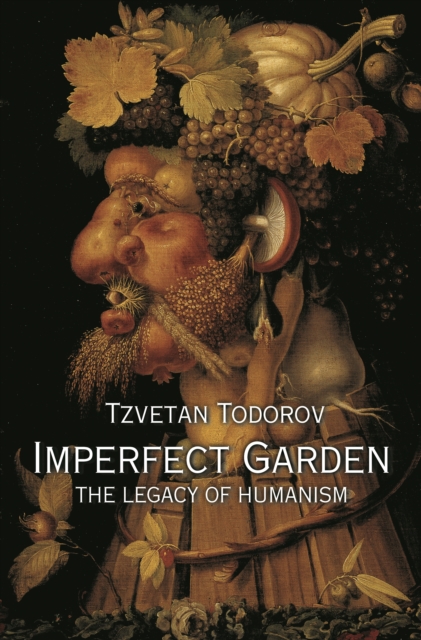
Imperfect garden
Modern humanity made a deal with the devil, according to Tzvetan Todorov. We got freedom, but we also lost God and common society, and we have only a helpless and dizzying individualism to guide us. The central problem facing us now is how to survive the poison pill we swallowed when we tasted freedom. There are four basic responses, Todorov claims: conservatism, scientism, individualism, and humanism. As the reader soon learns from his characterizations, Todorov’s allegiance is firmly with the humanists. Imperfect Garden takes up the standard of humanism, and Todorov situates himself alongside Rousseau, Montesquieu, and Montaigne. For Todorov, as with the best of the humanists, life in the world is a garden that needs our tending. And though by its nature it is imperfect, at times bearing rotten and sour fruit, it can always be improved with our care, diligence, and love. Ultimately, Todorov proposes that humanism is a wager, à la Pascal: we will be no worse off for striving to mend the human condition, but we risk everything if we don’t. --Eric de Place
eBook

Exclusions
In the 1930s, the French Third Republic banned naturalized citizens from careers in law and medicine for up to ten years after they had obtained French nationality. In 1940, the Vichy regime permanently expelled all lawyers and doctors born of foreign fathers and imposed a 2 percent quota on Jews in both professions. On the basis of extensive archival research, Julie Fette shows inExclusionsthat doctors and lawyers themselves, despite their claims to embody republican virtues, persuaded the French state to enact this exclusionary legislation. At the crossroads of knowledge and power, lawyers and doctors had long been dominant forces in French society: they ran hospitals and courts, doubled as university professors, held posts in parliament and government, and administered justice and public health for the nation. Their social and political influence was crucial in spreading xenophobic attitudes and rendering them more socially acceptable in France.
Fette traces the origins of this professional protectionism to the late nineteenth century, when the democratization of higher education sparked efforts by doctors and lawyers to close ranks against women and the lower classes in addition to foreigners. The legislatively imposed delays on the right to practice law and medicine remained in force until the 1970s, and only in 1997 did French lawyers and doctors formally recognize their complicity in the anti-Semitic policies of the Vichy regime. Fette's book is a powerful contribution to the argument that French public opinion favored exclusionary measures in the last years of the Third Republic and during the Holocaust.
eBook
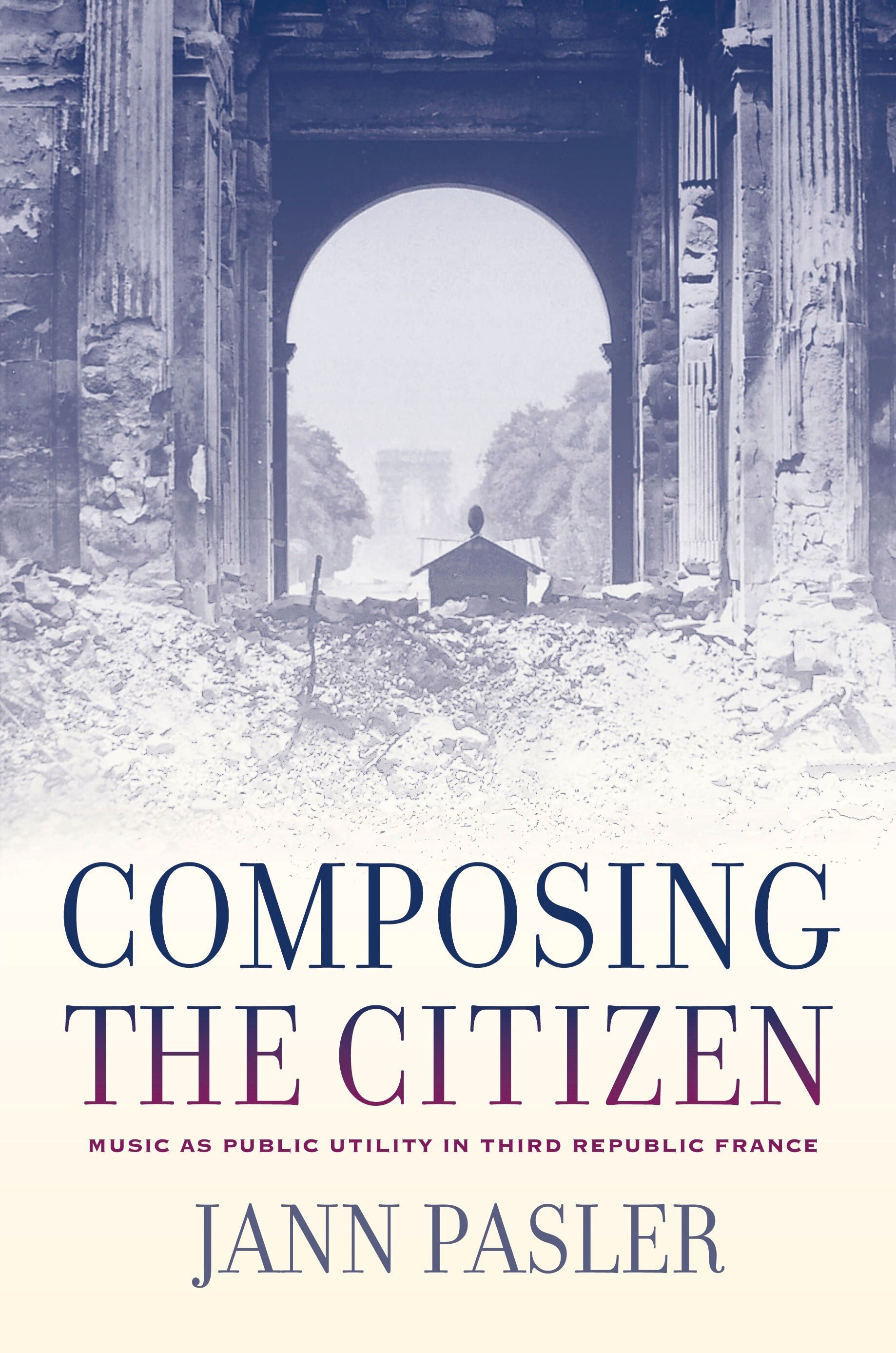
Composing the Citizen
In a book that challenges modernist ideas about the value and role of music in Western society,Composing the Citizendemonstrates how music can help forge a nation. Deftly exploring the history of Third Republic France, Jann Pasler shows how French people from all classes and political persuasions looked to music to revitalize the country after the turbulent crises of 1871. Embraced not as a luxury but for its \"public utility,\" music became an object of public policy as integral to modern life as power and water, a way to teach critical judgment and inspire national pride. It helped people to forget the past, voice conflicting aspirations, and imagine a shared future. Based on a dazzling survey of archival material, Pasler's rich interdisciplinary work looks beyond elites and the histories their agendas have dominated to open new windows onto the musical tastes and practices of amateurs as well as professionals. A fascinating history of the period emerges, one rooted in political realities and the productive tensions between the political and the aesthetic. Highly evocative and deeply humanistic,Composing the Citizenignites broad debates about music's role in democracy and its meaning in our lives.
eBook

States of Credit
States of Creditprovides the first comprehensive look at the joint development of representative assemblies and public borrowing in Europe during the medieval and early modern eras. In this pioneering book, David Stasavage argues that unique advances in political representation allowed certain European states to gain early and advantageous access to credit, but the emergence of an active form of political representation itself depended on two underlying factors: compact geography and a strong mercantile presence.
Stasavage shows that active representative assemblies were more likely to be sustained in geographically small polities. These assemblies, dominated by mercantile groups that lent to governments, were in turn more likely to preserve access to credit. Given these conditions, smaller European city-states, such as Genoa and Cologne, had an advantage over larger territorial states, including France and Castile, because mercantile elites structured political institutions in order to effectively monitor public credit. While creditor oversight of public funds became an asset for city-states in need of finance, Stasavage suggests that the long-run implications were more ambiguous. City-states with the best access to credit often had the most closed and oligarchic systems of representation, hindering their ability to accept new economic innovations. This eventually transformed certain city-states from economic dynamos into rentier republics.
Exploring the links between representation and debt in medieval and early modern Europe,States of Creditcontributes to broad debates about state formation and Europe's economic rise.
eBook

Temporary Protection and Technology Adoption
This paper uses a natural experiment to estimate the causal effect of temporary trade protection on long-term economic development. I find that regions in the French Empire which became better protected from trade with the British for exogenous reasons during the Napoleonic Wars (1803–1815) increased capacity in mechanized cotton spinning to a larger extent than regions which remained more exposed to trade. In the long run, regions with exogenously higher spinning capacity had higher activity in mechanized cotton spinning. They also had higher value added per capita in industry up to the second half of the nineteenth century, but not later.
Journal Article

The human being at the heart of agroecological transitions: insights from cognitive mapping of actors’ vision of change in Roquefort area
Agroecological transitions aim at developing sustainable farming and food systems, adapted to local contexts. Such tran-sitions require the engagement of local actors and the consideration of their knowledge and reasoning as a whole, whichencompasses different natures of knowledge (empirical, scientific, local, generic), related to different dimensions (economic,environmental, technical, social, political), as well as their values and perceived uncertainties. While these transitions areoften problematized in relation to technical issues, this article's objective is to start from the way the local actors considerthese transitions in order to see what issues are actually involved. In this study, we analyzed the reasoning of diverse farmingactors, including farmers and farm advisors. We conducted 30 cognitive mapping interviews, during which the local actorsdrew cognitive maps to explicit their reasoning concerning their agroecological transition with an open approach. Theirreasoning revealed an emphasis on the human & social dimension of the process of agroecological transitions: (i) humanand social considerations come first in the transition process, while technical solutions are viewed as secondary, (ii) use anddevelopment of human capacities, social interactions and human well-being are crucial to the conduct of agroecologicaltransitions, (iii) human-scale farming appears as a condition for the use of human capacities, human well-being and ruraldevelopment, (iv) agroecological transitions imply farming advisory transitions, and (v) rural development appears as acondition for agroecological transitions, implying transitions in society as a whole.
Journal Article