
Catalogue Search | MBRL


Are you sure you want to remove the book from the shelf?

{{itemTitle}}
8,028
result(s) for
"Social welfare problems "
Sort by:


European Foundations of the Welfare State
While social welfare programs, often inspired by international organizations, are spreading throughout the world, the more far-reaching notion of governmental responsibility for the basic well-being of all members of a political society is not, although it remains a feature of Europe and the former British Commonwealth. The welfare state in the European sense is not simply an administrative arrangement of various measures of social protection but a political project embedded in distinct cultural traditions. Offering the first accessible account in English of the historical development of the European idea of the welfare state, this book reviews the intellectual foundations which underpinned the road towards the European welfare state, formulates some basic concepts for its understanding, and highlights the differences in the underlying structural and philosophical conditions between continental Europe and the English-speaking world.
eBook

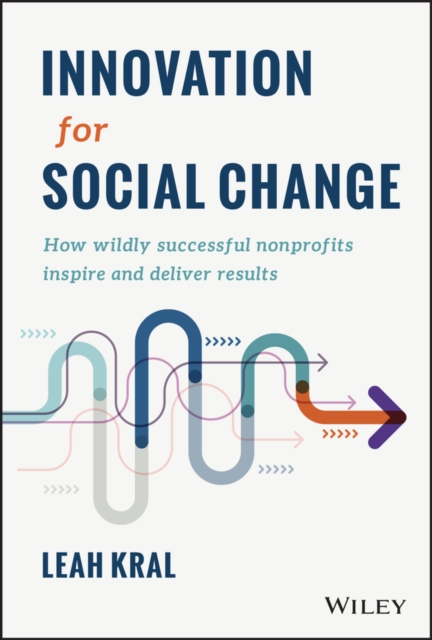
Innovation for Social Change
Transform your nonprofit's ability to innovate for the future
In Innovation for Social Change, distinguished author Leah Kral delivers a practical manual for nonprofits and charitable organizations seeking to innovate their way toward new and exciting possibilities. In the book, you'll explore hands-on design thinking strategies and techniques you can use as a disciplined process for exploring what's possible in your organization. You'll learn how to identify hidden needs, deal with the knock-on effects of your ideas, and focus your efforts where they can have the most impact.
You'll also discover how to transform your ideas into action, building small experiments and learning from them before scaling them up organization-wide, and how to create an ecosystem for everyday innovation. Finally, the author explains what we can learn from social entrepreneurs as they boldly challenge the status quo.
The book also includes:
* Six basic and mutually reinforcing principles that will help you become more innovative today
* Instructive and engaging case studies from nonprofits with a variety of missions, visions, and political backgrounds
* Strategies for applying straightforward principles from economics to supercharge nonprofit innovation
A can't-miss roadmap to creative innovation, Innovation for Social Change will earn a place in the libraries of nonprofit board members, managers, fundraisers, and other professionals in the charitable space.
eBook

The politics of the new welfare state
Since the early 1990s, European welfare states have undergone substantial changes. Traditional programmes, such as old age pensions have been curtailed. Cost-containment measures have been adopted also in other parts of the welfare state, ranging from health care services to invalidity benefits. At the same time, today's welfare states have taken up some new functions. They are expected to help and/or push non-working people back into employment, to complement work income for the working poor, to help parents reconcile work and family life, to promote gender equality, to support child development, and to provide social services for an ageing society. This book provides a thorough empirical account of these developments in western Europe. It also discusses a number of interpretations that have been put forward in relation to the transformation process, in particular whether change amounts to retrenchment, dualisation, or whether it is better captured by the notion of a reorientation towards an active, social investment-based welfare state. On the theoretical level the book focuses on the drivers of the transformation process. It does so on the basis of a multidimensional understanding of social policies, and highlights the importance of political competition and policy learning processes as explanatory factors for the emergence of a new welfare settlement.
eBook

Self-Direction
In the past, when people with disabilities and older adults needed
help with activities of daily living and navigating their
communities, they rarely had any choice about who helped them, when
that support was delivered, or what the worker would or would not
do. The self-direction movement changed all that by offering people
the option to select their own workers and even create an
individualized budget to help them live more independently. Written
by experts who played a key part in the growth, evaluation, and
dissemination of this revolutionary approach,
Self-Direction describes the development of this movement
through the authors' personal accounts. Also included are stories
from actual participants in the movement who benefitted from this
approach and from policymakers who saw how self-direction could
help address states' problems. The book's conclusion discusses
recommendations that can improve the way self-direction is
delivered and how to spread its message so that all people with
disabilities can have this choice.
eBook
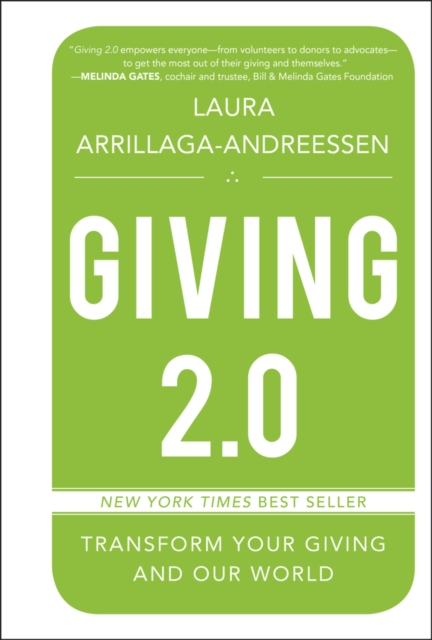
Giving 2.0
\"Today's top strategies for individual donors to revolutionize their giving and the world. Major gifts may dominate headlines, but the majority of giving still comes from individual households. Even in 2009, at a time of deep recession, individual giving averaged almost $2,000 per household and 82% of the $300 billion donated that same year. Giving 2.0 empowers individual donors of every level navigating the seemingly infinite ways one can give. Based on her vast experience as a philanthropist, academic, and social innovator, Arrillaga-Andreessen shares the most effective techniques she herself pilots and studies. Draws from author's unique experience as founder/chairman of the Stanford Center on Philanthropy and Civil Society, founder/chairman of SV2 (Silicon Valley Social Venture Fund), and faculty member at Stanford Graduate School of Business. Helps individuals harness the power of technology, collaboration, advocacy, and social entrepreneurship to take their giving to the next level. Features dozens of stories on innovative methods of how individuals give time, money, and expertise, showing readers how they can renew their giving and reach their fullest potential. A practical and an inspiring call to action, Giving 2.0 is an indispensable tool for anyone aspiring to create significant change\"--
eBook

Rescuing the Vulnerable
In many ways, the European welfare state constituted a response to the new forms of social fracture and economic turbulence that were born out of industrialization—challenges that were particularly acute for groups whose integration into society seemed the most tenuous. Covering a range of national cases, this volume explores the relationship of weak social ties to poverty and how ideas about this relationship informed welfare policies in the nineteenth and twentieth centuries. By focusing on three representative populations—neglected children, the homeless, and the unemployed—it provides a rich, comparative consideration of the shifting perceptions, representations, and lived experiences of social vulnerability in modern Europe.
eBook

Participation, marginalization and welfare services
Current debates around participation and marginalization dominate the agenda of many European political forums. There is an increasing concern about the stability of social cohesion and a growing number of particular groups of people who are regarded as being at risk of being socially excluded or marginalized. This volume goes beyond the surface of public discussions to look at the central role played by welfare services in European societies in either strengthening or hindering participatory citizenship and democracy. In current discussions welfare services - understood in a broad sense - are centrally positioned: there are high expectations that welfare services can hinder marginalization and enable participation. Yet marginalization is, in most cases, rooted in the deeper structures of society, with economy, participation and involvement dependent on political or highly personal factors, which are beyond the scope of welfare services. This groundbreaking volume posits that participation and marginalization are 'twin' concepts, expressing opposing sides of one and the same processes faced by individuals and communities. It will be essential reading for social workers, sociologists and policy-makers throughout Europe.
eBook

Entangled city
Based on 15 years of ethnographic fieldwork, the book understands the increasing violence seen in cities as a product of the emergence of transnational illegal markets since the 1970's, followed by the suppression of unskilled workers, in many places racialised young men from poor neighbourhoods. The book gives flesh and blood to these transformations through a careful study of Sao Paulo's case in Brazil. The first part of the book is based on the trajectories of three families, featuring young men affiliated with illegal markets such as drug dealing and car theft, although in very different situations. The clash between the everyday life patterns of these black families, compared to Sao Paulo’s white middle classes, gives plausibility to the city’s social conflict, most violent after the 80’s, when transnational markets arrive and incarceration grows. Sao Paulo’s case offers more: this conflict is 70% less lethal in 2017 than it was in the 2000, mostly due to the actions of the PCC (the main criminal group in Brazil, a transnational one) discussed in the second part of the book. The “world of crime\" is stronger , yet at the same time homicide rates are falling. The final argument demonstrates that informality, illegality and criminal violence are produced entangling legal and illegal markets and formal/informal institutions, not only in Sao Paulo.Based on 15 years of ethnographic fieldwork, the book understands the increasing violence seen in cities as a product of the emergence of transnational illegal markets since the 1970's, followed by the suppression of unskilled workers, in many places racialised young men from poor neighbourhoods. The book gives flesh and blood to these transformations through a careful study of Sao Paulo's case in Brazil. The first part of the book is based on the trajectories of three families, featuring young men affiliated with illegal markets such as drug dealing and car theft, although in very different situations. The clash between the everyday life patterns of these black families, compared to Sao Paulo’s white middle classes, gives plausibility to the city’s social conflict, most violent after the 80’s, when transnational markets arrive and incarceration grows. Sao Paulo’s case offers more: this conflict is 70% less lethal in 2017 than it was in the 2000, mostly due to the actions of the PCC (the main criminal group in Brazil, a transnational one) discussed in the second part of the book. The “world of crime\" is stronger , yet at the same time homicide rates are falling. The final argument demonstrates that informality, illegality and criminal violence are produced entangling legal and illegal markets and formal/informal institutions, not only in Sao Paulo.
eBook