
Catalogue Search | MBRL


Are you sure you want to remove the book from the shelf?

{{itemTitle}}
210
result(s) for
"Social work with juvenile delinquents."
Sort by:

'Soft' policing : the collaborative control of anti-social behaviour
Examining multi-agency working in response to anti-social behaviour, Daniel McCarthy investigates the way in which the police, social work teams and the youth justice service work together on early intervention initiatives to help young people, and explores the complexities and practical struggles of these partnerships.
Book

Nurturing Pillars of Society
The younger generation — those under the age of 25 — accounts for more than a quarter of Hong Kong’s population. A much-misunderstood group, these people have special characteristics and needs, and some are particularly vulnerable. Substance abuse among young people is on the rise, and juveniles make up a third of total arrests every year. Extra effort and attention is required of policy-makers, educationalists and social workers to help this group make a positive contribution to society. This book seeks to promote understanding of Hong Kong’s young generation and offers strategies for working with them and their families towards healthy and productive development. Divided into three parts — youth in general, youth-at-risk, and young offenders — the book draws on international literature and empirical studies from within Hong Kong. Its focus is on action, always stressing the practical question of how to build a new model for working effectively with them. This book will be essential reading for seasoned professionals as well as undergraduate students in criminology, social policy, and social work, and postgraduates intending to practise in these areas.
eBook


Foundations for youth justice : positive approaches to practice
How can youth justice refocus its attention on the rights and perspectives of young people in transition? This book outlines youth justice practices in their current state of flux in the United Kingdom as New Labour policies receive direction under the vastly different Coalition Government. This book explores opportunities for a fresh orientation that places young people at the center. She outlines the risks and problems that modern society creates for them and asks when, and how, society should respond to youth behaviors that cause harm to others. The result is a bold and realistic remodelling of youth justice practices.
Book

Connecting with Young People in Trouble
A powerful critique of existing youth services which spans lived experience, theory and practice. Contains first-hand accounts of relational change and sees youth crime via a refreshing new lens.
eBook

The 8% solution : preventing serious, repeat juvenile crime
The 8% Solution is a practical, common-sense guide offering long-term solutions to juvenile crime through a proven program. Written in narrative style with a liberal use of anecdotal incidents, this is an easy-to-read description of the law and details effective ways to correct the problem.
eBook
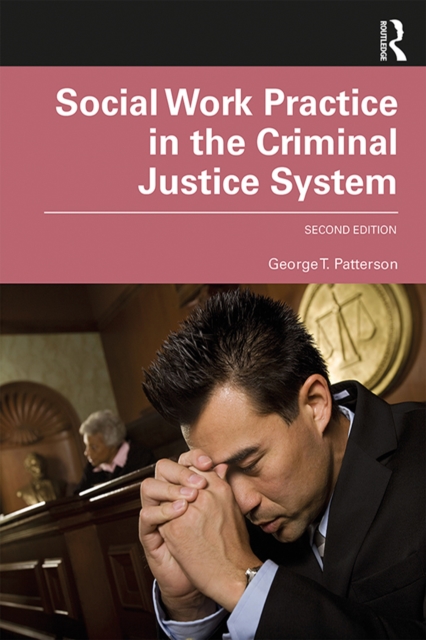
Social Work Practice in the Criminal Justice System
Social Work Practice in the Criminal Justice System presents an overview of the criminal justice system for social workers, exploring the networks and institutions which comprise it. Integrating social work ethics and a commitment to social justice, this textbook explores social work practice roles to address social problems within the criminal justice system and promotes the development of knowledge, skills, and critical reflection in this increasingly important area of practice. In addition to covering the four key areas for social work practice - law enforcement, courts, corrections, and legislation, it covers police social work and forensic social work. This second edition has been updated to include: The opioid crisis and opioid courts Separate chapters describing special populations and contemporary issues in the criminal justice system Expanded criminal justice perspectives and theoretical frameworks. Examining the challenges and opportunities of social work practice in the criminal justice system, this is the ideal text for social work instructors, students, and practitioners working with or within the criminal justice system. Each chapter includes a summary of social work practice implications, key terms, and suggestions for further reading.
eBook

Persistent Young Offenders
Based on some of the most interesting research from the last ten years, this book discusses effective practice in work with persistent young offenders. It contrasts two major evaluations of projects for juvenile offenders, one of which was successful and the other less so. This detailed and thorough study will be of particular value to those interested in less punitive approaches.
eBook
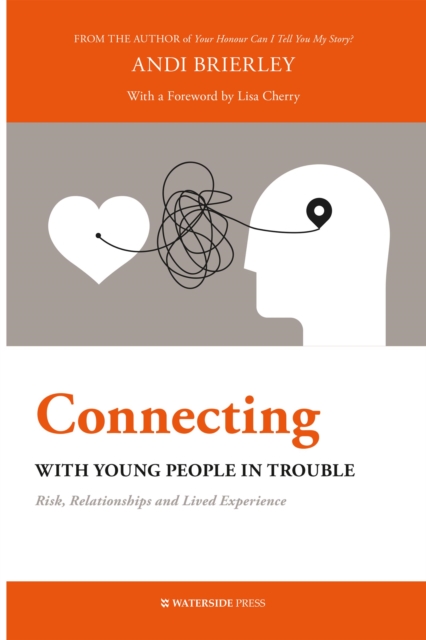
Connecting with young people in trouble: risk, relationships and lived experience
A powerful critique of existing youth services which spans lived experience, theory and practice. Contains first-hand accounts of relational change and sees youth crime via a refreshing new lens.The only work of its kind, in which a Youth Justice Specialist with experiences of crime and incarceration as a young person combines those lived experiences with practice and teaching theory to show how services can better serve and empathise with children and young people in trouble. Andi Brierley explains why existing ways of dealing with children and adolescents can at times be counterproductive. From the everyday atmosphere of reporting arrangements, to preoccupation with risk-management processes, to the language used by professionals, the author invites us to re-assess the consequences.
eBook