
Catalogue Search | MBRL


Are you sure you want to remove the book from the shelf?

{{itemTitle}}
484
result(s) for
"Social workers Fiction."
Sort by:


Women and the Civil Rights Movement, 1954-1965
Historians have long agreed that women--black and white--were
instrumental in shaping the civil rights movement. Until recently,
though, such claims have not been supported by easily accessed
texts of speeches and addresses. With this first-of-its-kind
anthology, Davis W. Houck and David E. Dixon present thirty-nine
full-text addresses by women who spoke out while the struggle was
at its most intense.
Beginning with the Brown decision in 1954 and extending through
the Voting Rights Act of 1965, the editors chronicle the unique and
important rhetorical contributions made by such well-known
activists as Ella Baker, Fannie Lou Hamer, Daisy Bates, Lillian
Smith, Mamie Till-Mobley, Lorraine Hansberry, Dorothy Height, and
Rosa Parks. They also include speeches from lesser-known but
influential leaders such as Della Sullins, Marie Foster, Johnnie
Carr, Jane Schutt, and Barbara Posey.
Nearly every speech was discovered in local, regional, or
national archives, and many are published or transcribed from
audiotape here for the first time. Houck and Dixon introduce each
speaker and occasion with a headnote highlighting key biographical
and background details. The editors also provide a general
introduction that places these public addresses in context.
Women and the Civil Rights Movement, 1954-1965 gives voice
to stalwarts whose passionate orations were vital to every phase of
a movement that changed America.
eBook

Touched by you
\"Brooklyn Wells has fought her dominating father, CEO Parker Wells, every step of the way. Instead of taking her appointed place in the boardroom, she's a social worker. Instead of living for diamonds and designer gowns, she helps her community's poor and lost. And now she's falling hard for the troubled newcomer who saved her life--and holds dangerous secrets ... For Carter Marshall, Wellspring offers a chance to put tragedy behind him and start again. Caring too much is not in the plan--until the irrepressible Brooklyn teases him to live once more ... and recklessly lose himself in passion. But Parker Wells has a major deal riding on his daughter's arranged marriage. And he won't stop at using Brooklyn and Carter's pasts to drive them apart. As they fight scandal, betrayal, and their own vulnerabilities, will the fire between them burn even hotter--or flame out for good?\"--Publisher's description.
Book
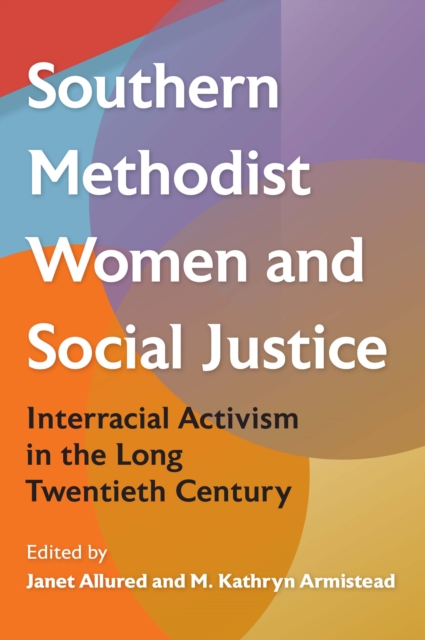
Southern Methodist Women and Social Justice
Highlighting the contributions of Methodist women in
advocating for progressive reform from 1900 to the
present
This book tells the stories of nine southern Methodist
women, who, inspired by their faith, carried forward the spirit
of progressivism. They fought for racial equality, challenged
white male supremacy, and addressed class oppression. The white
and Black women featured here responded to local human rights
violations with compassion, advocating for expanded and more
diverse private and public services in the United States.
Motivated by a modernist interpretation of the Gospel
authorized by the tenets of Methodism, these women expanded
notions of southern identity and womanhood. Their actions
supported the Black freedom struggle and promoted women’s
rights, gaining momentum after the 1939 rise of the
Women’s Society of Christian Service—the largest
Protestant women’s organization in the country. Grounded
in research from church archives and interviews, this book
shows how Methodist traditions provided spiritual, theological,
and doctrinal support for social justice work among laywomen
and female clergy. With Methodism as a case in point, this book
expands the historical narrative of twentieth-century reform
movements to include the South’s progressive religious
traditions.
Contributors: Chelsea Elizabeth Hodge | Fran
Wescott | Janet Lynn Allured | Randall M. Miller | Jeanette
Stokes | M. Kathryn Armistead | Stanley Harrold | Rachel Sauls
| Helen R. Neinast | Jennifer Copeland | Katie W. Powell
A volume in the series Southern Dissent, edited by Stanley
Harrold and Randall M. Miller
eBook

Alex & Zee : a novel
This is the story of Zee, an aimless ex-lawyer who has turned his inability to make a decision into a fine art, and his girlfriend, Alex, a practical and hard-working social worker who feels her biological clock ticking loudly. Reverberating with the emotional crises of the urban adult, Alex & Zee is an offbeat portrait of contemporary relationships, full of wickedly astute observations of city life and its multifarious life forms.
Book

The role of science fiction perception on innovator: integrating the theory of planned behavior and social support network theory
PurposeThis study aims to explore the influence of science fiction on innovators and present a comprehensive model using the theory of planned behavior and social support theory to discuss the impact of science fiction on the intention of becoming an innovation worker.Design/methodology/approachPartial least squares structural equation modeling (PLS-SEM) was adopted in this study and responses were obtained from 244 Chinese innovators.FindingsThe results revealed the adequacy of the proposed model and the above-mentioned constructs in explaining innovation intention. Science fiction perception was found to influence the intention of becoming an innovation worker directly. Subjective norm, perceived behavioral control, and attitude directly influence the intention of becoming an innovation worker. Additionally, attitude is a mediator between science fiction perception and the intention of becoming an innovation worker. Moreover, social support network moderates the relationship between attitude and intention.Originality/valueThese results shed light on the mechanism by which science fiction influence innovators as well as provide critical managerial implications for policymakers and practitioners.
Journal Article

Necessary lies
In 1960 North Carolina, Ivy Hart is a fifteen-year-old girl whose family are tenants on a small tobacco farm. After her parents die, she is left with the overwhelming task of caring for several family members. Jane Forrester is Grace County's newest social worker, and she quickly becomes emotionally invested in her clients' lives, straining her personal and professional relationships. Jane's relationship with the Hart family tests her resolve to fight against racial tensions and state-mandated sterilizations.
Book

Step Into the Free and Infinite Laboratory of the Mind
Aliens! Killer robots! Spaceships! For a long time, Finn saw science fiction stories in a fairly conventional way--as a touchstone or a starting point for a conversation about a topic such as artificial intelligence (Terminator or I, Robot) or genetic engineering (Gattaca or Frankenstein). These stories act as a kind of collective shorthand, one that gets a crowd on the same page before conversation turns to the \"real\" challenges facing society. That was before the future became his job. When he founded the Center for Science and the Imagination (CSI) at Arizona State University in 2012, he began to understand science fiction as part of an important feedback loop with real scientific and technological innovation. Science fiction and science are both engaged in exploring the adjacent possible: the worlds many might be able to reach from their present configuration of science and society. Writers and researchers scour the literature, looking for ideas that might be combined or extended in novel ways, and both groups are in the business of creating new stories or new concepts that might change the world.
Journal Article

Every day is Mother's Day : a novel
A social worker is baffled by a mother-daughter team drowning in festering rubbish, unhealthy smells in their dilapidated home, and too many secrets that keep them sick.
Book

The Lure of the Virtual
Although organizational scholars have begun to study virtual work, they have yet to fully grapple with its diversity. We draw on semiotics to distinguish among three types of virtual work (virtual teams, remote control, and simulations) based on what it is that a technology makes virtual and whether work is done
with or
on
,
through
, or
within
representations. Of the three types, simulations have been least studied, yet they have the greatest potential to change work's historically tight coupling to physical objects. Through a case study of an automobile manufacturer, we show how digital simulation technologies prompted a shift from symbolic to iconic representation of vehicle performance. The increasing verisimilitude of iconic simulation models altered workers' dependence on each other and on physical objects, leading management to confound operating
within
representations with operating
with or
on
representations. With this mistaken understanding, and lured by the virtual, managers organized simulation work in virtual teams, thereby distancing workers from the physical referents of their models and making it difficult to empirically validate models. From this case study, we draw implications for the study of virtual work by examining how changes to work organization vary by type of virtual work.
Journal Article