
Catalogue Search | MBRL


Are you sure you want to remove the book from the shelf?

{{itemTitle}}
27
result(s) for
"Socialantrolopologi/etnografi"
Sort by:

Labour Recruitment, Circuits of Capital and Gendered Mobility: Reconceptualizing the Indonesian Migration Industry
During the last decade there has been a marked shift in the structure of migration from Indonesia with the deregulation of the transnational labour recruitment market after the fall of Suharto and a broader attempt across the region to regulate migrant flows to and from receiving countries
in the wake of the Asian economic crisis. In this process, hundreds of Indonesian labour recruitment agencies have come to function as brokers in an increasingly government-regulated economy that sends documented migrants to countries such as Malaysia and Saudi Arabia. Based primarily on fieldwork
on the island of Lombok, one of the major migrant-sending areas in Indonesia, the article considers the gendered aspects of this state-market relationship by focusing ethnographic attention on the initial stages of recruitment, as informal labour brokers deliver migrants to formal agencies.
Critically, the article describes how capital increasingly flows \"down\" towards female migrants and \"up\" from male migrants-i.e., men must go into debt while women do not pay (or are even offered money) to travel abroad-thus highlighting the gendered dimensions
of the current economy of transnational migration. More generally, the article argues for a renewed focus on the migration industry as a way of reconceptualizing Indonesian transnational migration in the context of contemporary forms of globalization.
Journal Article

Producing Absolute Truth: CSI Science as Wishful Thinking
Forensic science has come to be assigned an important role in contemporary crime fiction. In this article, I analyze the cultural repertoire of forensic science conveyed by the popular television show Crime Scene Investigation (CSI). I argue that CSI science, in delivering an absolute \"truth\" about how and by whom crimes have been committed, is equated with justice, effectively superseding nonfictional forensic science as well as nonfictional judicature as a whole. Thus, CSI as a cultural performance adds to the mediascape a repertoire of wishful-thinking science with which to think about perceptions of and desires for crime and justice in nonfictional society. This repertoire seems to be considered relevant enough to nonfictional society to cause concern about the judicial system, as expressed in discussions of the so-called \"CSI effect.\"
Journal Article
Diversity Is Our Business
Anthropologists have tended to portray their discipline as in crisis and ask whether \"the end of anthropology\" is near. I offer indicators to suggest that the discipline is alive and well as far as its internal activities are concerned. I then turn to the more worrying question of its external image, understandings and stereotypes more or less common among a wider public: the anthropologist as antiquarian and insensitive, slightly lost in real life. Anthropologists have been ineffective in offering a simple, coherent view of what the discipline is and what holds it together. I propose that a consistent emphasis on \"diversity\" as what anthropology is about best matches our combined interests and practices. To have a strong \"brand\" is essential under present-day cultural and political conditions, in and out of academic life. The foregrounding of \"diversity\" goes with the anthropological concern with ethnography, comparison, and cultural critique.
Journal Article

Young and Defiant in Tehran
With more than half its population under twenty years old, Iran is one of the world's most youthful nations. The Iranian state characterizes its youth population in two ways: as a homogeneous mass, \"an army of twenty millions\" devoted to the Revolution, and as alienated, inauthentic, Westernized consumers who constitute a threat to the society. Much of the focus of the Islamic regime has been on ways to protect Iranian young people from moral hazards and to prevent them from providing a gateway for cultural invasion from the West. Iranian authorities express their anxieties through campaigns that target the young generation and its lifestyle and have led to the criminalization of many of the behaviors that make up youth culture.In this ethnography of contemporary youth culture in Iran's capital, Shahram Khosravi examines how young Tehranis struggle for identity in the battle over the right to self-expression. Khosravi looks closely at the strictures confronting Iranian youth and the ways transnational cultural influences penetrate and flourish. Focusing on gathering places such as shopping centers and coffee shops, Khosravi examines the practices of everyday life through which young Tehranis demonstrate defiance against the official culture and parental dominance. In addition to being sites of opposition, Khosravi argues, these alternative spaces serve as creative centers for expression and, above all, imagination. His analysis reveals the transformative power these spaces have and how they enable young Iranians to develop their own culture as well as individual and generational identities. The text is enriched by examples from literature and cinema and by livid reports from the author's fieldwork.
eBook
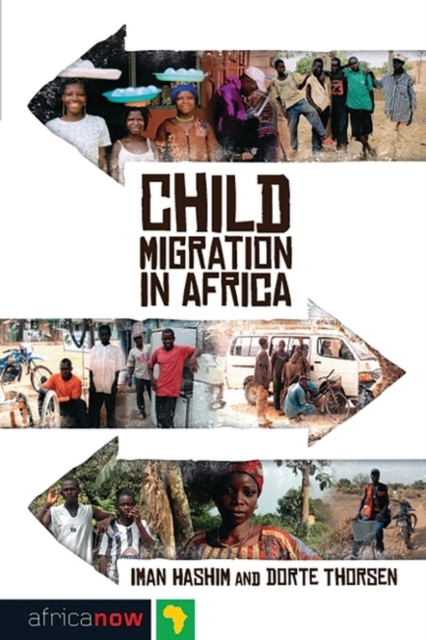
Child Migration in Africa
Child Migration in Africa explores the mobility of children without their parents within West Africa. Drawing on the experiences of children from rural Burkina Faso and Ghana, the book provides rich material on the circumstances of children’s voluntary migration and their experiences of it. Their accounts challenge the normative ideals of what a ‘good’ childhood is, which often underlie public debates about children’s migration, education and work in developing countries. The comparative study of Burkina Faso and Ghana highlights that social networks operate in ways that can be both enabling and constraining for young migrants, as can cultural views on age- and gender-appropriate behaviour. The book questions easily made assumptions regarding children's experiences when migrating independently of their parents and contributes to analytical and cross-cultural understandings of childhood. Part of the groundbreaking Africa Now series, Child Migration in Africa is an important and timely contribution to an under-researched area.
eBook

'Hard times' in Lithuania: Crisis and 'discourses of discontent' in post-communist society
This article analyses the intersection of global recession with the underlying crisis of neo-liberalism in Baltic Lithuania, and the disappointment of expectations regarding the promised benefits of free market capitalism for the citizens of post-communist society. Drawing on an empirical analysis of Lithuania, a new European Union member state and former Soviet republic, the post-communist trajectory of neo-liberal economic and social development is critiqued. Global economic and financial crisis has resulted in a social and economic 'shock'. It occurred in an environment already marked by disappointment, alienation and high outward migration. Through an analysis of 'voice' expressed in 'discourses of discontent', the article attempts to chart the impact of 'hard times'. It predicts a new 'exit' in the form of a surge of outward migration resulting from the failures of 'voice', and the concerning possibility of 'internal exit'.
Journal Article

Be like bees – the politics of mobilizing farmers for development in Tigray, Ethiopia
Based on long-term ethnographic research, this article analyses the relations between local politics and farmers’ participation in rural development in Tigray (Ethiopia). It takes an actor-oriented approach and focuses on local government officials and farmer representatives, who mediate between the government agencies that undertake rural development programmes and the farmers whom they address. To reach the target numbers of programme beneficiaries, these local development brokers ‘mobilize’ farmers to participate. They capitalize upon the historical legitimacy of the 1975–91 revolution against the military Derg dictatorship in which the Tigray People's Liberation Front (TPLF), now heading the national government, and Tigray's rural population successfully joined forces. They revitalize farmers’ collective memory of this alliance and reinvent the revolutionary grassroots institutions through which it was realized. The effects of mobilization on participation in development are most evident among farmers who are members of the TPLF. A TPLF-development nexus arises, structuring local political career opportunities along the lines of development. The case study attempts to contribute to an empirical understanding of the entanglement of local politics and local development brokerage in rural African societies.
Journal Article


Sociology and Beyond
During the last decades, development discourse has taken a neo-liberal turn. Parallel to this, the discourse of social science has become more oriented to matters of individual agency. Within the sociological and anthropological literature on development, this emphasis on individual agency is often expressed in terms of an explicit statement taken by the author that s/he wishes to correct an earlier (ethically inferior) emphasis on structure that is assumed to imply that the concerned people are passive victims. Problematising this ethics of scientific writing, this paper will look at various discourses in which the concept of victimhood is used, seeing claims and disclaimers of victimhood as themselves being expressions of agency in a contestation over accountability, responsibility, recognition and possible indemnification or blame.
Journal Article
Ethereal expression: Paradoxes of ballet as a global physical culture
Set in 19th-century Romanticism, classical ballets are still playing to full opera houses across the globe. This article explores paradoxes of time, cultural capital and gender in ballet as a global physical culture on- and off-stage. Drawing on ethnography of three national ballet companies in Stockholm, London and New York and a contemporary company in Frankfurt-am-Main, I suggest that classical ballet is preserved because it is not only a 'high' culture, but also a physical culture which has been taught and cultivated between bodies for centuries. Scrutinizing the stories of the Romantic ballets that originated during an era in Europe when the supernatural was à la mode and class and cultural background had a greater impact on marriage choice than today, we note that ballets still have the ability to touch audiences through the archetypical themes of love in relation to social structure and norms, desire and morality. The most popular classical ballet productions such as Swan Lake, La Sylphide and Giselle have been challenged in radical contemporary versions which confirm the prominent position of classical ballet both in the ballet world and society at large. Comparative ethnographic work on ballet schools in different locations helps to uncover the global connections that point to the robust existence of ballet as a unitary form of physical culture.
Journal Article