
Catalogue Search | MBRL


Are you sure you want to remove the book from the shelf?

{{itemTitle}}
283
result(s) for
"Socialism Austria."
Sort by:

The alternative Austrian economics : a brief history
\"For most economists, 'Austrian economics' refers to a distinct school of thought, originating with Mises and Hayek and characterised by a strong commitment to free-market liberalism. This innovative book explores an alternative Austrian tradition in economics. Socialist in spirit but too diffuse to be described as a single school of thought, it shares a common conviction that the market, while possibly a good servant, is a very poor master. Demonstrating how the debate on the economics of socialism began in Austria long before the 1930s, this unique book analyses the work and impact of many leading Austrian economists. Beginning with the Austro-Marxist theorists Otto Bauer and Rudolf Hilferding and moving through to the new generation of social democratic economists, most prominently Kurt Rothschild and Josef Steindl, The Alternative Austrian Economics provides insight into the history and evolution of socialist economics in Austria. Offering a previously underrepresented discussion of a century of Austrian socialist economics, this engaging book will prove to be of great value to Marxian and heterodox economists, historians of economic thought and political scientists interested in political economy\"-- Provided by publisher.
Book


Austro-Marxism
Austro-Marxism: The Ideology of Unity documents the theoretical and political legacy of one of Europe's most influential intellectual currents in the first half of the twentieth century.
eBook
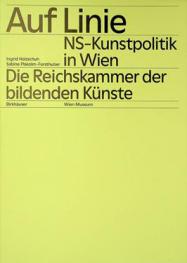
Auf Linie : NS-Kunstpolitik in Wien : die Reichskammer der Bildenden Künste
Die Publikation befasst sich mit der mächtigsten NS-Institution zur politischen Lenkung des Kunstgeschehens im Dritten Reich, der Reichskammer der bildenden Künste. Die wissenschaftliche Aufarbeitung der knapp 3.000 Mitgliederakten ermöglicht erstmals einen Einblick in die politischen Machtstrukturen, Abläufe, Netzwerke und künstlerische Haltung des NS-Regimes in Wien. Ausgehend von der zunehmenden Faschisierung vor 1938 werden die Folgen der Gleichschaltung nach dem ?Anschluss? für Malerei, Bildhauerei, Kunstgewerbe, Architektur und Grafik in Wien thematisiert. Das Buch beschreibt die wichtigsten Akteure der NS-Kunst, die auftraggebenden NS-Institutionen und die Propaganda-Ausstellungen. Ein kritischer Ausblick beleuchtet die Situation nach 1945 und hinterfragt künstlerische und personelle Kontinuitäten.00Exhibition: Wien Museum MUSA, Wien, Austria (14.10.2021- 24.04.2022).
Book
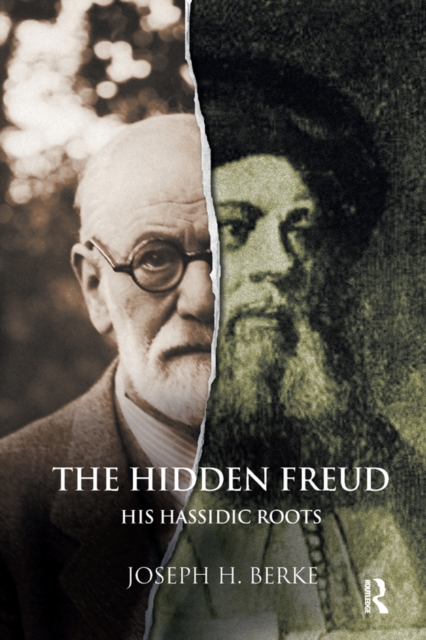
The Hidden Freud
This book explores Sigmund Freud and his Jewish roots and demonstrates the input of the Jewish mystical tradition into Western culture via psychoanalysis. It shows in particular how the ideas of Kabbalah and Hassidism have profoundly influenced and enriched our understanding of mental processes and clinical practices. Freud's own ancestors were hassidim going back many generations, and the book examines how this background influenced both his life and his work. It also shows how he struggled to deny these roots in order to be accepted as a secular, German professional, and at the same time how he used them in the development of his ideas about dreaming, sexuality, depression and mental structures as well as healing practices. The book argues that in many important respects psychoanalysis can be seen as a secular extension of Kabbalah. The author shows, for example, how Freud utilized the Jewish mystical tradition to develop a science of subjectivity.
eBook


Jewish Responses to Nazism in Vienna after the Anschluss
The new leadership of the Weimar Republic in 1933, under the rule of Adolf Hitler, selected a religious minority within Germany, stole the right of self-determination from its members, and imposed upon them a new identity that legally defined them as inferior. This act of creating a false identity and officially marking a group of individuals as such eventually charted the course to the institutionalized murder of some 6 million human beings by the Nazis and their allies.¹ This act first targeted 525,000 (0.8 percent) of the population in Germany in 1933. Through territorial annexations and war, the Nazis then
Book Chapter

Austro-Marxism
This volume offers the essential theoretical thought of the Austro-Marxist thinkers Otto Bauer, Max Adler, Karl Renner, Friedrich Adler, Rudolf Hilferding, and Otto Neurath over the span of their Austrian Social-Democratic careers, from the decades before World War I until the mid-1930s.
eBook