
Catalogue Search | MBRL


Are you sure you want to remove the book from the shelf?

{{itemTitle}}
261
result(s) for
"Socialism Venezuela."
Sort by:

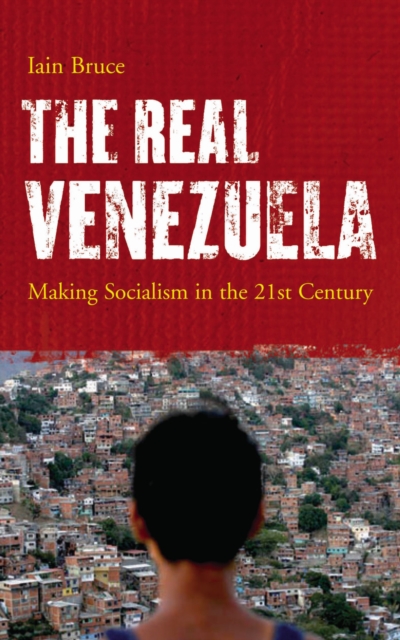
The Real Venezuela
Venezuela has become a huge source of hope and inspiration for the Left throughout the world. Some see it as a shining example of how to begin building a successful socialist state, but Western leaders see it as a dangerous enemy and accuse Chávez of being a dictator. This book reveals the truth by examining the country from the ground up. Iain Bruce explores the political changes underway in Venezuela at the level of the lives of ordinary people. Through grassroots investigations and extended interviews, he explores a series of key transformations in Venezuela: a new social economy around a network of co-operatives; workplace democracy; popular education; radical agrarian reform; participatory budgets and community planning. The result is a clear picture of everyday life in Venezuela. No other book on the country has this level of detail; it will be a key text for students of Latin American politics and social movements and of interest to anyone following the fortunes of the Bolivarian Revolution.
eBook
Communes and Workers' Control in Venezuela
In Communes and Workers' Control in Venezuela: Building 21st Century Socialism from Below Dario Azzellini offers an account of the Bolivarian Revolution from below with extensive empirical examples and original voices from movements, communal councils, communes and workers.
eBook

Latin America's turbulent transitions
Over the past few years, something remarkable has occurred in Latin America. For the first time since the Sandinista Revolution in Nicaragua in the 1980s, people within the region have turned toward radical left governments - specifically in Venezuela, Bolivia, and Ecuador. Why has this profound shift taken place and how does this new, so-called Twenty-First-Century Socialism actually manifest itself? What are we to make of the often fraught relationship between the social movements and governments in these countries and do, in fact, the latter even qualify as 'socialist' in reality?
These are the bold and critical questions that Latin America's Turbulent Transitions explores. The authors provocatively argue that although US hegemony in the region is on the wane, the traditional socialist project is also declining and something new is emerging. Going beyond simple conceptions of 'the left', the book reveals the true underpinnings of this powerful, transformative, and yet also complicated and contradictory process.
eBook
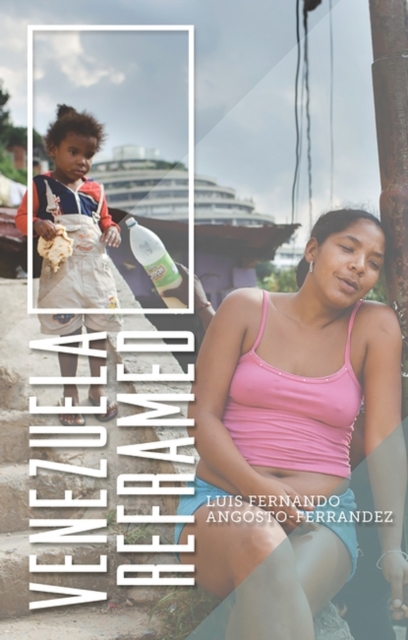
Venezuela reframed
Bolivarian governments, it would seem, have enfranchised the indigenous population in Venezuela like nowhere before. This book, however, shows that these governments are still falling short of materializing constitutional ideals of indigenous free-determination, and it explains why.
eBook

The Possibilities and Pitfalls of Left-Wing Populism in Socialist Venezuela
Gill shows how Venezuelan President Hugo Chávez’s populist style of governance both inspired opposition to U.S. imperialism and drew the ire of many powerful domestic and foreign groups, contributing to the country's current economic malaise.
Journal Article

Racism and education in the U.K. and the U.S. : towards a socialist alternative
Extends Marxist analysis to include key concepts from the work of neo-Marxists Antonio Gramsci and Louis Althusser. It looks in detail at racism in the U.K. and the U.S. and goes on to examine the differences between schooling and education, and their relationship to racism in those two countries and in the Bolivarian Republic of Venezuela.
eBook
Democracy and Revolution
Is socialism dead since the fall of the Soviet Union? What is the way forward for the Left? This book argues that Cuba and Venezuela provide inspiration for anti-globalisation and anti-capitalist movements across the world. Another world Is possible, but only through an effective political strategy to win power on a popular and democratic basis.
D. L. Raby argues that the way forward for progressives is not the dogmatic formulae of the Old Left, nor in the spontaneous autonomism of John Holloway or Tony Negri. Instead, it is to be found in new, broad and flexible popular movements with bold and determined leadership. Examining the relationship of key leaders to their people, including Hugo Chávez and the Sandinistas in Nicaragua, Raby shows that it is more necessary than ever to take power, peacefully where possible, but in all cases with the strength that comes from popular unity backed by force where necessary.
In this way it is possible to build democratic power, which may or may not be socialist depending on one’s definition, but which represent the real anti-capitalist alternative for the twenty-first century.
eBook


The Constitutional Situation in Venezuela: the Construction of a Socialist Communal State
This paper will try to emphasize how, in recent years, steps have been taken aimed at replacing the pluralist and decentralized State foreseen in the Constitution for a different model, based on the penetration of the socialism in the different community spaces, which constitutes the foundation for the establishment of a new scheme of production, of conviviality and legitimacy. It will highlight the contradictions between the model presented as desirable and the real state policies and judgments.
Journal Article