
Catalogue Search | MBRL


Are you sure you want to remove the book from the shelf?

{{itemTitle}}
384
result(s) for
"Socialist feminism"
Sort by:

Marxism and feminism
\"Global events, from economic crisis to social unrest and militarization, disproportionately affect women. Yet around the world it is also women who are leading the struggle against oppression and exploitation. In light of renewed interest in Marxist theory among many women activists and academics, Marxism and Feminism presents a contemporary and accessible Marxist-feminist analysis on a host of issues. It reassesses previous debates and seeks to answer pressing questions of how we should understand the relationship between patriarchy and capitalism, and how we can envision a feminist project which emancipates both women and society\"--Page 4 of cover.
Book

Emancipatory Feminism in the Time of Covid-19
The Covid-19 pandemic threw into stark relief the multi-dimensional threats created by neoliberal capitalism. Government measures to alleviate the crisis were largely inadequate, leaving women – in particular working-class women – to carry the increased burden of care work while at the same time placing themselves in direct risk as frontline workers. Emancipatory Feminism in the Time of Covid-19, the seventh volume in the Democratic Marxism series, explores how many subaltern women – working class, peasant and indigenous – challenge hegemonic neoliberal feminism through their resistance to ordinary capitalist practices and ecological extractivism. Contributors cover women’s responses in a wide range of contexts: from women leading the defence of Rojava – the Kurdish region of Syria, to approaches to anti-capitalist ecology and building food secure pathways in communities across Africa, to championing climate justice in mining affected communities and transforming gender divisions in mining labour practices in South Africa, to contesting macro-economic policies affecting the working conditions of nurses. Their practices demonstrate a feminist understanding of the current systemic crises of capitalism and patriarchal oppression. What is offered in this collection is a subaltern women’s grassroots resistance focused on advancing and enabling solidarity-based political projects, deepening democracy, building capacities and alliances to advance new feminist alternatives.
eBook
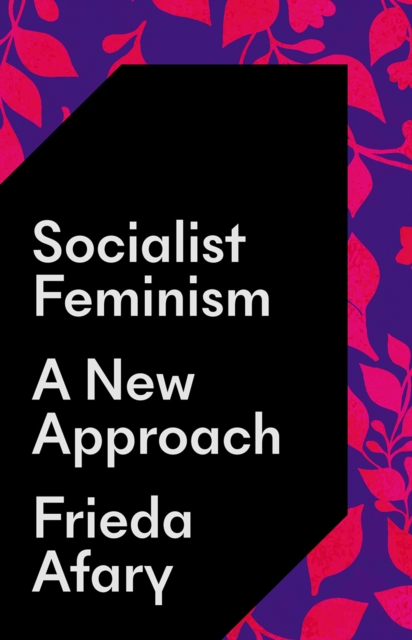
Socialist Feminism
What is socialist feminism and why is it needed to fight the global rise of authoritarianism and fascism? Frieda Afary brings the insights gained through her study of feminist philosophy, her international activism and her work in community education as a public librarian in Los Angeles, offering a bold new vision of an alternative to capitalism, racism, sexism, heterosexism and alienation.Socialist Feminism: A New Approach reclaims theories of women’s oppression through a return to humanism, enriched by social reproduction theories, Black feminist intersectionality, abolitionism, queer theories, Marxist-Humanism and the author’s own experiences as an Iranian American feminist, scholar and activist.She looks at global developments in gender relations since the 1980s, the impact of the Covid-19 pandemic, the distinct features of twenty-first century authoritarianism and current struggles against it, drawing out lessons for revolutionary theorising, organising and international solidarity including the #MeToo and Black Lives Matter movements.This book also contains a study guide which transforms it into a useful pedagogical tool for teachers and activists.
eBook

Bananas and (Wo)men: Communist Schoolteachers, Socialist Feminism, and the Making of Costa Rica's First Communist Party, 1920–1940
In the 1930s, the Communist Party of Costa Rica (PCCR), also known as the Bloque de Obreros y Campesinos (BOC), paved the way for the first massive victories for workers, including women, a population often overlooked within Costa Rica's early twentieth century historiography, especially its feminist labor history. In this article, I argue that Costa Rican women, particularly schoolteachers, were influential figures in the formative years of Costa Rica's first communist party. Moreover, by focusing on the political and literary contributions of Carmen Lyra and Luisa González, I argue that it was militant communist women—building from what I call an inconspicuous \"socialist feminist\" lens—who influenced the PCCR's political program on women's and children's rights, making it one of the first political parties in Central America to explicitly develop a stance and platform around these issues. They did this by challenging and critiquing traditionally \"taboo\" issues around gender, sexuality, and reproductive rights, including engaging debates around prostitution, child labor, gender roles, abortion, traditional bourgeois family structures and dynamics, education, and women's suffrage. The groundbreaking organizing of these militant communist women, inspired by their socialist feminist values, was fundamental to the trajectory of the first communist party of Costa Rica.
Journal Article
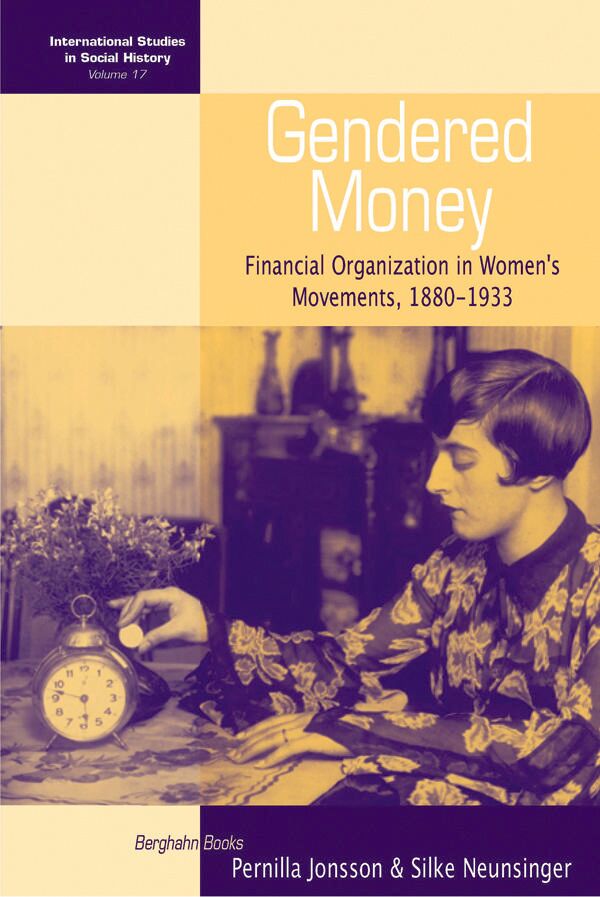
Gendered money
As economic citizenship was a pre-condition of full citizenship, the lack of economic autonomy was an important motivation during the early stages of the women's movement. Independent of their class background, women had less access to not only financial resources but also social and cultural capital, i.e., member's commitment. Resources are therefore of particular interest from a gender perspective, and this book sheds light on the importance of resources for women's struggles for political rights. Highlighting the financial strategies of the first wave of Swedish middle-class and socialist women's movements and comparing them with similar organizations in Germany, England, and Canada, the authors show the importance of class, gender, age, and the national context, offering a valuable contribution to the discussion of resource mobilization theories in the context of social movements.
eBook
Navigating Ideological Divides: Alternative Feminist Discourse(S) Within the Romanian Contemporary Literary Sphere
This paper aims to analyse the emergence of alternative feminist platforms (such as Literatură și feminism, Premiile Sofia Nădejde, Buletin de știri Ecaterina Arbore, Cooperativa arbore, Pagini libere, Cenaclul X, frACTalia) within the context of an ideologically divided Romanian literary sphere. The national political climate registers conservative attitudes towards feminism as volatile. They oscillate between that of “opportunist non-sexists” (Grünberg, Lived Feminism(s)), who appropriated the movement for cultural capital, and the outright rejection of feminism, understood as inextricably linked to imported Western ideology (Miroiu, Drumul către autonomie). In response, our paper implements a double perspective: one that juxtaposes instances of feminist appropriations with leftist feminist articulations. We first adopt a birds-eye view, examining the post-communist political climate that gave rise to waves of “retraditionalization” in Eastern European countries (Bluhm et al.), as well the issue of alignment or synchronisation of feminist ideals with similar local and global movements. Then, we showcase the means of disseminating anti-genderist and anti-feminist ideas within the Romanian academe, as well as the larger civil society. Lastly, we aim to highlight alternative feminist platforms, which we interpret as feminist “counterpublics” (Fraser; Majewska) able to form sites of resistance within the masculinist public sphere. Our study highlights convergent time-frames or temporal coherence within alternative feminist discourses, illustrating how non-liberal feminists sometimes coordinate actions and responses to better address social struggles.
Journal Article

Gendered Socialist Feminist Disparities in Earnings as a Factor Undermining Achieving SDG 5: A Case of World Vision eSwatini
Gender and development can no longer be conceptualised outside of economics and income for livelihoods, particularly for women. As a yardstick for evaluating sustainable development in any country or setting, earnings based particularly on gender have much bearing in ascertaining progression and equality between men and women. This is because women represent and account for over 50 per cent of the world’s population, in which only about 50 per cent of women unfortunately participate in the labour force, compared to the 80 per cent of men. The study investigated gender equality in non-governmental organisations (NGOs) using a qualitative research approach in the form of a case study of an international non-governmental organisation (INGO) which is a development agent and carries or advances Agenda 2030 as part of its existence. The study used interviews and observations as data collection tools with a sample size of twenty (n=20) participants. This study is framed according to the socialist feminist theory. The study unearths that to some extent, gender does have a bearing and plays a role in earnings or remuneration in the workplace since, in some instances, it was discovered that women doing the same work and having a high level of education earned less than their male counterparts. Thus, earnings are gendered; women earn less than males and are not considered for promotions. The study recommends the policy reviews, gender mainstreaming, and embracing gender equality. The study further recommends making sure that all citizens, from ground level are re-socialised, empowered, and aware of the importance of embracing gender equality in society to overcome other disparities in education, health, finance, and technology, together with cultural and social impediments that continuously undermine women’s potential, participation, and empowerment.
Journal Article
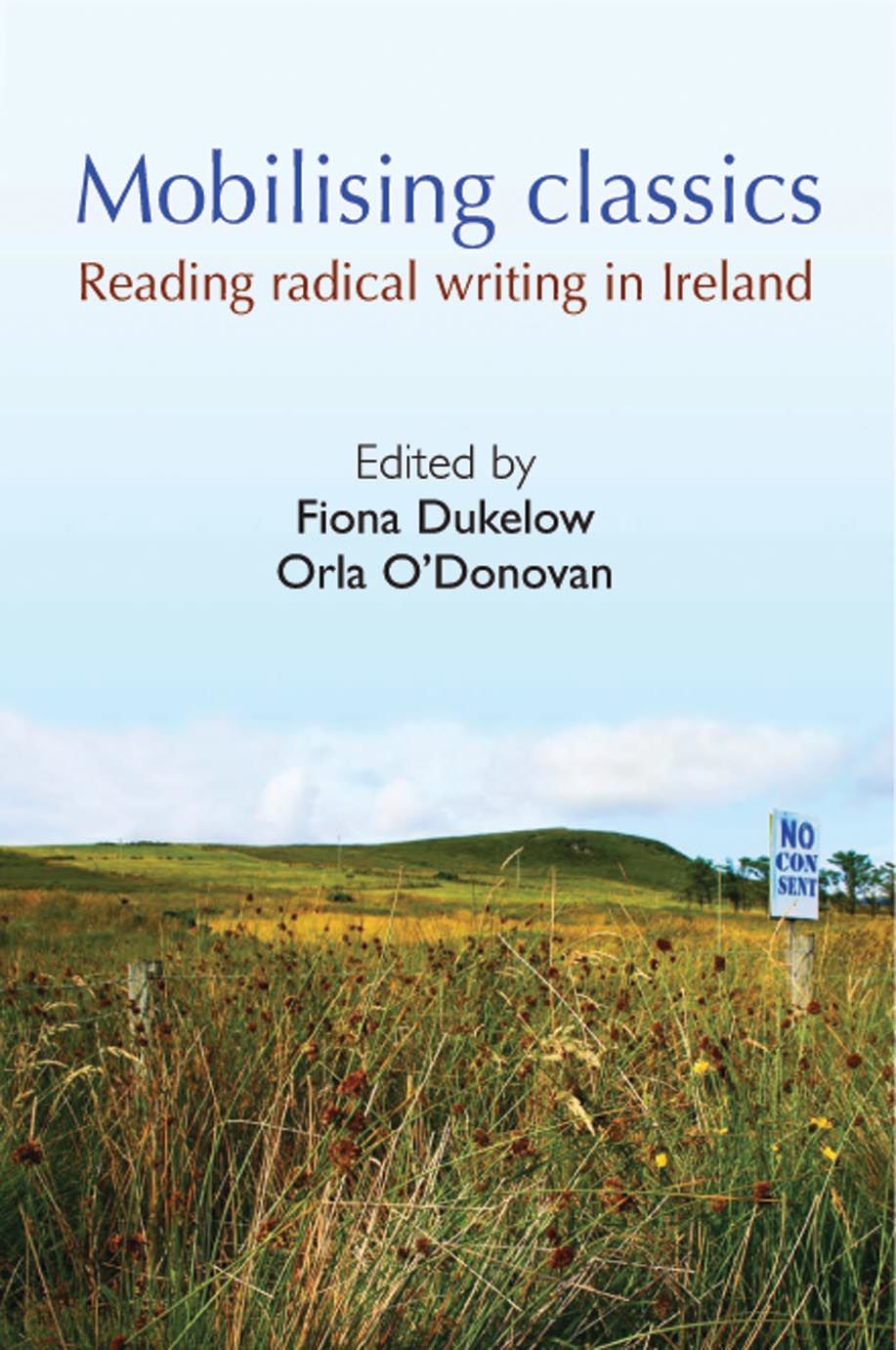
Mobilising Classics
The terms patriarchy, institutional racism, sustainable development and alienation may be familiar but this familiarity is often removed from the analytical contexts in which these ideas emerged. This book provides a series of rich reflections on the interaction between the radical ideas associated with these and other authors, and political action in Ireland.The classic texts that comprise the focal point for each chapter were selected by the contributors, many of whom straddle the boundaries of academia and activism. Each essay provides an account of the contributor’s personal encounters with the text, opens up the key mobilising ideas and considers how the text has the potential invigorate the political imagination of contemporary oppositional politics. This book will be of interest to students in the social sciences, especially sociology and Irish studies and will appeal to those interested or involved in political activism of any variety.
eBook

Democracy in the making
A series of reflections on a political and intellectual life that began in the optimistic period of second-wave socialist feminism, but had to explore how to sustain hope in more difficult times. Central to this process has been consideration of the ongoing relationship between
the personal and the political. Topics covered include happiness as a social good and its relationship to care, both personal and public; the importance to feminism of both economic production and social reproduction; men's violence; the politics of difference; masculinity; queer politics;
transgender politics; and Corbyn and Labour. The focus has always been on how to keep hope alive, how to keep affirming love and solidarity: how and where can we find the most imaginative, interesting and progressive thought and action?
Journal Article

\When a mother is employed, her children suffer\: A quantitative analysis of factors influencing attitudes towards women's employment and gender roles in Rwanda
Socialist feminist theory has assumed that patriarchy and capitalism are the main sources of women's limited roles and related attitudes in society. Informed by this theory and using the data from the World Values Survey wave six, this study aimed at analysing the factors influencing individuals' attitudes towards women's employment and gender roles in Rwandan society. A hierarchical multiple regression modelling method was used to analyse data through R and SPSS statistics programs. The main findings yielded by three research models show that Rwandans express ambivalent attitudes toward women's work and gender roles, comprising both traditional and non-traditional attitudes. Women, young people, highly educated people, private-sector workers and people who rarely use mass media have non-traditional attitudes while men, old people, less educated people, public sector workers, and media-heavy users hold traditional attitudes toward gender roles. Overall, these results bear important theoretical implications as they broaden the existing literature by arguing that patriarchy and capitalism are not the only factors determining peoples' attitudes on women's employment and gender roles as claimed by socialist feminist theory. Instead, the study suggests that additional dynamics including gender, age, educational level, job sectors, and mass media factors work together to shape individuals' attitudes on women's work and gender roles.
Journal Article