
Catalogue Search | MBRL


Are you sure you want to remove the book from the shelf?

{{itemTitle}}
32
result(s) for
"Sociolinguistics -- Cameroon"
Sort by:

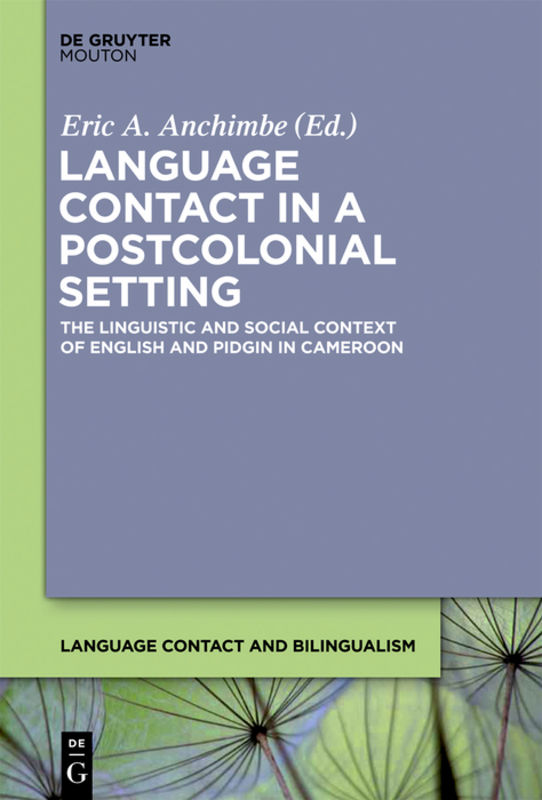
Language Contact in a Postcolonial Setting
This timely book brings together research on the features and evolution of Cameroon English and Cameroon Pidgin English, approached from a variety of innovative multilingual frameworks that focus on the emergence of mother tongue speakers. The authors illustrate how language and population contact, history (colonialism), multilingualism, translation, and indigenization have contributed to shaping the norms of postcolonial Englishes and Pidgins. Employing naturalistic data, the volume provides a new fascinating perspective that better situates and supplements existing research in the fields of African Englishes and Creolistics. It is particularly of key interest to sociolinguists, contact linguists, Africanists, Anglicists, creolists and historical linguists.
eBook
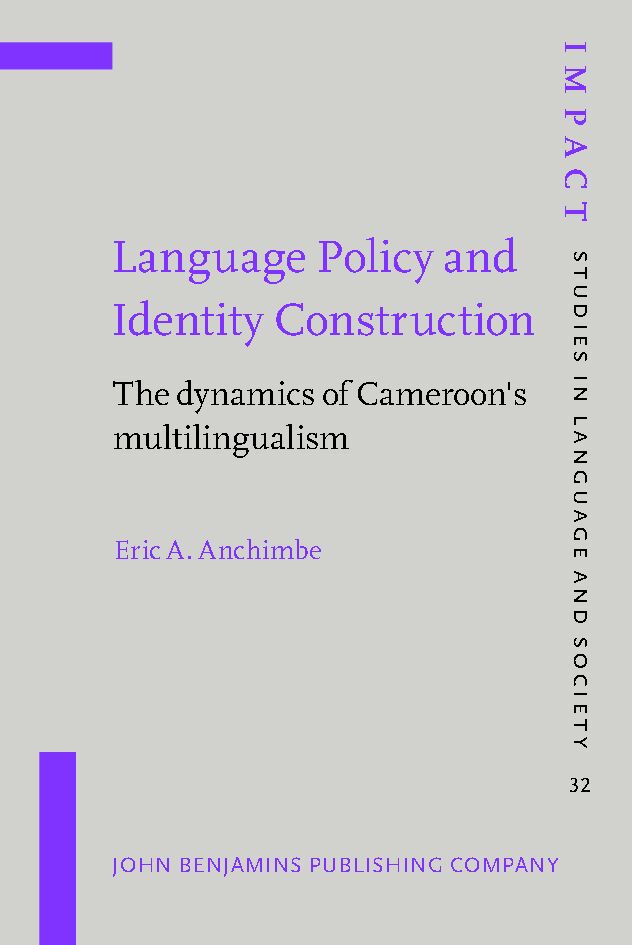
Language policy and identity construction : the dynamics of Cameroon's multilingualism
The (dis)empowerment of languages through language policy in multilingual postcolonial communities often shapes speakers' identification with these languages, their attitude towards other languages in the community, and their choices in interpersonal and intergroup communication. Focusing on the dynamics of Cameroon's multilingualism, this book contributes to current debates on the impact of politic language policy on daily language use in sociocultural and interpersonal interactions, multiple identity construction, indigenous language teaching and empowerment, the use of Cameroon Pidgin English in certain formal institutional domains initially dominated by the official languages, and linguistic patterns of social interaction for politeness, respect, and in-group bonding. Due to the multiple perspectives adopted, the book will be of interest to sociolinguists, applied linguists, pragmaticians, Afrikanists, and scholars of postcolonial linguistics.
eBook
Language Use in Rural Development
No detailed description available for \"Language Use in Rural Development\".
eBook

Language use in rural development : an African perspective
No detailed description available for \"Language Use in Rural Development\".
eBook

English and French bilingual education and language policy in Cameroon: the bottom-up approach or the policy of no policy?
Cameroon, host to around 280 local languages, two European official languages (English and French) and Pidgin English, has been struggling since the 1960s to achieve official bilingualism for national unity and integration. This policy implies that each citizen should learn and use both official languages. The greatest means to implement this language policy has been formal education. However, the failure or mitigated results of the State’s initiatives to produce competent bilingual citizens led to a resurrection and fast dissemination of a defunct education programme launched by the State in 1963 and which consisted of a dual-medium (English and French) and dual-curriculum (British and French curricula) programme offered to a handful of selected Cameroonians. The many obstacles to this atypical and complex programme led the State to stopping the experiment. In 1989, an equivalent programme was launched in two private primary schools and, nowadays, dozens of such schools do the same nationwide without any official recognition. This study examines the State’s tolerance of this very demanding but rapidly spreading programme operating outside the country’s primary education curricula and pedagogical requirements, among other issues, but which seems so attractive to parents. This attractiveness comes from the fact that this dual-medium and dual-curriculum programme enables pupils to become competent bilinguals in English and French. However, because the programme entails extra burdens for parents and pupils, one of the findings this study arrives at is that the same degree of bilingualism could be obtained through a version of the content and language integrated learning (CLIL) approach.
Journal Article

Cameroon English Speech: Intelligibility to Some Chinese Speakers of English Living in Cameroon and Pedagogic Concerns
In the recent past, there have been several calls from Cameroonian scholars for the variety of English spoken within the country to be taught in the Cameroonian classroom, arguing strongly that the acquisition and use of Standard British English (SBE) is far-fetched given the socio-pragmatic realities of the context within which the language is learnt (see, for instance, Atechi, 2006; Ngefac, 2010 & 2011). On the same token, there have been doubts whether Cameroon English (CamE) can be regarded as a variety in its own right (see Simo Bobda, 2002). This study set out to investigate the intelligibility of Cameroon English speech to educated Chinese speakers of English living in Cameroon and to examine what implications the findings can have on English Language teaching (ELT) in Cameroon.
Journal Article

Kingdom of Mankon
This book is a descriptive and documentary analysis of the Mankon I-language and E-language mirrored through aspects of history, geography, flora and fauna. These aspects manifest in the taxonomic nomenclatures attributed to referents in society. Because these referents were hitherto transmitted orally from generation to generation, the author has painstakingly analysed and documented aspects of Mankon culture for posterity. The work focuses in particular on Mankon proverbs for insights into the structure and function of the language. As a vehicle of communication, language plays a primordial role in encoding and decoding metalinguistic data. Through thorough scientific linguistic universals and principals, Chi Che has proposed orthography for Mankon pedagogy that is simple, tenable and practicable. This book is the answer to the international clarion call for societies to analyse and document their endangered indigenous cultures. Schools, linguists, sociolinguists, anthropologists, historians and others will find this book especially useful.
eBook

Camfrang forever! Metacommunication in and about Camfranglais
This paper explores aspects of the deliberate usage, transformation and status-negotiation of Camfranglais in Cameroon. There are many examples of metacommunication among speakers: heated discussions of whether or not this variety should be promoted (even to the status of a national language), lamentations about why teachers and parents dislike and ?ght it so much, and even word planning sessions are not unusual. Based on the analysis of several internet forums as well as material from my own ?eld-research, I examine the close relationship many young Cameroonians – especially those living outside of Cameroon – establish between the use of Camfranglais and their Cameroonian identity. It will be shown that the linguistic awareness of young, urban Camfranglophones is very high, setting it apart from other youth language phenomena worldwide.
Journal Article
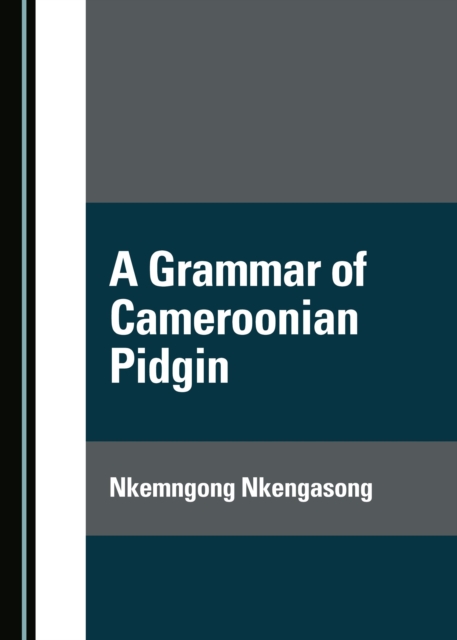
A Grammar of Cameroonian Pidgin
This volume represents a comprehensive description of the structure of Cameroonian Pidgin, including an overview of its socio-cultural context, writing system, sounds, word formation, word classes and sentence structures. It comprises a corpus of 540 Cameroonian Pidgin proverbs and a rich glossary of over 1000 words and expressions typical of Cameroonian Pidgin which are helpful in understanding the characteristic features of the language, as well as the cultural, the social, and the philosophical contexts of the Cameroonian Pidgin speaker. Written with the first-hand experience of a \"native speaker\", it will be of interest to ordinary users, as well as students, researchers and professional linguists interested in the way the language functions. Indeed, it represents a useful resource for anyone wishing to learn or know about Pidgin, especially tourists and professionals traveling to West and Central Africa.
eBook