
Catalogue Search | MBRL


Are you sure you want to remove the book from the shelf?

{{itemTitle}}
105,500
result(s) for
"Sociology -- History"
Sort by:


Recipes for Thought
For a significant part of the early modern period, England was the most active site of recipe publication in Europe and the only country in which recipes were explicitly addressed to housewives.Recipes for Thoughtanalyzes, for the first time, the full range of English manuscript and printed recipe collections produced over the course of two centuries.
Recipes reveal much more than the history of puddings and pies: they expose the unexpectedly therapeutic, literate, and experimental culture of the English kitchen. Wendy Wall explores ways that recipe writing-like poetry and artisanal culture-wrestled with the physical and metaphysical puzzles at the center of both traditional humanistic and emerging \"scientific\" cultures. Drawing on the works of Shakespeare, Spenser, Jonson, and others to interpret a reputedly \"unlearned\" form of literature, she demonstrates that people from across the social spectrum concocted poetic exercises of wit, experimented with unusual and sometimes edible forms of literacy, and tested theories of knowledge as they wrote about healing and baking. Recipe exchange, we discover, invited early modern housewives to contemplate the complex components of being a Renaissance \"maker\" and thus to reflect on lofty concepts such as figuration, natural philosophy, national identity, status, mortality, memory, epistemology, truth-telling, and matter itself. Kitchen work, recipes tell us, engaged vital creative and intellectual labors.
eBook


The American Soul Rush
Yoga. Humanistic Psychology. Meditation. Holistic Healing. These
practices are commonplace today. Yet before the early 1960s they
were atypical options for most people outside of the upper class or
small groups of educated spiritual seekers. Esalen Institute, a
retreat for spiritual and personal growth in Big Sur, California,
played a pioneering role in popularizing quests for
self-transformation and personalized spirituality. This \"soul rush\"
spread quickly throughout the United States as the Institute made
ordinary people aware of hundreds of ways to select, combine, and
revise their beliefs about the sacred and to explore diverse
mystical experiences. Millions of Americans now identify themselves
as spiritual, not religious, because Esalen paved the way for them
to explore spirituality without affiliating with established
denominations The American Soul Rush explores the concept of
spiritual privilege and Esalen's foundational influence on the
growth and spread of diverse spiritual practices that affirm
individuals' self-worth and possibilities for positive personal
change. The book also describes the people, narratives, and
relationships at the Institute that produced persistent, almost
accidental inequalities in order to illuminate the ways that gender
is central to religion and spirituality in most contexts.
eBook


Max Weber's Comparative-Historical Sociology Today
Bringing together the author's major scholarly work on Weber over the last thirty years, Max Weber's Comparative-Historical Sociology Today addresses major themes in Weber's thought, whilst also examining the mode of analysis practised in his comparative-historical writings. By exploring Weber's concepts and procedures, the individual chapters seek to convey the rigor of his research strategies, demonstrating their uniqueness. In this light, this study proceeds to identify as incomplete and then reconstruct the analyses undertaken by Weber of the rise of Confucianism in China, the caste system in India, and monotheism in ancient Israel. The analysis then advances to the modern era, utilising Weber's research procedures to explain the origins of four independent phenomena: the singularity of the American political culture, the cultural foundations of modern citizenship, cultural pessimism (Kulturpessimismus) in nineteenth century Germany, and the 'location' of work in contemporary German society. A dialogue with a variety of recent major schools is pursued throughout this volume. Offering a rich examination of the major themes in Weber's sociology, alongside a reconstruction of his mode of analysis and application of his approach, this book will appeal to scholars around the world with interests in social theory, German and American societies, cultural sociology, political sociology, the sociology of knowledge, comparative-historical sociology, and the sociology of civilizations.
Stephen Kalberg is Associate Professor of Sociology at Boston University and Affiliate of the Center for European Studies, Harvard University, USA. He is author of 'Max Weber's Comparative Historical Sociology' and 'Max Weber Lesen', editor of 'Max Weber: Readings and Commentary on Modernity' and translator of 'Weber's The Protestant Ethic and the Spirit of Capitalism'.
Contents: Introduction; Part I Reconstructing Major Themes: Introduction; Max Weber's types of rationality: cornerstones for the analysis of Rationalization processes in history; Should the 'dynamic autonomy' of ideas matter to sociologists?; Max Weber on the origin of other-worldly salvation religions and the constitution of groups in American society today; The past and present influence of world views: Max Weber on a neglected sociological concept. Part II Weber's Mode of Causal Analysis: Introduction; The perpetual and tight interweaving of past and present in Max Weber's sociology; Macro comparisons: precautions, possibilities, achievements and limitations; The theoretical framework and causal methodology. Part III Reconstructing Significant Developments from Weber's Oeuvre: the Rise and Expansion of Confucianism, the Caste System, and Monotheism: Introduction; The rise and expansion of Confucianism in China; The rise and expansion of the caste system in India; The rise and expansion of monotheism in ancient Israel. Part IV Utilizing Weber I: the Importance of Deep Culture: Introduction: The legacies of ascetic Protestantism and American uniqueness: the political culture of the United States; The cultural foundations of modern citizenship. Part V Utilizing Weber II: Multi-Causal and Contextual-Conjectural Analysis: Introduction; The origin and expansion of Kulturpessimismus: the relationship between public and private spheres in early 20th-century Germany; Culture and the location of work in contemporary Western Germany: a Weberian configurational and comparative analysis. Part VI Conclusion: Bringing Weber Back In: Appendices; References; Index.
eBook

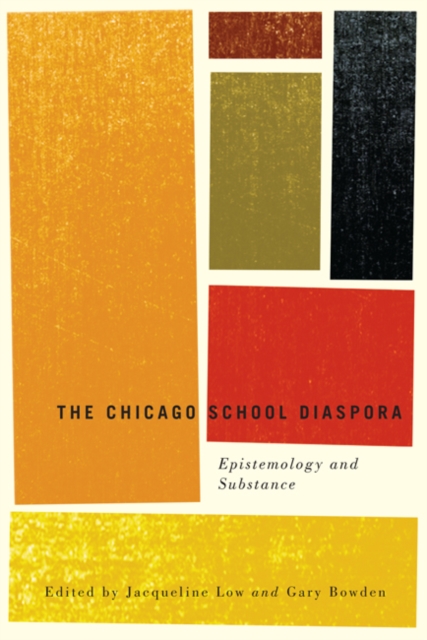
The Chicago School Diaspora
When the University of Chicago was founded in 1892 it established the first sociology department in the United States. The department grew rapidly in reputation and influence and by the 1920s graduates of its program were heading newly formed sociology programs across the country and determining the direction of the discipline and its future research. Their way of thinking about social relations revolutionized the social sciences by emphasizing an empirical approach to research, instead of the more philosophical \"armchair\" perspective that previously prevailed in American sociology. The Chicago School Diaspora presents work by Canadian and international scholars who identify with what they understand as the \"Chicago School tradition.\" Broadly speaking, many of the scholars affiliated with sociology at Chicago understood human behaviour to be determined by social structures and environmental factors, rather than personal and biological characteristics. Contributors highlight key thinkers and epistemological issues associated with the Chicago School, as well as contemporary empirical research. Offering innovative theoretical explanations for the diversity and breadth of its scholarly traditions, The Chicago School Diaspora offers a fresh approach to ideas, topics, and approaches associated with the origins of North American sociology. Contributors include Michael Adorjan (University of Hong Kong, China), Gary Bowden (University of New Brunswick), Jeffrey Brown (University of New Brunswick), Tony Christensen (Wilfrid Laurier University), Luis Cisneros (postdoctoral scholar, University of Arizona), Gary A. Cook (Beloit College), Mary Jo Deegan (University of Nebraska-Lincoln), Scott Grills (Brandon University), Mervyn Horgan (Acadia University), Mark Hutter (Rowan University), Benjamin Kelly (Nipissing University), Rolf Lindner (Humboldt University & HafenCity University, Germany), Jacqueline Low (University of New Brunswick), Mourad Mjahed (Peace Corps, Rabat, Morocco), DeMond S. Miller (Rowan University), Edward Nell (New School for Social Research), David A. Nock (Lakehead University), Defne Över (PhD candidate, Cornell University), George Park (Memorial University), Thomas K. Park (University of Arizona), Dorothy Pawluch (McMaster University), Robert Prus (University of Waterloo), Antony J. Puddephatt (Lakehead University), Isher-Paul Sahni (Concordia University), Roger A. Salerno (Pace University), William Shaffir (McMaster University), Greg Smith (University of Salford, UK), Robert A. Stebbins (University of Calgary), Izabela Wagner (Warsaw University, Poland and CEMS EHESS - School for Advanced Studies in Social Sciences, France), and Yves Winkin (ENS Lyon, France).
eBook


The Babylon Complex: Theopolitical Fantasies of War, Sex, and Sovereignty
Babylon is a surprisingly multivalent symbol in U.S. culture and politics. Political citations of Babylon range widely, from torture at Abu Ghraib to depictions of Hollywood glamour and decadence. In political discourse, Babylon appears in conservative ruminations on democratic law, liberal appeals to unity, Tea Party warnings about equality, and religious advocacy for family values. A composite biblical figure, Babylon is used to celebrate diversity and also to condemn it, to sell sexuality and to regulate it, to galvanize war and to worry about imperialism. Erin Runions explores the significance of these shifts and contradictions, arguing that together they reveal a theopolitics that tries to balance the drive for U.S. dominance with the countervailing ideals and subjectivities of economic globalization. Examining the confluence of cultural formations, biblical interpretations, and (bio)political philosophies, The Babylon Complex shows how theopolitical arguments for war, sexual regulation, and political control both assuage and contribute to anxieties about waning national sovereignty. Theoretically sophisticated and engaging, this remarkable book complicates our understanding of how the Bible affects U.S. political ideals and subjectivities.
eBook