
Catalogue Search | MBRL


Are you sure you want to remove the book from the shelf?

{{itemTitle}}
70,295
result(s) for
"Sociology of culture"
Sort by:


Bright Futures in Malawi’s New Dawn: Educational Aspirations as Assertions of Identity
Imagined futures, once a vital topic of theoretical inquiry within the sociology of culture, have been sidelined in recent decades. Rational choice models cannot explain the seemingly irrational optimism of youth aspirations, pointing to the need to explore other alternatives. This article incorporates insights from pragmatist theory and cognitive sociology to examine the relationship between imagined futures and present actions and experiences in rural Malawi, where future optimism appears particularly unfounded. Drawing from in-depth interviews and archival sources documenting ideological campaigns promoting schooling, the author shows that four elements are understood to jointly produce educational success: ambitious career goals, sustained effort, unflagging optimism, and resistance to temptation. Aspirations should be interpreted not as rational calculations, but instead as assertions of a virtuous identity, claims to be \"one who aspires.\"
Journal Article


Cultural Holes: Beyond Relationality in Social Networks and Culture
A burgeoning literature spanning sociologies of culture and social network methods has for the past several decades sought to explicate the relationships between culture and connectivity. A number of promising recent moves toward integration are worthy of review, comparison, critique, and synthesis. Network thinking provides powerful techniques for specifying cultural concepts ranging from narrative networks to classification systems, tastes, and cultural repertoires. At the same time, we see theoretical advances by sociologists of culture as providing a corrective to network analysis as it is often portrayed, as a mere collection of methods. Cultural thinking complements and sets a new agenda for moving beyond predominant forms of structural analysis that ignore action, agency, and intersubjective meaning. The notion of \"cultural holes\" that we use to organize our review points both to the cultural contingency of network structure and to the increasingly permeable boundary between studies of culture and research on social networks.
Journal Article

Democracy versus Distinction: A Study of Omnivorousness in Gourmet Food Writing
The American culinary field has a experienced a broadening in recent decades. While French food retains high status, gourmet food can now come from a broad range of cuisines. This change mirrors a broadening in other cultural fields labeled \"omnivorousness\" within the sociology of culture. The authors take gourmet food writing as a case study to understand the rationales underlying omnivorousness. Their findings, based on qualitative and quantitative data, reveal two frames used to valorize a limited number of foods: authenticity and exoticism. These frames resolve a tension between an inclusionary ideology of democratic cultural consumption on the one hand, and an exclusionary ideology of taste and distinction on the other. This article advances our understanding of how cultural consumption sustains status distinctions in the face of eroding boundaries between highbrow and lowbrow culture. [PUBLICATION ABSTRACT]
Journal Article

Leisure studies in a global era
\"The way in which leisure is used to construct whiteness and the way in which whiteness shapes leisure, is an important unanswered theme in sociological analyses of leisure. This book develops a new theory of instrumental whiteness and leisure, which draws in part on existing leisure theories and in part on the critical theorising around \"race\" and whiteness. In developing a new theory of whiteness and leisure, new primary and existing secondary empirical research is drawn upon to highlight whiteness across a comprehensive and internationally-grounded range of leisure practices. The book explores sports participation, sports media and sports fandom, informal leisure, outdoor leisure, music, popular culture and tourism. This book is grounded in Spracklen's development of leisure theory that uses a Habermasian framework of communicative and instrumental rationalities and actions to understand the tensions between utopian theories of individualized leisure and dystopian theories of increasing constraint and control. \"-- Provided by publisher.
Book
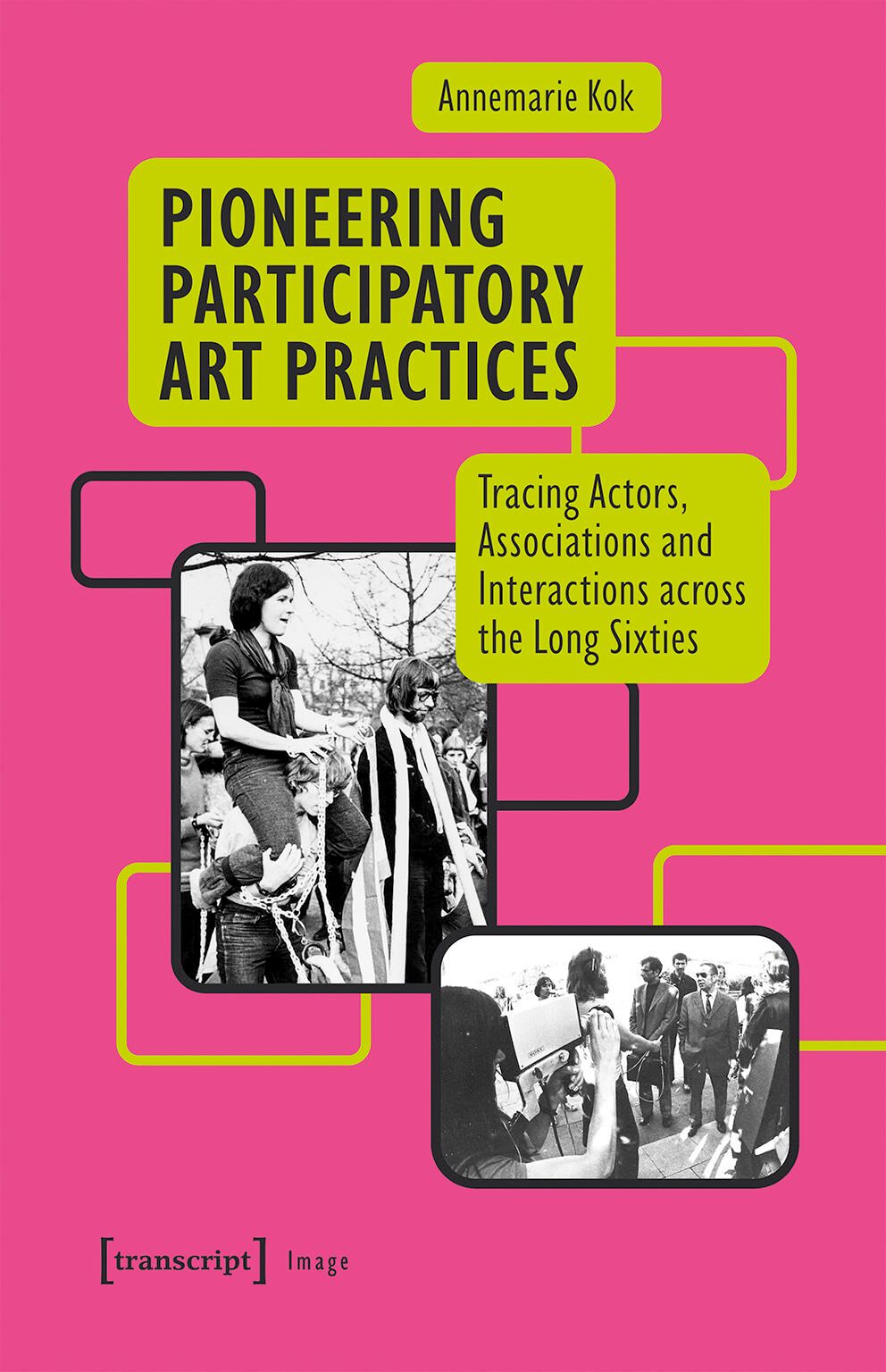
Pioneering Participatory Art Practices
Participatory art practices allow members of an audience to actively contribute to the creation of art.Annemarie Kok provides a detailed analysis and explanation of the use of participatory strategies in art in the so-called long sixties (starting around 1958 and ending around 1974) in Western Europe.
eBook

What Is Organizational Imprinting? Cultural Entrepreneurship in the Founding of the Paris Opera
Organization theorists have long recognized that organizations take on elements from their environments in the course of being founded. This observation, articulated by Stinchcombe in 1965 and known today as the 'organizational imprinting hypothesis,' is frequently cited but remains little understood. Advances in cultural sociology and entrepreneurship studies have provided tools for unpacking this process. The author draws on these tools to underscore the role played by entrepreneurs in selecting and incorporating historically specific elements that may remain for decades or even centuries as fundamental features of the organization in question. The founding of the Paris Opera under Louis XIV serves as the basis for theorizing organizational imprinting at founding as an outcome of cultural entrepreneurship. Adapted from the source document.
Journal Article