
Catalogue Search | MBRL


Are you sure you want to remove the book from the shelf?

{{itemTitle}}
467
result(s) for
"Solar system Origin."
Sort by:

A history of the solar system
\"This well illustrated book presents a compact history of the Solar System from its dusty origins 4,600,000 years ago to the present day. Its primary aim is to show how the planets and their satellites, comets, meteors, interplanetary dust, solar radiation and cosmic rays continually interact, sometimes violently, and it reflects humanity's progress in exploring and interpreting this history. The book is intended for a general readership at a time when human and robotic exploration of space is often in the news and should also appeal to students at all levels. It covers the essentials but refers to a large literature which can be accessed via the Internet.\"--Page [4] cover.
Book

Origins
Jim Baggott sets out the scientific story of creation - 13.8 billion years from the Big Bang to human consciousness, via the origins of space and time, mass and light, stars, the habitable earth, and life itself. From astrophysics to biology, the whole inspiring picture is here.
eBook


Our place in the universe
Our Place in the Universe tells the story of our world, formation of the first galaxies and stars formed from great clouds containing the primordial elements made in the first few minutes; birth of stars, their lives and deaths in fiery supernova explosions; formation of the solar system, its planets and many moons; life on Earth, its needs and vicissitudes on land and in the seas; finally exoplanets, planets that surround distant stars. Interspersed in the text are short pieces on some of those who revealed these wonders to us. It is written in a very authoritative and readable form and contains more than 100 color prints of the marvelous galaxies, and nebula that have been taken from space-based and land-based telescopes carried by NASA missions, the European Space Agency, the European Southern Laboratory in Chile and many other sources.
eBook


Multiple generations of grain aggregation in different environments preceded solar system body formation
The solar system formed from interstellar dust and gas in a molecular cloud. Astronomical observations show that typical interstellar dust consists of amorphous (a-) silicate and organic carbon. Bona fide physical samples for laboratory studies would yield unprecedented insight about solar system formation, but they were largely destroyed. The most likely repositories of surviving presolar dust are the least altered extraterrestrial materials, interplanetary dust particles (IDPs) with probable cometary origins. Cometary IDPs contain abundant submicron a-silicate grains called GEMS (glass with embedded metal and sulfides), believed to be carbon-free. Some have detectable isotopically anomalous a-silicate components from other stars, proving they are preserved dust inherited from the interstellar medium. However, it is debated whether the majority of GEMS predate the solar system or formed in the solar nebula by condensation of high-temperature (>1,300 K) gas. Here, we map IDP compositions with single nanometer-scale resolution and find that GEMS contain organic carbon. Mapping reveals two generations of grain aggregation, the key process in growth from dust grains to planetesimals, mediated by carbon. GEMS grains, some with a-silicate subgrains mantled by organic carbon, comprise the earliest generation of aggregates. These aggregates (and other grains) are encapsulated in lower-density organic carbon matrix, indicating a second generation of aggregation. Since this organic carbon thermally decomposes above ∼450 K, GEMS cannot have accreted in the hot solar nebula, and formed, instead, in the cold presolar molecular cloud and/or outer protoplanetary disk. We suggest that GEMS are consistent with surviving interstellar dust, condensed in situ, and cycled through multiple molecular clouds.
Journal Article

The sun and the origins of the solar system
\"A book for teens about the sun and the origins of the solar system\"-- Provided by publisher.
Book

Laboratory Studies Towards Understanding Comets
This review presents some of the recent advancements in our understanding of comets facilitated by laboratory studies, need for new laboratory simulations, and predictions for future explorations. With the spacecraft Rosetta at the comet 67P/Churyumov–Gerasimenko, a large volume of science data is expected to follow early results that have been published recently. The most surprising of them being hard ice shell that bounced the lander Philae a couple of times before settling on the comet. Long evaded molecular nitrogen has now been detected in the comet 67P/CG. The observed density of
470
kg
m
−
3
is in line with other comet observations, whereas the nature and composition of hydrocarbons detected on the surface are still a puzzle. Observation of D/H ratio that deviates significantly from Earth’s water D/H ratio brings back to the table the long-standing question whether or not water on Earth was delivered by comet impacts. Our review summarizes some of the critical laboratory work that helps improve our understanding of cometary interior (whether amorphous or crystalline or containing clathrates), cometary surface (rich of complex organics), cometary coma and tail (D/H ratio, negative ions, and photoluminescence). Outstanding questions are also discussed.
Journal Article

Pluto : sentinel of the outer solar system
An account of Pluto for general readers, amateur astronomers and students alike.
Book
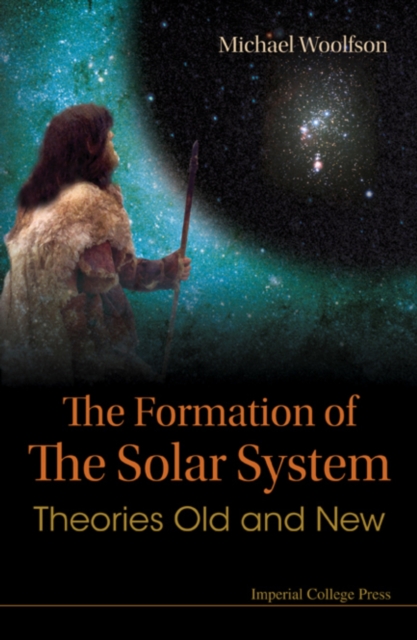
The formation of the solar system
This book traces the development of ideas about the origin of the Solar System from ancient times to the present day. A survey of more modern ideas, covering the last 200 years or so, highlights the difficulties experienced by theories and also points the way towards the development of a more successful theory. In particular, the current “standard model” — the Solar Nebula Theory — is examined and discussed in some detail. After more than thirty years of development, this theory has still not settled down into an agreed form, as it experiences both theoretical difficulties and problems with reconciling new observations. By contrast, the Capture Theory, developed over the last forty years by the author, and supported by recent observations provides a complete description of the formation of the Solar System, including an evolutionary hypothesis that explains the detailed structure of the system. Written in an informative yet accessible manner, this book will appeal to both specialist and non-specialist readers alike.
eBook