
Catalogue Search | MBRL


Are you sure you want to remove the book from the shelf?

{{itemTitle}}
5
result(s) for
"Soldiers United States Social conditions 18th century."
Sort by:

Becoming men of some consequence : youth and military service in the Revolutionary War
\"This book examines young Revolutionary War soldiers' and officers' changing motivations and expectations in relation to their enlistments, experiences in the army, choices about quitting long-term military service, and their attempts to rejoin civilian life after the war\"--Provided by publisher.
Book

George Washington's enforcers : policing the Continental Army
A well-disciplined army was vital to win American independence, but policing soldiers during the Revolution presented challenges.George Washington's Enforcers: Policing the Continental Army examines how justice was left to the overlapping duties of special army personnel and how an improvised police force imposed rules and regulations.
eBook
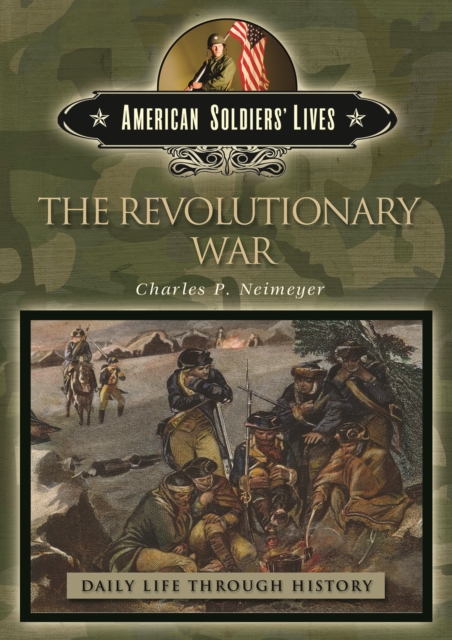
The Revolutionary War
American soldiers eventually make King George say uncle in spite of profound hardships and deprivation. Nearly everyone in the U.S. has studied the Revolutionary War. Too often, however, historians of the Revolution focus on the activity of the army without noticing what was taking place inside the army. Making liberal use of diaries and correspondence by the soldiers and their families, Charles P. Neimeyer tells the stories of the men and women who fought for the young country's independence. Sometimes starting off as rag-tag groups of men shooting off their muskets at geese just for the thrill of the sound, the soldiers became more disciplined and focused. The army recruited a significant number of African American soldiers, who fought side by side with whites. Women also fought and served in the army, either masquerading as male soldiers or providing support for army operations in camp and on the march. Suffering through times of numbing cold and starvation where men boiled their shoes for food, the sheer perseverance of the soldiers in the ranks ultimately won the war for independence. Presenting stories from letters and diaries of the men and women of the time, this volume reveals the stories of fear, exhaustion, hard work, grief, and exhilaration of the people in the camps and on the march. Highlights include: ; Recruitment, which included just about any healthy man willing to serve, including immigrants and enemy POWs ; General Washington's attempts to create a model, respectable army ; Attempts at medical treatment, and the ravages of smallpox, which left men dying at makeshift hospitals ; African American soldiers in the War ; Women's contributions to war efforts, whether in disguise as soldiers, or in filling in for husbands killed in battle ; Daily life in the camp: the monotony, the lack of food and supplies, drinking, sleeping in huts and out in the open, games, letter writing and religious observations ; The failure to fairly pay the soldiers as they mustered out of service The book also includes a timeline that puts dates and events in better perspective; a comprehensive, topically arranged bibliography; and a thorough index.
eBook

Vice in the Barracks
This book examines the colonial state's approach to venereal disease and 'vice'-driven health risks in the first half of the nineteenth century. Further, it shows that these decisions had wide-ranging and often surprising consequences not simply for the army itself, but for India and the empire more broadly.
eBook

Suffering Soldiers: Revolutionary War Veterans, Moral Sentiment, and Political Culture in the Early Republic
\"Suffering Soldiers: Revolutionary War Veterans, Moral Sentiment, and Political Culture in the Early Republic\" by John Resch is reviewed.
Book Review