
Catalogue Search | MBRL


Are you sure you want to remove the book from the shelf?

{{itemTitle}}
289
result(s) for
"Somaliland"
Sort by:
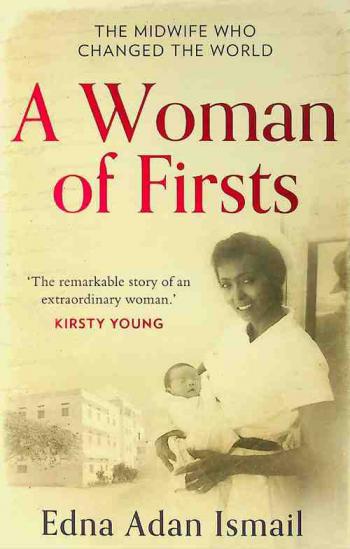
A woman of firsts
The indomitable Edna Adan Ismail survived imprisonment, persecution, and civil war to become a pioneering politician, a leading light in the World Health Organisation, and a global campaigner for women's rights. The eldest child of an overworked doctor in the British Protectorate of Somaliland, Edna was the first midwife in Somaliland, she campaigned tirelessly for better healthcare for women and fought for women on a global stage as the first female Foreign Minister of her country. But mixing with presidents and princes, she still never forgot her roots and continued to deliver children and train midwives - a role she has to this day. At 81 years old, she still runs what is hailed as the Horn of Africa's finest university hospital where she trains future generations and still delivers babies. After all - as she puts it - she is 'simply a midwife.'

Somaliland i Tajwan – współpraca państw nieuznawanych w cieniu rozgrywki geopolitycznej mocarstw w Rogu Afryki
SOMALILAND AND TAIWAN – THE COOPERATION OF UNRECOGNIZED COUNTRIES IN THE SHADOW OF THE GEOPOLITICAL GAME OF SUPERPOWERS IN THE HORN OF AFRICA Separated by thousands of kilometers and very different cultures, histories, and economies, Taiwan and Somaliland appear to have little in common. Like Taiwan, Somaliland was created in the aftermath of a civil war. The consequences of those conflicts continue to shape the political status of both countries. Since the declaration of independence from Somalia in 1991, Hargeisa, like Taipei, has been trying to secure its existence, because both states cannot count on international recognition, and their independence is contested by the states from which they seceded. Despite being forced to exist on the periphery of the international community, both de facto states still try to be active participants in global affairs. Relations between unrecognized states are also an element of the game between the main players in this region, the US and China. Washington, concerned about Beijing’s political and economic expansion in the Horn of Africa, is trying to limit it, and one of the elements of this policy is indirect support for the strategically located Somaliland through its ally from Taipei.
Journal Article


Consider Somaliland
Can 'traditional' leaders and institutions help to build more legitimate, accountable and effective governments in polities or 'states' under (re)construction? This book investigates the fascinating case of \"Somaliland\", the 20-year old non-recognized state which emerged from Somalia's conflict and state collapse.
eBook

Vulnerability and adaptive capacity of fisheries-dependent communities on the Coast of Berbera to climate change
Fisheries-dependent communities in the Horn of Africa, specifically Somaliland, are highly vulnerable to climate change. However, empirical research on their specific perceptions and adaptation strategies is limited. This study addresses this gap by focusing on the fisheries community in Berbera, Somaliland. Using a mixed-methods approach, this study combined a quantitative survey of 286 households with qualitative data from Key Informant Interviews, Focus Group Discussions, and observations to assess climate perceptions, document adaptation strategies, and identify key determinants and constraints. Descriptive statistics were used to analyze the participants’ perceptions and strategies, while thematic analysis was applied to the qualitative data. Logistic regression was used to identify the key determinants of adaptation. The findings revealed a very high level of climate change perception (96%), with fishers primarily identifying increased wind strength and temperature fluctuations as major threats, leading to reduced production and equipment damage. In response, the community relies heavily on reactive coping mechanisms, such as the distress sale of household assets (99.3%), rather than proactive technical adaptation. Key constraints include financial, technical, and knowledge-based barriers, all of which are underpinned by significant institutional weaknesses. Regression analysis confirmed that education, income, access to services, and fishing experience are significant and positive determinants of adopting more proactive strategies. This study concludes that the Berbera fishing community exhibits high vulnerability, characterized by high awareness but constrained adaptive capacity. Targeted interventions are urgently needed to strengthen financial access, technical capacity, and institutional support to build long-term resilience in the fisheries sector.
Journal Article

Advancing early childhood education policy: a transformative case study in Hargeisa, Somaliland-insights from preprimary education development
This qualitative case study explores the implementation of early childhood education (ECE) policies in three selected centers in Hargeisa, Somaliland. Through semi-structured interviews with nine participants, including teachers and head teachers, the research identified significant gaps between policy guidelines and actual practice. The study found that ECE programs often last only one year instead of the policy-recommended two years, creating developmental challenges for children aged four and five. Additionally, safety issues arise due to high-traffic areas near schools, insufficient teacher training, lack of adequate learning materials, and inadequate playground facilities. This study underscores the necessity for the Somaliland Ministry of Education and Science (MOE&S) to enforce policy adherence and allocate resources at grassroots levels to enhance the quality of ECE. Urgent reforms are advised to bridge these gaps, aligning policy implementation with local needs and fostering a better learning environment for young children. Findings provide insights for policymakers, emphasizing the importance of sustained community engagement, adequate funding, and international partnerships to enhance the sustainability and effectiveness of ECE policies in Somaliland's socio-political context.
Journal Article

Exclusive breastfeeding for the first six months of life and its associated factors among children age 6-24 months in Burao district, Somaliland
Background
Adequate nutrition during early childhood ensures growth and development of children and breast milk is better than any other products given to a child. However, studies on exclusive breastfeeding practice are limited in Somaliland. Therefore, this study was aimed to assess exclusive breastfeeding for the first 6 months of life and its associated factors among children 6–24 months of age in Burao district, Somaliland.
Methods
A community-based cross-sectional study was conducted from 26 August to 10 October 2018, in Burao district among randomly, selected 464 mothers with children 6–24 months of age. Data were collected through face-to-face interview using pretested structured questionnaire.
Results
The prevalence of exclusive breastfeeding was 20.47% (95% CI 18.84, 23.63%). Exclusive breastfeeding practice was associated with: having female child (AOR 0.48; 95% CI 0.29, 0.80)), lack of formal education (AOR 0.32; 95% CI 0.19, 0.53), household monthly income 100$-200$ (AOR 0.35;95% CI 0.18, 0.68), lack of husband’s support (AOR 0.32; 95% CI 0.19, 0.53), and mothers who were not counselled on breastfeeding during antenatal care (AOR = 0.33; 95% CI 0.16, 0.66).
Conclusions
Exclusive breastfeeding practice was very low as compared to recommendations of infant and young child practice (IYCF) which recommends children to exclusively breastfeed for the first 6 months of life. Exclusive breastfeeding practice was associated with a mother’s lack of formal education, monthly income less than 100$, being a female child, lack of advice on exclusive breastfeeding during antenatal care and lack of husband support. The promotion of education for women, husband’s engagement, encouraging antenatal care follow-up and counseling of exclusive breastfeeding during antenatal care was recommended to improve exclusive breastfeeding practice.
Journal Article

The suicidal state in Somalia
This book documents and delves into the reign and rule of the Siad Barre regime that ruled Somalia from 1969 up to 1991. It traces what went wrong with the post-colonial Somali State once colonial rule passed to the Somali hands.
eBook

Pastoralism and Development in Africa
Once again, the Horn of Africa has been in the headlines. And once again the news has been bad: drought, famine, conflict, hunger, suffering and death. The finger of blame has been pointed in numerous directions: to the changing climate, to environmental degradation, to overpopulation, to geopolitics and conflict, to aid agency failures, and more. But it is not all disaster and catastrophe. Many successful development efforts at ‘the margins’ often remain hidden, informal, sometimes illegal; and rarely in line with standard development prescriptions. If we shift our gaze from the capital cities to the regional centres and their hinterlands, then a very different perspective emerges. These are the places where pastoralists live. They have for centuries struggled with drought, conflict and famine. They are resourceful, entrepreneurial and innovative peoples. Yet they have been ignored and marginalised by the states that control their territory and the development agencies who are supposed to help them. This book argues that, while we should not ignore the profound difficulties of creating secure livelihoods in the Greater Horn of Africa, there is much to be learned from development successes, large and small. This book will be of great interest to students and scholars with an interest in development studies and human geography, with a particular emphasis on Africa. It will also appeal to development policy-makers and practitioners.
eBook