
Catalogue Search | MBRL


Are you sure you want to remove the book from the shelf?

{{itemTitle}}
3
result(s) for
"Somalis Kenya Social conditions."
Sort by:


Little White Houses
A rare exploration of the racial and class politics of architecture, Little White Houses examines how postwar media representations associated the ordinary single-family house with middle-class whites to the exclusion of others, creating a powerful and invidious cultural iconography that continues to resonate today. Drawing from popular and trade magazines, floor plans and architectural drawings, television programs, advertisements, and beyond, Dianne Harris shows how the depiction of houses and their interiors, furnishings, and landscapes shaped and reinforced the ways in which Americans perceived white, middle-class identities and helped support a housing market already defined by racial segregation and deep economic inequalities.After describing the ordinary postwar house and its orderly, prescribed layout, Harris analyzes how cultural iconography associated these houses with middle-class whites and an ideal of white domesticity. She traces how homeowners were urged to buy specific kinds of furniture and other domestic objects and how the appropriate storage and display of these possessions was linked to race and class by designers, tastemakers, and publishers. Harris also investigates lawns, fences, indoor-outdoor spaces, and other aspects of the postwar home and analyzes their contribution to the assumption that the rightful owners of ordinary houses were white.Richly detailed, Little White Houses adds a new dimension to our understanding of race in America and the inequalities that persist in the U.S. housing market.
eBook
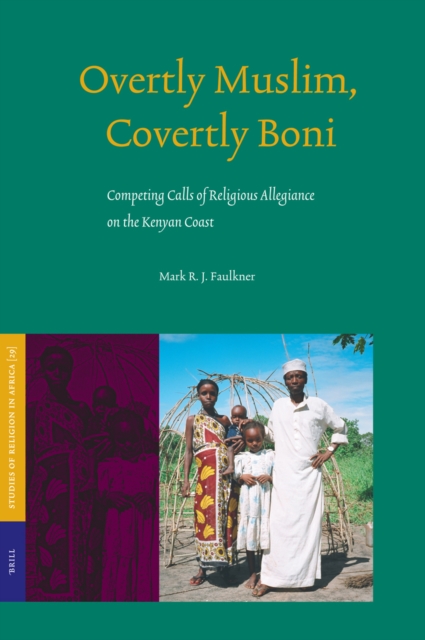
Overtly Muslim, covertly Boni : competing calls of religious allegiance on the Kenyan coast
This volume explores the way of life of the Boni community, a hunter-gatherer people that straddle the Kenya/Somali border in East Africa. The Boni converted to Islam some fifty years ago and the reasons for this, both internal and external to the community, are identified.
eBook