
Catalogue Search | MBRL


Are you sure you want to remove the book from the shelf?

{{itemTitle}}
26
result(s) for
"South Africa -- History -- 1961-1994"
Sort by:

The ANC's War against Apartheid
For nearly three decades, Umkhonto we Sizwe (MK), the armed wing of the African National Congress (ANC), waged a violent revolutionary struggle against the apartheid state in South Africa. Stephen Davis works with extensive oral testimonies and the heroic myths that were constructed after 1994 to offer a new history of this armed movement. Davis deftly addresses the histories that reinforce the legitimacy of the ANC as a ruling party, its longstanding entanglement with the South African Communist Party, and efforts to consolidate a single narrative of struggle and renewal in concrete museums and memorials. Davis shows that the history of MK is more complicated and ambiguous than previous laudatory accounts would have us believe, and in doing so he discloses the contradictions of the liberation struggle as well as its political manifestations.
eBook

The love song of Andrâe P. Brink : A biography
The love song of Andrâe P Brink is the first biography of this major South African novelist who, during his lifetime, was published in over 30 languages and ranked with the likes of Gabriel Garcâia Mâarquez, Peter Carey and Aleksandr Solzhenitsyn. Leon de Kock's eagerly awaited account of Brink's life is richly informed by a previously unavailable literary treasure: the dissident Afrikaner's hoard of journal-writing, a veritable chronicle that was 54 years in the making. In this massive new biographical source - running to a million words - Brink does not spare himself, or anyone else for that matter, as he narrates the ups and downs of his five marriages and his compulsive affairs with a great number of women. These are precisely the topics that the rebel in both politics and sex skated over in his memoir, A Fork in the Road. De Kock's biographical study of the author who came close to winning the Nobel Prize for Literature not only synthesises the journals but also subjects them to searching critical analysis. In addition, the biographer measures the journals against additional sources, scholarly and otherwise, among them the testimonies of Brink's friends, family, wives and lovers. The Love Song of Andrâe P Brink subjects Brink's literary legacy to a bracing academic reevaluation, making this major new biography a crucial addition to scholarship on Brink.
Book

Fordsburg Fighter
When Amin Cajee left South Africa to join the liberation struggle he believed he had volunteered to serve ,a democratic movement dedicated to bringing down an oppressive and racist regime,. Instead, he writes, in this powerful and courageous memoir, ,I found myself serving a movement that was relentless in exercising power and riddled with corruption,. Fordsburg Fighter traces an extraordinary physical journey , from home in South Africa, to training in Czechoslovakia and the ANC,s Kongwa camp in Tanzania to England. The book makes a significant contribution to the hidden history of exile, and documents Cajee,s emotional odyssey from idealism to disillusionment.
eBook


A just defiance
Both a riveting courtroom drama and a real-life thriller, A Just Defiance tells the story of four young black South Africans who were arrested for a string of political murders in 1987. In gripping prose, Peter Harris—the white lawyer who defended the men—describes how he came to understand, while constructing the case to save the defendants from the death penalty, the chain of events that led them to undergo training at ANC camps in Angola and return to their homeland to execute some of the apartheid regime's most notorious collaborators. The shocking twists and turns of the high-profile trial kept the public in suspense during the dying days of apartheid. Harris's account of the trial is intercut with flashbacks to instances of the cold-blooded brilliance and deadly efficiency of the squad's operations. We see Nelson Mandela recently released from Robben Island as he begins negotiations that will eventually lead to the assumption of power by the ANC. We read about bomb-making and assassination attempts by both the ANC and the South African police. A critical and popular success in South Africa, this book is a tale of people driven to extremes by injustice and repression, and of ordinary citizens caught up in extraordinary events. Finally, it is the story of a country's search for reconciliation, one that captures the moral vertigo of South Africa's violent apartheid years.
eBook

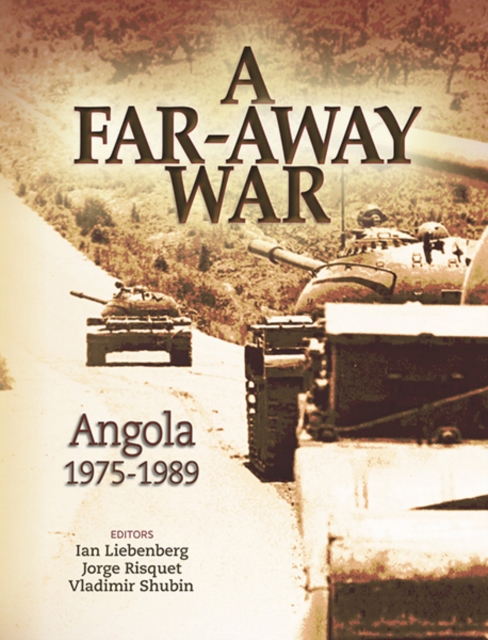
Far-Away War
South Africa's armed forces invaded Angola in 1975, setting off a war that had consequences for the whole region that are still felt today. A Far-Away War contributes to a wider understanding of this war in Angola and Namibia. The book does not only look at the war from an \"old\" South African (Defence Force) perspective, but also gives a voice to participants \"on the other side\" - emphasising the role of the Cubans and Russians. This focus is supplemented by the inclusion of many never-before-published photographs from Cuban and Russian archives, and a comprehensive bibliography.
eBook

The soccer fence : a story of friendship, hope and apartheid in South Africa
Each time Hector watches white boys playing soccer in Johannesburg, South Africa, he dreams of playing on a real pitch one day. After the fall of apartheid, when he sees the 1996 African Cup of Nations team, he knows that his dream can come true.
Book
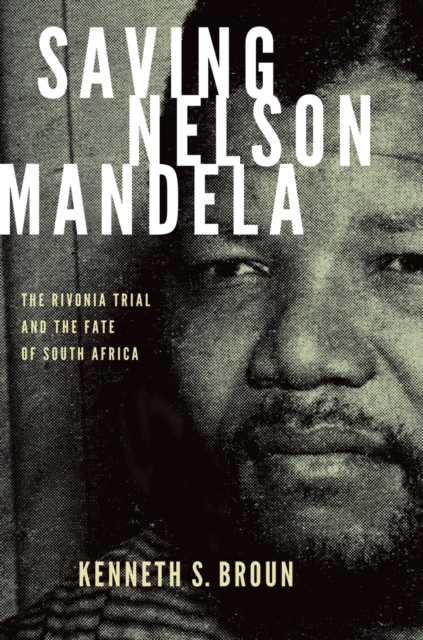
Saving Nelson Mandela : the Rivonia trial and the fate of South Africa
When South Africa's apartheid government charged Nelson Mandela with planning its overthrow in 1963, most observers feared that he would be sentenced to death. But the support he and his fellow activists in the African National Congress received during his trial not only saved his life, but also enabled him to save his country. This book recreates the trial—called the “Rivonia” Trial after the Johannesburg suburb where police seized Mandela. Based upon interviews with many of the case's primary figures and portions of the trial transcript, the book situates readers inside the courtroom at the imposing Palace of Justice in Pretoria. Here, the trial unfolds through a dramatic narrative that captures the courage of the accused and their defense team, as well as the personal prejudices that colored the entire trial. The Rivonia trial had no jury and only a superficial aura of due process, combined with heavy security that symbolized the apartheid government's system of repression. The book shows how outstanding advocacy, combined with widespread public support, in fact backfired on apartheid leaders, who sealed their own fate. Despite his twenty-seven-year incarceration, Mandela's ultimate release helped move his country from the racial tyranny of apartheid toward democracy.
eBook