
Catalogue Search | MBRL


Are you sure you want to remove the book from the shelf?

{{itemTitle}}
37
result(s) for
"South Africa Foreign relations 21st century."
Sort by:

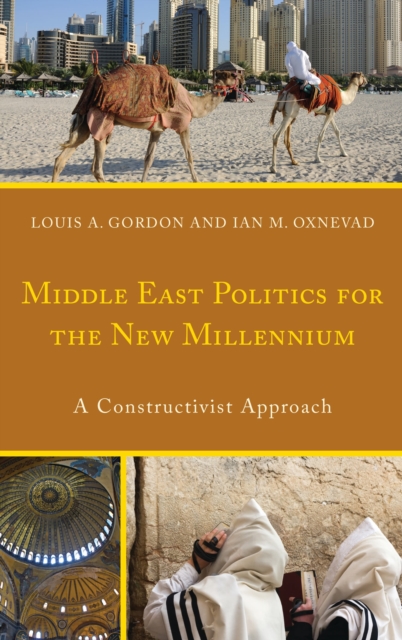
Middle East Politics for the New Millennium
This book explores the domestic and international relations of countries in the Middle East and North Africa using the focus of ideas and repeat interactions employed by constructivism. This book incorporates rich history and analyses of political trends and figures of the region to develop a deeper understanding of Middle East politics.
eBook


The rise of China and India in Africa
In recent years, China and India have become the most important economic partners of Africa and their footprints are growing by leaps and bounds, transforming Africa's international relations in a dramatic way. Although the overall impact of China and India's engagement in Africa has been positive in the short-term, partly as a result of higher returns from commodity exports fuelled by excessive demands from both countries, little research exists on the actual impact of China and India's growing involvement on Africa's economic transformation. This book examines in detail the opportunities and challenges posed by the increasing presence of China and India in Africa, and proposes critical interventions that African governments must undertake in order to negotiate with China and India from a stronger and more informed platform.
eBook


Morning in South Africa
This incisive, deeply informed book introduces post-apartheid South Africa to an international audience. South Africa has a history of racism and white supremacy. This crushing historical burden continues to resonate today. Under President Jacob Zuma, South Africa is treading water. Nevertheless, despite calls to undermine the 1994 political settlement characterized by human rights guarantees and the rule of law, distinguished diplomat John Campbell argues that the country's future is bright and that its democratic institutions will weather its current lackluster governance.
The book opens with an overview to orient readers to South Africa's historical inheritance. A look back at the presidential inaugurations of Nelson Mandela and Jacob Zuma and Mandela's funeral illustrates some of the ways South Africa has indeed changed since 1994. Reviewing current demographic trends, Campbell highlights the persistent consequences of apartheid. He goes on to consider education, health, and current political developments, including land reform, with an eye on how South Africa's democracy is responding to associated thorny challenges. The book ends with an assessment of why prospects are currently poor for closer South African ties with the West. Campbell concludes, though, that South Africa's democracy has been surprisingly adaptable, and that despite intractable problems, the black majority are no longer strangers in their own country.
eBook

South Africa and the UN Human Rights Council : the fate of the liberal order
\"This book provides a detailed analysis of South Africa's actions on the UN Human Rights Council, examining the country's positions on civil and political rights, economic rights and development, social groups whose rights are frequently violated as well as abuses in specific countries. The most detailed and comprehensive study of any country's record on the UN Human Rights Council to date, it demonstrates that despite occasional support for human rights, South Africa's overall record ranged from opposing to failing to support human rights. This is compounded by an anti-Western or 'anti-imperial' edge to South Africa's positions on the HRC. Using South Africa as a study case of a liberal country consistently behaving illiberally, it therefore challenges the widespread belief in international relations theory, typically found in liberal and constructivist thought, that there is an alignment of domestic political society and foreign policy values. Addressing ongoing debates since the presidency of Nelson Mandela about the place of human rights in South Africa's foreign policy, South Africa and the UN Human Rights Council will be useful to students and scholars of international relations, human rights, international law and African politics\"-- Provided by publisher.
Book

Redefining Regional Power in International Relations
This book examines the concept of regional power in international relations. Using the emerging powers of India and South Africa as the case studies, it explores how regional powers simultaneously differ and share common features.
The book develops a method to classify and evaluate different types of regional powers and applies this typology to contemporary case studies of India and South Africa. Regional power is often expected to have a positive influence on region-specific problems of conflict, economic deprivation and political instability. In reality, an 'achievement-expectations gap' can be seen in many regional powers, which can be analysed and understood through observable variation in regional power. The author discovers that in addition to the management of the internal regional order, regional powers have to establish individuality whilst fitting into the global international environment, altering both regional dynamics and creating variance in the level of control within the region. Elucidating concepts and definitions, this book is an accessible and in-depth study that both introduces key concepts and provides a framework for the future study of regional power in international relations.
Redefining Regional Power in International Relations will be of interest to students and scholars of regionalism and international relations.
eBook


Turkey in Africa
This book offers a comprehensive and multidisciplinary analysis of Turkey-Africa relations.
Bringing together renowned authors to discuss various dimensions of Turkey's African engagement while casting a critical analysis on the sustainability of Turkey-Africa relations, this book draws upon the rising power literature to examine how Turkish foreign policy has been conceptualized and situated theoretically. Moving from an examination of the economic and military dimensions of Turkey's policy including trade relations, business practices, security cooperation and peacekeeping discourse, it then illuminates the multilateral dimension of Turkey's Africa policy with a focus on soft power instruments of public diplomacy, humanitarian/development assistance, religious activities and airline diplomacy. Overall, it shows how Turkey's African opening can be integrated into its wider interest in gaining global power status and its desire to become a strong regional power.
This book will be of key interest to scholars and students of Turkish foreign policy/politics, African politics, and more broadly to international relations.
eBook