
Catalogue Search | MBRL


Are you sure you want to remove the book from the shelf?

{{itemTitle}}
39
result(s) for
"South African literature 20th century History and criticism."
Sort by:

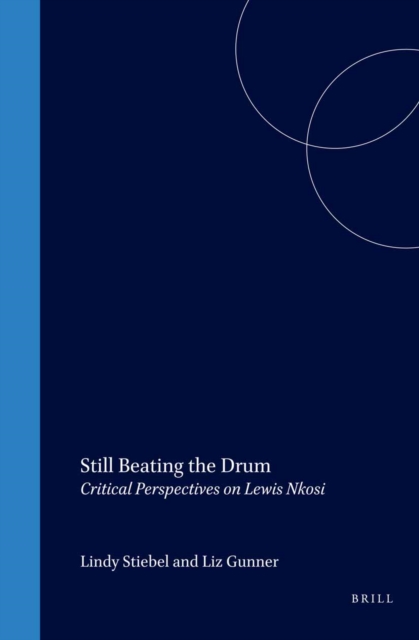
Still beating the drum : critical perspectives on Lewis Nkosi
Lewis Nkosi is one of South Africa's foremost writers and critics, and one of the few survivors of the exile generation dating from the Drum era. Up until now, however, no full length study has been done on his work. This is a gap in South African literary history and criticism that this book is intended to fill. Besides his well known earlier works, Nkosi is still very much an active writer as the publication in 2002 of his novel, Underground People, shows, with his latest novel due out in 2005. The timing of Still Beating the Drum, a book which intends to highlight and evaluate his extensive and varied oeuvre, is thus appropriate. Given Lewis Nkosi's life trajectory, this volume will appeal to readers interested in South African and African literature, both in South Africa and abroad. Intended as a important critical resource on Lewis Nkosi, the book is divided into three parts: Part One collects papers from scholars around the world currently working on Nkosi's work in various genres; Part Two reprints key articles from different moments in Nkosi's critical writing, together with hitherto unpublished recent interviews with Nkosi; and Part Three provides the reader with a timeline and extensive bibliography for Lewis Nkosi, both invaluable resources for scholars working on Nkosi given the scattered nature of much of his more ephemeral writings in the past. Lewis Nkosi is an important figure in South African literature whose voice has been heard far and wide - this book aims to collect for critical consideration some of the echoes and reverberations his voice has generated.
eBook


South African Literature's Russian Soul
How do great moments in literary traditions arise from times of intense social and political upheaval?South African Literature's Russian Soul charts the interplay of narrative innovation and political isolation in two of the world's most renowned non-European literatures.
eBook


South Africa and the dream of love to come : queer sexuality and the struggle for freedom
After apartheid, South Africa established a celebrated new political order that imagined the postcolonial nation as belonging equally to the descendents of indigenous people, colonizing settlers, transported slaves, indentured laborers, and immigrants. Its constitution, adopted in 1996, was the first in the world to include gays and lesbians as full citizens. Brenna M. Munro examines the stories that were told about sexuality, race, and nation throughout the struggle against apartheid in order to uncover how these narratives ultimately enabled gay people to become imaginable as fellow citizens. She also traces how the gay, lesbian, or bisexual person appeared as a stock character in the pageant of nationhood during the transition to democracy. In the process, she offers an alternative cultural history of South Africa. Munro asserts that the inclusion of gay people made South Africans feel \"modern\"-at least for a while. Being gay or being lesbian was reimagined in the 1990s as distinctly South African, but the \"newness\" that made these sexualities apt symbols for a transformed nation can also be understood as foreign and un-African. Indeed, a Western-style gay identity is often interpreted through the formula \"gay equals modernity equals capitalism.\" As South Africa's reentrance into the global economy has failed to bring prosperity to the majority of its citizens, homophobic violence has been on the rise. Employing a wide array of texts-including prison memoirs, poetry, plays, television shows, photography, political speeches, and the postapartheid writings of Nobel Laureates Nadine Gordimer and J. M. Coetzee-Munro reports on how contemporary queer activists and artists are declining to remain ambassadors for the \"rainbow nation\" and refusing to become scapegoats for the perceived failures of liberation and liberalism.
eBook

Abandoning the Black Hero
Abandoning the Black Herois the first book to examine the postwar African American white-life novel-novels with white protagonists written by African Americans. These fascinating works have been understudied despite having been written by such defining figures in the tradition as Richard Wright, Zora Neale Hurston, James Baldwin, Ann Petry, and Chester Himes, as well as lesser known but formerly best-selling authors Willard Motley and Frank Yerby.
John C. Charles argues that these fictions have been overlooked because they deviate from two critical suppositions: that black literature is always about black life and that when it represents whiteness, it must attack white supremacy. The authors are, however, quite sympathetic in the treatment of their white protagonists, which Charles contends should be read not as a failure of racial pride but instead as a strategy for claiming creative freedom, expansive moral authority, and critical agency.In an era when \"Negro writers\" were expected to protest, their sympathetic treatment of white suffering grants these authors a degree of racial privacy previously unavailable to them. White writers, after all, have the privilege of racial privacy because they are never pressured to write only about white life. Charles reveals that the freedom to abandon the \"Negro problem\" encouraged these authors to explore a range of new genres and themes, generating a strikingly diverse body of novels that significantly revise our understanding of mid-twentieth-century black writing.
eBook

Mythologies of Migration, Vocabularies of Indenture
Pirbhai uses the critical paradigm of 'indenture history' to examine the local literary and cultural histories that have influenced and shaped the development of novel-length fiction by writers of the South Asian diaspora in national contexts as diverse as Mauritius, South Africa, Guyana, and Fiji.
eBook

White Diaspora
This is the first book to analyze our suburban literary tradition. Tracing the suburb's emergence as a crucial setting and subject of the twentieth-century American novel, Catherine Jurca identifies a decidedly masculine obsession with the suburban home and a preoccupation with its alternative--the experience of spiritual and emotional dislocation that she terms \"homelessness.\" In the process, she challenges representations of white suburbia as prostrated by its own privileges.
In novels as disparate asTarzan(written by Tarzana, California, real-estate developer Edgar Rice Burroughs), Richard Wright'sNative Son, and recent fiction by John Updike and Richard Ford, Jurca finds an emphasis on the suburb under siege, a place where the fortunate tend to see themselves as powerless. From Babbitt to Rabbit, the suburban novel casts property owners living in communities of their choosing as dispossessed people. Material advantages become artifacts of oppression, and affluence is fraudulently identified as impoverishment. The fantasy of victimization reimagines white flight as a white diaspora.
Extending innovative trends in the study of nineteenth-century American culture, Jurca's analysis suggests that self-pity has played a constitutive role in white middle-class identity in the twentieth century. It breaks new ground in literary history and cultural studies, while telling the story of one of our most revered and reviled locations: \"the little suburban house at number one million and ten Volstead Avenue\" that Edith Wharton warned would ruin American life and letters.
eBook

Apartheid and Beyond
This book contributes to the study of South African literature, offering readings of writers such as Coetzee, Gordimer, Fugard, Tlali, and Mda. Focusing on the relationship between place, subjectivity, and literary form, the study examines our understanding of apartheid as a geographical form of control, and of its imagined and actual transformation.
eBook