
Catalogue Search | MBRL


Are you sure you want to remove the book from the shelf?

{{itemTitle}}
1,144
result(s) for
"South Yemen"
Sort by:
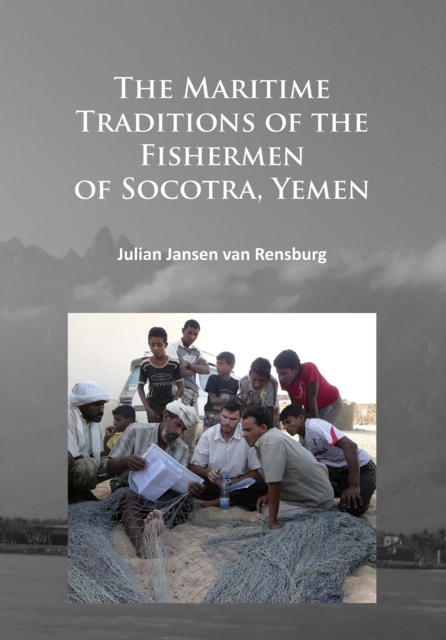
The Maritime Traditions of the Fishermen of Socotra, Yemen
The Socotra archipelago lies approximately 135 nautical miles (Nm) northeast of Cape Guardafui, Somalia and 205Nm south of Rās Fartaq, Yemen. The archipelago is made up of four main islands, Socotra, cAbd al-Kūri, Samḥa and Darsa, of which Socotra is the largest and most densely populated. The population of Socotra is divided between the interior pastoralists and the coastal fishermen and traders. While scholarly studies concerning the interior population abound, the fishermen of Socotra have received comparatively less attention and little about them or their traditions is known. This research seeks to address this balance by analysing the Socotri maritime traditions and addressing the question as to how social, environmental and technological influences have shaped the maritime traditions of the fishermen of Socotra. The primary data forming the basis of this book is author’s ethnographic fieldwork carried out on the islands of Socotra and Samḥa between 2009 and 2010. This data is incorporated within a transdisciplinary framework that looks at some of the essential factors of historical, archaeological and environmental evidence to gain a holistic insight into the spatial and temporal factors affecting the maritime traditions of the fishermen.
eBook

South Yemen's independence struggle : generations of resistance
\"At its beginning in 2007, the Southern Movement in South Yemen was a loose merger of different people, most of them former army personnel and state employees of the People's Democratic Republic of Yemen (PDRY) who were forced from their jobs after the war in 1994, only four years after the unification between the PDRY and the Yemen Arab Republic. This bold ethnographic account of a persistent Arab uprising, in a rarely studied corner of the Middle East, explores why the Southern Movement has grown so tremendously during the last decade and how it developed from a primarily social movement demanding social rights into a mass protest movement claiming independence for a state that had long vanished from the world map. Anne-Linda Amira Augustin asks why so many young people born after 1990 joined the movement and demanded the re-establishment of a state that they had never themselves experienced. At the core of South Yemeni resistance lies the transmission from generation to generation of a dominant counternarrative, which may be seen as the continuation and rehabilitation of the PDRY's national narrative. This narrative, amplified through everyday communication in families and neighborhoods, but also by mediamakers, journalists, academics, civil society actors, and by the movement's activists, opposes the national-unity narrative of the Republic of Yemen and intensifies the demands for an independent state.\"\"-- Provided by publisher.
Book

Brutality in an Age of Human Rights
In Brutality in an Age of Human Rights , Brian Drohan
demonstrates that British officials' choices concerning
counterinsurgency methods have long been deeply influenced or even
redirected by the work of human rights activists. To reveal how
that influence was manifested by military policies and practices,
Drohan examines three British counterinsurgency campaigns-Cyprus
(1955-1959), Aden (1963-1967), and the peak of the \"Troubles\" in
Northern Ireland (1969-1976). This book is enriched by Drohan's use
of a newly available collection of 1.2 million colonial-era files,
International Committee of the Red Cross files, the extensive
Troubles collection at Linen Hall Library in Belfast, and many
other sources.
Drohan argues that when faced with human rights activism,
British officials sought to evade, discredit, and deflect public
criticism of their actions to avoid drawing attention to brutal
counterinsurgency practices such as the use of torture during
interrogation. Some of the topics discussed in the book, such as
the use of violence against civilians, the desire to uphold human
rights values while simultaneously employing brutal methods, and
the dynamic of wars waged in the glare of the media, are of
critical interest to scholars, lawyers, and government officials
dealing with the conflicts in Iraq and Afghanistan, and those to
come in the future.
eBook


Jews and Muslims in lower Yemen : a study in protection and restraint, 1918-1949
This fascinating microhistory, crafted from documents and oral narratives, provides a rare portrait of pre-1950 rural Yemen while showing how religiously subordinated Jewish villagers strove to pursue their interests without forgoing the protection of the dominant Muslim majority.
eBook
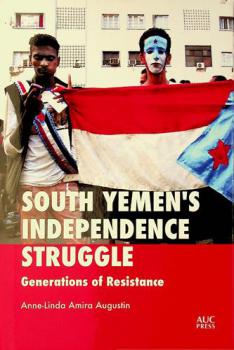
South Yemen's independence struggle : generations of resistance
\"At its beginning in 2007, the Southern Movement in South Yemen was a loose merger of different people, most of them former army personnel and state employees of the People's Democratic Republic of Yemen (PDRY) who were forced from their jobs after the war in 1994, only four years after the unification between the PDRY and the Yemen Arab Republic. This bold ethnographic account of a persistent Arab uprising, in a rarely studied corner of the Middle East, explores why the Southern Movement has grown so tremendously during the last decade and how it developed from a primarily social movement demanding social rights into a mass protest movement claiming independence for a state that had long vanished from the world map. Anne-Linda Amira Augustin asks why so many young people born after 1990 joined the movement and demanded the re-establishment of a state that they had never themselves experienced. At the core of South Yemeni resistance lies the transmission from generation to generation of a dominant counternarrative, which may be seen as the continuation and rehabilitation of the PDRY's national narrative. This narrative, amplified through everyday communication in families and neighborhoods, but also by mediamakers, journalists, academics, civil society actors, and by the movement's activists, opposes the national-unity narrative of the Republic of Yemen and intensifies the demands for an independent state.\"\"-- Provided by publisher.
BOOK

Nasser's Gamble
Nasser's Gambledraws on declassified documents from six countries and original material in Arabic, German, Hebrew, and Russian to present a new understanding of Egypt's disastrous five-year intervention in Yemen, which Egyptian president Gamal Abdel Nasser later referred to as \"my Vietnam.\" Jesse Ferris argues that Nasser's attempt to export the Egyptian revolution to Yemen played a decisive role in destabilizing Egypt's relations with the Cold War powers, tarnishing its image in the Arab world, ruining its economy, and driving its rulers to instigate the fatal series of missteps that led to war with Israel in 1967.
Viewing the Six Day War as an unintended consequence of the Saudi-Egyptian struggle over Yemen, Ferris demonstrates that the most important Cold War conflict in the Middle East was not the clash between Israel and its neighbors. It was the inter-Arab struggle between monarchies and republics over power and legitimacy. Egypt's defeat in the \"Arab Cold War\" set the stage for the rise of Saudi Arabia and political Islam.
Bold and provocative,Nasser's Gamblebrings to life a critical phase in the modern history of the Middle East. Its compelling analysis of Egypt's fall from power in the 1960s offers new insights into the decline of Arab nationalism, exposing the deep historical roots of the Arab Spring of 2011.
eBook

Behind the Curtain: Syria’s 1979 Mediation in the Yemen Dispute
The literature on international mediation emphasizes the crucial role that mediator impartiality and interest play in a mediation's success. Building on this literature and focusing on the case of Syria's role in resolving the Yemen dispute, my research seeks to demonstrate how a mediator's relationship with an external actor can change the level of the mediator's impartiality and interest and, ultimately, the mediation outcome. Syria's first attempt in 1979 to resolve the Yemen dispute through mediation failed, but its second attempt in the same year was successful. This article describes how Syria's relations with the Soviet Union changed the level of Syria's interest and impartiality toward the dispute between North Yemen and South Yemen. It also explores how and why the Soviets clandestinely helped Syria to become an effective mediator for the dispute. Drawing upon the lessons of this case, I discuss how external factors other than a mediator's bilateral relations with the parties can increase the mediator's impartiality and interest in a dispute.
Journal Article