
Catalogue Search | MBRL


Are you sure you want to remove the book from the shelf?

{{itemTitle}}
97
result(s) for
"Southern Arabia."
Sort by:

Southern Arabia
First published in 2005.J.Theodore Bent, well established as a travel writer and archaeologist, made seven journeys in all around the southern part of Arabia including Oman and Dhofar.Accompanied always by his wife, the author devoted the last years of his life to observation and travel in these lands.
eBook

Unique arbuscular mycorrhizal fungal communities uncovered in date palm plantations and surrounding desert habitats of Southern Arabia
The main objective of this study was to shed light on the previously unknown arbuscular mycorrhizal fungal (AMF) communities in Southern Arabia. We explored AMF communities in two date palm (Phoenix dactylifera) plantations and the natural vegetation of their surrounding arid habitats. The plantations were managed traditionally in an oasis and according to conventional buidelines at an experimental station. Based on spore morphotyping, the AMF communities under the date palms appeared to be quite diverse at both plantations and more similar to each other than to the communities under the ruderal plant, Polygala erioptera, growing at the experimental station on the dry strip between the palm trees, and to the communities uncovered under the native vegetation (Zygophyllum hamiense, Salvadora persica, Prosopis cineraria, inter-plant area) of adjacent undisturbed arid habitat. AMF spore abundance and species richness were higher under date palms than under the ruderal and native plants. Sampling in a remote sand dune area under Heliotropium kotschyi yielded only two AMF morphospecies and only after trap culturing. Overall, 25 AMF morphospecies were detected encompassing all study habitats.Eighteen belonged to the genus Glomus including four undescribed species. Glomus sinuosum, a species typically found in undisturbed habitats, was the most frequently occurring morphospecies under the date palms. Using molecular tools, it was also found as a phylogenetic taxon associated with date palm roots. These roots were associated with nine phylogenetic taxa, among them eight from Glomus group A, but the majority could not be assigned to known morphospecies or to environmental sequences in public databases. Some phylogenetic taxa seemed to be site specific. Despite the use of group-specific primers and efficient trapping systems with a bait plant consortium, surprisingly, two of the globally most frequently found species, Glomus intraradices and Glomus mosseae, were not detected neither as phylogenetic taxa in the date palm roots nor as spores under the date palms, the intermediate ruderal plant, or the surrounding natural vegetation. The results highlight the uniqueness of AMF communities inhabiting these diverse habitats exposed to the harsh climatic conditions of Southern Arabia.
Journal Article
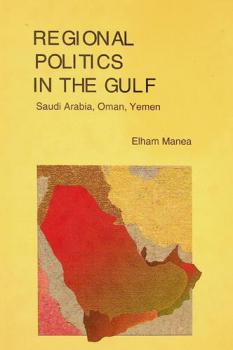
Regional politics in the Gulf : Saudi Arabia, Oman, Yemen
\"The three major neighbouring states of the Arabian Peninsula - Saudi Arabia, Oman and Yemen - make for strange bedfellows. They are governed by three very different systems with very different results, calling into question how their internal policies affect regional relations and vice versa.\" \"Each state adheres to a different Islamic sect, moreover, and though their populations are overwhelmingly Arab, differing tribal structures result in widely variant effects on the political process in their respective systems. Each state has also had extensive historical relationships with the Ottoman and British empires, the US and Russia, and these too have coloured regional relations.\" \"Manea examines each country in detail, from state formation to current affairs and from local to national government.\"--Jacket.
Book

new genus and species of cyprinid fish (Actinopterygii, Cyprinidae) from the Arabian Peninsula, and its phylogenetic and zoogeographic affinities
Arabibarbus hadhrami, a new species of cyprinid fish from the Hadhramaut Province of Yemen, is described. It has modally 30 scales (29–32) in the lateral line, the wedge-shaped head is longer (27.8–32.5 % SL) and higher (15.5–18.4 % SL) than in its congeners. The body is slender and laterally flattened. The dorsal fin is high (26.5–32.4 % SL) and well ossified. The pectoral fins (19.9–23.9 % SL) and pelvic fins (16.8–19.8 % SL) are longer than in its congeners. Two closely related species, Arabibarbus arabicus and Arabibarbus grypus are re-described and compared to the new species. Based on morphological and molecular characters the new genus Arabibarbus is erected for these three species. It is characterised by medium to large body size, an ossified, smooth principal dorsal fin ray, eight branched dorsal and five branched anal fin rays, large shield-shaped scales with numerous parallel radii, a lateral line with 29 to 44 scales, pharyngeal teeth that are hooked at their tips, their count being 2.3.5–5.3.2 and the possession of two pairs of barbels. Arabibarbus hadhrami is the type species of the new genus. The phylogenetic position of the new genus is analysed, based on the mitochondrial cytochrome b gene. It is the sister taxon to the genus Carasobarbus Karaman, 1971 and closely related to Mesopotamichthys Karaman, 1971, Pterocapoeta Günther, 1902 and ‘Barbus’ reinii Günther, 1874. Arabibarbus probably colonised the Arabian Peninsula about 4 Ma ago, coming from the Tigris-Euphrates drainage in the East via Wādī ar Rimah/Wādī al Bāţin.
Journal Article


A Late Antique Christian king from Ẓafār, southern Arabia
Southern Arabia was an important trading partner for the Roman world but owing to geography and politics its archaeology has been less intensively studied than that of neighbouring regions. A succession of kingdoms rose and fell in the last centuries BC and first centuries AD, but in the late Roman period the dominant power was Ḥimyar, with its capital at Ẓafār. In 2008 a relief sculpture was discovered at the site depicting a crowned ruler accompanied by symbols of office. This study reviews the arguments surrounding the date of the sculpture, but more importantly throws light on the cultural and political connections that it embodies. The proposal is that it represents an Aksumite puppet-ruler of the sixth century, at a key moment in the history of the Ḥimyarite kingdom. The crowned king of Ẓafār is significant not only in itself but also in helping to delineate the cultural and political stage on to which Islam was shortly to emerge.
Journal Article

Genetic Mechanism of Uranium Concentration in Ferruginous Sandstone of the Wajid Group in Southern Saudi Arabia
Uranium anomalies were discovered in ferruginous sandstone in the Khusayyayn Formation of the Wajid Group in southern Saudi Arabia. Based on field surveys, ground radiometric surveys, and chemical analysis, this paper summarizes the characteristics of the lithology and lithofacies of the ferruginous sandstone and analyzes the genetic mechanism of uranium concentration in ferruginous sandstone. Ferric iron basically exists in the form of Fe2O3 in ferruginous sandstone, with an average content of 28.95 wt.%. The formation period of the ferruginous sandstone occurred during the early synsedimentary and later diagenesis stages from the Carboniferous to the Devonian. The uranium anomaly is hosted in thin-bedded and lenticular ferruginous sandstone, with a uranium content ranging from 50 to 766 ppm. The average U-Ra equilibrium coefficient of ferruginous sandstone was 1.00, indicating that the uranium was weakly reformed after the uranium concentration. Ferric ions are closely related to uranium mineralization. The initial concentration of the uranium occurred during the deposition of the ferruginous sandstone. Most of the uranium was adsorbed by a ferric colloidal solution, and part of it was reduced by Fe2+, organic carbon, and sulfur in the uranium preconcentrated stage during the deposition of ferruginous sandstone. The uranium ore was superimposed, transformed, and concentrated due to the change in the pH environment in the early Neogene.
Journal Article