
Catalogue Search | MBRL


Are you sure you want to remove the book from the shelf?

{{itemTitle}}
18
result(s) for
"Southern States -- Social conditions -- 1865-1945"
Sort by:


Faith in Bikinis
While traditional industries like textile or lumber mills have received a majority of the scholarly attention devoted to southern economic development, Faith in Bikinis presents an untold story of the New South, one that explores how tourism played a central role in revitalizing the southern economy and transforming southern culture after the Civil War. Along the coast of the American South, a culture emerged that negotiated the more rigid religious, social, and racial practices of the inland cotton country and the more indulgent consumerism of vacationers, many from the North, who sought greater freedom to enjoy sex, gambling, alcohol, and other pleasures. On the shoreline, the Sunbelt South-the modern South-first emerged.
This book examines those tensions and how coastal southerners managed to placate both. White supremacy was supported, but the resorts' dependence on positive publicity gave African Americans leverage to pursue racial equality, including access to beaches often restored through the expenditure of federal tax dollars. Displays of women clad in scanty swimwear served to market resorts via pamphlets, newspaper promotions, and film. Yet such marketing of sexuality was couched in the form of carefully managed beauty contests and the language of Christian wholesomeness widely celebrated by resort boosters. Prohibition laws were openly flaunted in Galveston, Biloxi, Myrtle Beach, Virginia Beach, and elsewhere. Yet revenue from sales taxes made states reluctant to rein in resort activities. This revenue bridged the divide between the coastal resorts and agricultural interests, creating a space for the New South to come into being.
eBook

The Problem South
For most historians, the late nineteenth and early twentieth centuries saw the hostilities of the Civil War and the dashed hopes of Reconstruction give way to the nationalizing forces of cultural reunion, a process that is said to have downplayed sectional grievances and celebrated racial and industrial harmony. In truth, says Natalie J. Ring, this buoyant mythology competed with an equally powerful and far-reaching set of representations of the backward Problem South-one that shaped and reflected attempts by northern philanthropists, southern liberals, and federal experts to rehabilitate and reform the country's benighted region. Ring rewrites the history of sectional reconciliation and demonstrates how this group used the persuasive language of social science and regionalism to reconcile the paradox of poverty and progress by suggesting that the region was moving through an evolutionary period of \"readjustment\" toward a more perfect state of civilization.In addition,The Problem Southcontends that the transformation of the region into a mission field and laboratory for social change took place in a transnational moment of reform. Ambitious efforts to improve the economic welfare of the southern farmer, eradicate such diseases as malaria and hookworm, educate the southern populace, \"uplift\" poor whites, and solve the brewing \"race problem\" mirrored the colonial problems vexing the architects of empire around the globe. It was no coincidence, Ring argues, that the regulatory state's efforts to solve the \"southern problem\" and reformers' increasing reliance on social scientific methodology occurred during the height of U.S. imperial expansion.
eBook

Southern Exposure
Using thorough and stark statistics, Kennedy describes a South emerging from World War II, coming to grips with the racism and feudalism that had held it back for generations. He includes an all-out Who’s Who, based on his own undercover investigations, of the "hate-mongers, race-racketeers, and terrorists who swore that apartheid must go on forever." The first paperback edition brings to a new generation of readers Kennedy’s searing profile of Dixie before the civil rights movement.
eBook
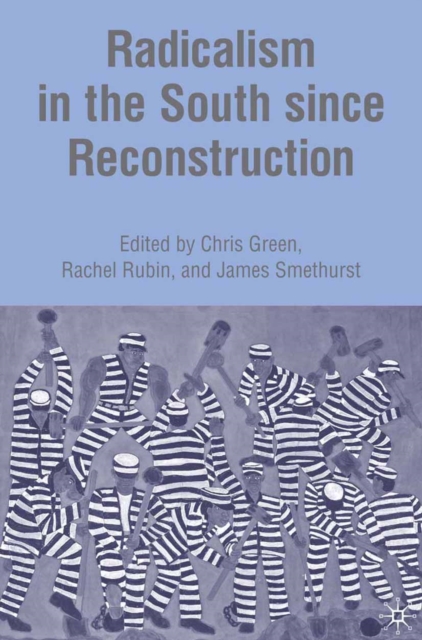
Radicalism in the South since Reconstruction
This book broadly frames the scholarly conversation about southern radicalism, putting essays covering a range of historical periods and topics in dialogue with each other so as to get a sense of the range of southern politics and history.
eBook

The South at Work
In 1904 William Garrott Brown traveled the American South, investigating the region’s political, economic, and social conditions. Using the pen name “Stanton,\" Brown published twenty epistles in the Boston Evening Transcript detailing his observations. The South at Work is a compilation of these newspaper articles, providing a valuable snapshot of the South as it was simultaneously emerging from post–Civil War economic depression and imposing on African Americans the panoply of Jim Crow laws and customs that sought to exclude them from all but the lowest rungs of southern society. A Harvard-educated historian and journalist originally from Alabama, Brown had been commissioned by the Evening Transcript to visit a wide range of locations and to chronicle the region with a greater depth than that of typical travelers’ accounts. Some articles featured familiar topics such as a tobacco warehouse in Durham, North Carolina; a textile mill in Columbia, South Carolina; and the vast steel mills at Birmingham. However, Brown also covered atypical enterprises such as citrus farming in Florida, the King Ranch in Texas, and the New Orleans Cotton Exchange. To add perspective, he talked to businessmen and politicians, as well as everyday workers. In addition to describing the importance of diversifying the South’s agricultural economy beyond cotton, Brown addressed race relations and the role of politicians such as James K. Vardaman of Mississippi, the growth of African American communities such as Hayti in Durham, and the role universities played in changing the intellectual climate of the South. The editor, Bruce E. Baker, has written an introduction and provided thorough annotations for each of Brown’s letters. Baker demonstrates the value of the collection as it touches on racism, moderate progressivism, and accommodation with the political status quo in the South. Baker and Brown’s combined work makes The South at Work one of the most detailed and interesting portraits of the region at the beginning of the twentieth century. Publication in book form makes The South at Work conveniently available to students and scholars of modern southern and American history.
eBook
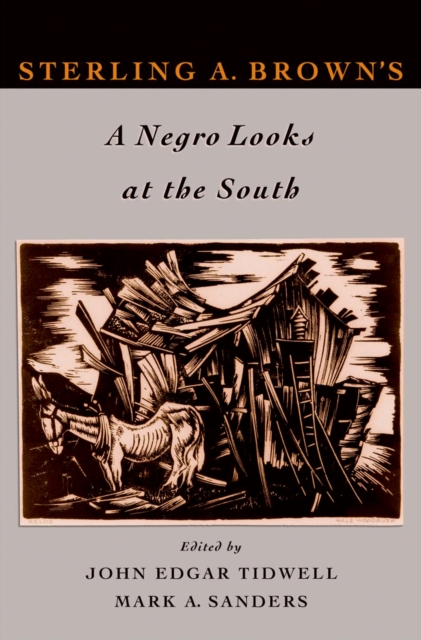
Sterling A. Brown's a Negro looks at the South
Using oral history and the printed word, Sterling A. Brown set out during the Second World War to capture the response of African Americans, primarily living in the South, to America's involvement in the war and how it affected them. These responses, brought together in extended, non-fiction essays of many different types, illustrate the diversity of opinions in the Black South about the war and the war period in America. For nearly sixteen years, the excerpts that were never published languished in Brown's manuscript collection at Howard University. Now, for the first time, all of the completed pieces of unpublished writings are combined with the few published sections into the book that Brown envisioned. The legacy Brown left us is not only a superb portrait of the way in which African Americans of the mid-century talked and lived; he also provided a methodology that oral and written historians will find extremely useful. This is clearly a document from another time, as its now outdated title reminds us, but it reveals a world that still informs our sense of ourself as a nation. In fact, it is an unforgettable history, which Brown has cast in a bright, elucidating new light.
eBook

Visual Art and the Urban Evolution of the New South
Visual Art and the Urban Evolution of the New South recounts the enormous influence of artists in the evolution of six southern cities—Atlanta, Charleston, New Orleans, Louisville, Austin, and Miami—from 1865 to 1950. In the decades following the Civil War, painters, sculptors, photographers, and illustrators in these municipalities employed their talents to articulate concepts of the New South, aestheticism, and Gilded Age opulence and to construct a visual culture far beyond providing pretty pictures in public buildings and statues in city squares. As Deborah C. Pollack investigates New South proponents such as Henry W. Grady of Atlanta and other regional leaders, she identifies “cultural strivers\"—philanthropists, women’s organizations, entrepreneurs, writers, architects, politicians, and dreamers—who united with visual artists to champion the arts both as a means of cultural preservation and as mechanisms of civic progress. Aestheticism, made popular by Oscar Wilde’s southern tours during the Gilded Age, was another driving force in art creation and urban improvement. Specific art works occasionally precipitated controversy and incited public anger, yet for the most part artists of all kinds were recognized as providing inspirational incentives for self-improvement, civic enhancement and tourism, art appreciation, and personal fulfillment through the love of beauty. Each of the six New South cities entered the late nineteenth century with fractured artistic heritages. Charleston and Atlanta had to recover from wartime devastation. The infrastructures of New Orleans and Louisville were barely damaged by war, but their social underpinnings were shattered by the end of slavery and postwar economic depression. Austin was not vitalized until after the Civil War and Miami was a post–Civil War creation. Pollack surveys these New South cities with an eye to understanding how each locale shaped its artistic and aesthetic self-perception across a spectrum of economic, political, gender, and race issues. She also discusses Lost Cause imagery, present in all the studied municipalities While many art history volumes concerning the South focus on sultry landscapes outside the urban grid, Visual Art and the Urban Evolution of the New South explores the art belonging to its cities, whether exhibited in its museums, expositions, and galleries, or reflective of its parks, plazas, marketplaces, industrial areas, gardens, and universities. It also identifies and celebrates the creative urban humanity who shaped the cultural, social, and, at times, architectural framework for the modern southern city.
eBook

The Long Shadow of the Civil War
InThe Long Shadow of the Civil War, Victoria Bynum relates uncommon narratives about common Southern folks who fought not with the Confederacy, but against it. Focusing on regions in three Southern states--North Carolina, Mississippi, and Texas--Bynum introduces Unionist supporters, guerrilla soldiers, defiant women, socialists, populists, free blacks, and large interracial kin groups that belie stereotypes of the South and of Southerners as uniformly supportive of the Confederate cause.Examining regions within the South where the inner civil wars of deadly physical conflict and intense political debate continued well into the era of Reconstruction and beyond, Bynum explores three central questions. How prevalent was support for the Union among ordinary Southerners during the Civil War? How did Southern Unionists and freedpeople experience both the Union's victory and the emancipation of slaves during and after Reconstruction? And what were the legacies of the Civil War--and Reconstruction--for relations among classes and races and between the sexes, both then and now?Centered on the concepts of place, family, and community, Bynum's insightful and carefully documented work effectively counters the idea of a unified South caught in the grip of the Lost Cause.
eBook

Iron confederacies : southern railways, Klan violence, and reconstruction
During Reconstruction, an alliance of southern planters and northern capitalists rebuilt the southern railway system using remnants of the Confederate railroads that had been built and destroyed during the Civil War. In the process of linking Virginia, the Carolinas, and Georgia by rail, this alliance created one of the largest corporations in the world, engendered bitter political struggles, and transformed the South in lasting ways, says Scott Nelson. Iron Confederacies uses the history of southern railways to explore linkages among the themes of states' rights, racial violence, labor strife, and big business in the nineteenth-century South. By 1868, Ku Klux Klan leaders had begun mobilizing white resentment against rapid economic change by asserting that railroad consolidation led to political corruption and black economic success. As Nelson notes, some of the Klan's most violent activity was concentrated along the Richmond-Atlanta rail corridor. But conflicts over railroads were eventually resolved, he argues, in agreements between northern railroad barons and Klan leaders that allowed white terrorism against black voters while surrendering states' control over the southern economy. |Focusing on the Reconstruction era, this book links the expansion of Southern railways by Southern planters and northern capitalists to issues of State's rights, racial violence, and big business.
eBook