
Catalogue Search | MBRL


Are you sure you want to remove the book from the shelf?

{{itemTitle}}
100
result(s) for
"Southern States -- Social conditions -- 19th century"
Sort by:


Out of the House of Bondage
The plantation household was, first and foremost, a site of production. This fundamental fact has generally been overshadowed by popular and scholarly images of the plantation household as the source of slavery's redeeming qualities, where 'gentle' mistresses ministered to 'loyal' slaves. This book recounts a very different story. The very notion of a private sphere, as divorced from the immoral excesses of chattel slavery as from the amoral logic of market laws, functioned to conceal from public scrutiny the day-to-day struggles between enslaved women and their mistresses, subsumed within a logic of patriarchy. One of emancipation's unsung consequences was precisely the exposure to public view of the unbridgeable social distance between the women on whose labor the plantation household relied and the women who employed them. This is a story of race and gender, nation and citizenship, freedom and bondage in the nineteenth century South; a big abstract story that is composed of equally big personal stories.
eBook

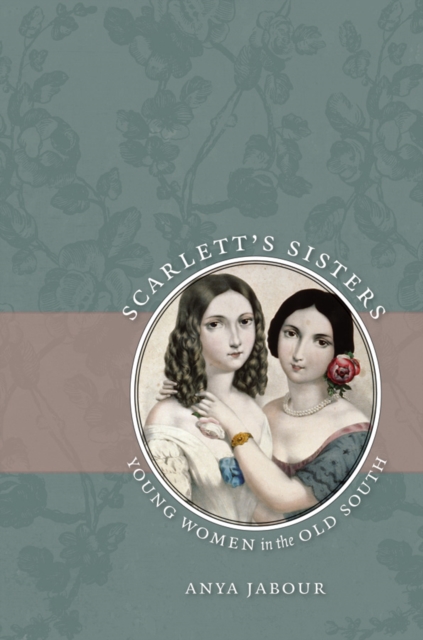
Scarlett's Sisters
Scarlett's Sistersexplores the meaning of nineteenth-century southern womanhood from the vantage point of the celebrated fictional character's flesh-and-blood counterparts: young, elite, white women. Anya Jabour demonstrates that southern girls and young women faced a major turning point when the Civil War forced them to assume new roles and responsibilities as independent women.Examining the lives of more than 300 girls and women between ages fifteen and twenty-five, Jabour traces the socialization of southern white ladies from early adolescence through young adulthood. Amidst the upheaval of the Civil War, Jabour shows, elite young women, once reluctant to challenge white supremacy and male dominance, became more rebellious. They adopted the ideology of Confederate independence in shaping a new model of southern womanhood that eschewed dependence on slave labor and male guidance.By tracing the lives of young white women in a society in flux, Jabour reveals how the South's old social order was maintained and a new one created as southern girls and young women learned, questioned, and ultimately changed what it meant to be a southern lady.
eBook

Masterless men : poor whites and slavery in the antebellum South
\"Analyzing land policy, labor, and legal history, Keri Leigh Merritt reveals what happens to excess workers when a capitalist system is predicated on slave labor. With the rising global demand for cotton--and thus, slaves--in the 1840s and 1850s, the need for white laborers in the American South was drastically reduced, creating a large underclass who were unemployed or underemployed. These poor whites could not compete--for jobs or living wages--with profitable slave labor. Though impoverished whites were never subjected to the daily violence and degrading humiliations of racial slavery, they did suffer tangible socio-economic consequences as a result of living in a slave society. Merritt examines how these 'masterless' men and women threatened the existing Southern hierarchy and ultimately helped push Southern slaveholders toward secession and civil war\"-- Provided by publisher.
Book

Intellectual Life and the American South, 1810-1860
Michael O'Brien has masterfully abridged his award-winning two-volume intellectual history of the Old South,Conjectures of Order, depicting a culture that was simultaneously national, postcolonial, and imperial, influenced by European intellectual traditions, yet also deeply implicated in the making of the American mind.Here O'Brien succinctly and fluidly surveys the lives and works of many significant Southern intellectuals, including John C. Calhoun, Louisa McCord, James Henley Thornwell, and George Fitzhugh. Looking over the period, O'Brien identifies a movement from Enlightenment ideas of order to a Romanticism concerned with the ambivalences of personal and social identity, and finally, by the 1850s, to an early realist sensibility. He offers a new understanding of the South by describing a place neither monolithic nor out of touch, but conflicted, mobile, and ambitious to integrate modern intellectual developments into its tense and idiosyncratic social experience.
eBook


My Brother Slaves
Trapped in a world of brutal physical punishment and unremitting, back-breaking labor, Frederick Douglass mused that it was the friendships he shared with other enslaved men that carried him through his darkest days.
In this pioneering study, Sergio A. Lussana offers the first in-depth investigation of the social dynamics between enslaved men and examines how individuals living under the conditions of bondage negotiated masculine identities. He demonstrates that African American men worked to create their own culture through a range of recreational pursuits similar to those enjoyed by their white counterparts, such as drinking, gambling, fighting, and hunting. Underscoring the enslaved men's relationships, however, were the sex-segregated work gangs on the plantations, which further reinforced their social bonds.
Lussana also addresses male resistance to slavery by shifting attention from the visible, organized world of slave rebellion to the private realms of enslaved men's lives. He reveals how these men developed an oppositional community in defiance of the regulations of the slaveholder and shows that their efforts were intrinsically linked to forms of resistance on a larger scale. The trust inherent in these private relationships was essential in driving conversations about revolution.
My Brother Slavesfills a vital gap in our contemporary understanding of southern history and of the effects that the South's peculiar institution had on social structures and gender expression. Employing detailed research that draws on autobiographies of and interviews with former slaves, Lussana's work artfully testifies to the importance of social relationships between enslaved men and the degree to which these fraternal bonds encouraged them to resist.
eBook

Fatal self-deception : slaveholding paternalism in the Old South
\"Slaveholders perpetuated and rationalized a romanticized version of plantation life. However, masters' relations with white plantation laborers and servants remains a largely unstudied subject. Southerners drew on the work of British and European socialists to conclude that all labor, white and black, suffered de facto slavery, and they championed the South's 'Christian slavery' as the most humane and compassionate of social systems, ancient and modern\"--Provided by publisher.
Book

Fatal Self-Deception
Slaveholders were preoccupied with presenting slavery as a benign, paternalistic institution in which the planter took care of his family and slaves were content with their fate. In this book, Eugene D. Genovese and Elizabeth Fox-Genovese discuss how slaveholders perpetuated and rationalized this romanticized version of life on the plantation. Slaveholders' paternalism had little to do with ostensible benevolence, kindness and good cheer. It grew out of the necessity to discipline and morally justify a system of exploitation. At the same time, this book also advocates the examination of masters' relations with white plantation laborers and servants - a largely unstudied subject. Southerners drew on the work of British and European socialists to conclude that all labor, white and black, suffered de facto slavery, and they championed the South's 'Christian slavery' as the most humane and compassionate of social systems, ancient and modern.
eBook