
Catalogue Search | MBRL


Are you sure you want to remove the book from the shelf?

{{itemTitle}}
29,302
result(s) for
"Sovereign wealth funds"
Sort by:


The role of sovereign wealth funds in natural resource-rich countries: A systematic meta-narrative review
Sovereign wealth funds (SWFs) have gained a considerable amount of attention in the past few decades owing to their growing significance in the world economy. Increasingly, SWFs are being tasked with an important task of increasing diversification of the economy away from natural resources. Despite the existence of several extensive reviews on sovereign wealth funds, the current study differs in two crucial ways: firstly, it aims to focus on the role of commodity SWFs in the economy, and secondly, it focuses on the resource-rich countries. The findings of this systematic literature review identify the gaps in the literature. This study concludes that commodity SWFs have an essential role to support industrial development and economic growth in natural resource-rich economies and suggests further areas of research.
Journal Article
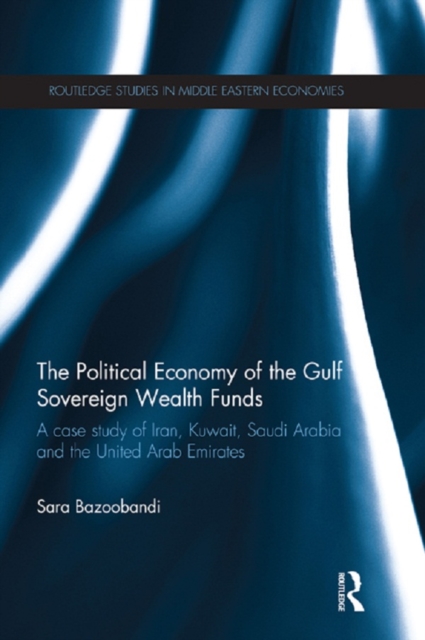
The Political Economy of the Gulf Sovereign Wealth Funds
Using four Gulf sovereign wealth funds as case studies - Iran, Kuwait, Saudi Arabia and the UAE - this book examines and analyses the history, governance and structure, and investment strategies of the above mentioned funds, in the context of on-going debates about their transparency.
The book discusses how most Gulf sovereign wealth funds were established under colonial rule, and have operated in the global financial system for many decades. With the increase of oil revenues, it goes on to look at how the funds have broadened their asset classes and their institutional development. Debate over the transparency of sovereign wealth funds has highlighted various global practices. Recently, organisational measures have been introduced for calculating possible risks from non-commercial investment incentives of funds, whose politically-driven investment strategies are viewed as potentially a major threat to the national security of their host countries.
Highlighting a number of incidents that triggered the transparency debate, the book scrutinises the reaction of some of the Gulf sovereign wealth funds to these recent regulatory codes and strategies. It is a useful contribution to Development, Political Economy and Middle East Studies.
eBook

The new economics of sovereign wealth funds
A complete guide to sovereign wealth funds written by and for industry practitioners
Sovereign wealth funds (SWFs) aren't new, but they are often misunderstood. As they've attracted more attention over the last decade and grown greatly in size, the need for a new and thorough resource on SWFs has never been greater. These funds will only grow more important over the coming years. In this book, expert authors who work in the industry present a comprehensive look at SWFs from the perspective of western investors.
eBook


Sovereign wealth fund investments and the US political process
We examine US firm-level campaign finance contributions preceding and subsequent to equity investment by a sovereign wealth fund (SWF). Our empirical results suggest that SWFs are attracted to firms engaged in US campaign finance and that firm campaign finance contributions increase after SWF investment. SWF attraction to campaign finance firms increases (1) after an exogenous legal shock that liberalized corporate campaign finance activities, and (2) in a subset of industries vulnerable to recent legislation capable of inhibiting or expunging foreign investment. We provide some of the first evidence consistent with political motives for SWF investment in the United States.
Journal Article

Can BNDES Finance the Sustainable Green Transition? Alternatives to Leveraging the Bank’s Sources of Resources from Sovereign Wealth Funds
The green-sustainable transition demands a profound structural transformation of national economies, requiring stable, long-term public financing that can support investments with high uncertainty and delayed returns. Development banks are uniquely positioned to lead this process, as they combine technical expertise with a public mandate to promote structural change and social inclusion. In the case of Brazil, the National Bank for Economic and Social Development (BNDES) has historically played this role; however, it has faced a progressive erosion of its funding base since 2016. Ensuring the effectiveness of BNDES as a key driver of the green transition depends on restoring access to stable sources of financing. In this context, sovereign wealth funds (SWFs) offer a viable institutional solution: as liability-free, intergenerational public savings, they are well suited to finance long-term sustainable investments. This article examines the potential of SWFs as viable and strategic funding instruments for the green transition. SWFs are intergenerational public savings, making them particularly well suited to finance climate mitigation, adaptation, and biodiversity conservation. The article proposes the creation – or reconfiguration – of a national SWF in Brazil with a clear mandate to channel resources to development banks, especially BNDES, in order to finance the transition within a framework of long-term sustainability and social inclusion.
Journal Article