
Catalogue Search | MBRL


Are you sure you want to remove the book from the shelf?

{{itemTitle}}
87
result(s) for
"Space (Architecture) Computer-aided design."
Sort by:

Electronic workflow for interior designers and architects
\"Good design is smart design, and smart designers carefully control their workflow for maximum efficiency. Interior designers use multiple programs during the design process but tend to learn each program in isolation. Electronic Workflow for Interior Designers and Architects is written with integration in mind: students and working professionals will learn how to combine traditional phases of design with the capabilities of selected software for efficient, clear project development. This book is organized to follow the design process from start to finish using a typical interior renovation project. Chapters cover everything from predesign and research to working drawings and construction documents. Presentation renderings for schematic designs and techniques for creating physical and electronic portfolios are also discussed. Readers have the choice of working with a simple, small project or a complex, multilevel one, depending on skill level.--Publisher's website.
Book
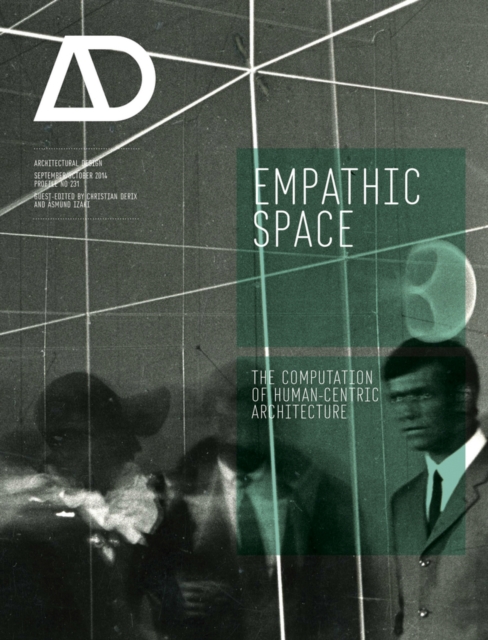
Empathic Space
In recent years, questions of space have gained renewed momentum in architecture and urban design, as adaptation, densification and sustainable regeneration have become an increasing priority. While most computing-based design tends to emphasise the formal aspects of architecture, overlooking space and its users, the 'original' computational design approaches first spearheaded in the UK in the 1960s and 1970s tended to be focused on behavioural and occupational patterns. Over the last decade, a new generation of design research has emerged that has started to implement and validate previous investigations into spatial computation, aiming to understand how to design spatial configurations based on user experiences. This revives an interest in the experiential that was first explored in the early 20th century by German and Nordic organic architects, who invented design methods that correlated cognitive responses of buildings' occupants to spatial structure. The current revival of human-centric design, however, represents the first design approach that synthesises spatial design and algorithmic techniques with organic design thinking, which could also be regarded as a return to the 'first principles' of architectural design. Contributors include: Paul Coates, Christian Derix, Olafur Eliasson, Lucy Helme, Bill Hillier, Åsmund Izaki, Prarthana Jagannath, Dan Montello, Juhani Pallasmaa, Philip Steadman and Guy Theraulaz. Featured Architects/Designers: Jussi Ängeslevä (Art+Com), Stan Allen, Aedas|R&D, Markus Braach (Kaisersrot), Hermann Hertzberger, Kazuhiro Kojima (Cat), Pablo Miranda and Rafi Segal.
eBook


SketchUp for interior design
A practical guide to SketchUp addressing the specific needs of interior designers Already a common and popular tool for architects and landscape architects, SketchUp is increasingly finding a place in the professional workflow of interior designers. SketchUp for Interior Design is a practical introduction for interior designers and students who want to learn to use the software for their unique needs. The book covers the basics of creating 3D models before showing how to create space plans, model furniture, cabinetry, and accessories, experiment with colors and materials, incorporate manufacturers' models into project plans, and create final presentations and animated walk-throughs for clients. Each chapter includes clear explanations and helpful illustrations to make this an ideal introduction to the topic. Includes downloadable sample models and 39 tutorial videos Features sample questions and activities for instructors and additional online resources for students and self-learners Provides instruction on using SketchUp in both PC and Mac formats
eBook

Research on Design Methods for Interactive Spaces in Schools for Children with Intellectual Disabilities Considering User Needs
To scientifically enhance user perception in decision-making for designing interactive spaces in schools for children with intellectual disabilities, we propose an innovative design model that integrates the Kano model, Analytic Hierarchy Process (AHP), and Axiomatic Design (AD) theories based on user needs. Initially, multi-method research was used to gather the original user requirements which were then refined through data cleaning to establish the initial user needs. The Kano model was then employed to categorize these initial user needs. AHP was then used to construct a hierarchical analysis model for the interactive spaces in schools for children with intellectual disabilities, creating a judgment matrix to accurately calculate demand weight values at each level. Subsequently, AHP was used to select the most important demand items. The independence axiom of AD theory was used to achieve a “Z”-shaped mapping between the functional requirements (FRs) and design parameters (DPs) for the interactive spaces in schools for children with intellectual disabilities. This mapping was analyzed using a matrix approach to assess the design rationality and optimize solutions, thereby transforming user needs into design parameters. Finally, the design parameters were used to create interactive spaces through computer-aided design, and the resulting design plans were evaluated. Experimental results indicate that this design scheme effectively translates subjective concepts into specific design parameters through a qualitative and quantitative approach. This significantly enhances the user needs of interactive spaces in schools for children with intellectual disabilities and provides a scientific basis for the architectural design of these schools.
Journal Article

Optimizing early-stage efficiency in complex system development via model-based systems engineering (MBSE) and concurrent engineering (CE) integration
The study conducted a systematic review with a bibliometric analysis to examine the extent of utilization and effectiveness of model-based systems engineering (MBSE) and concurrent engineering (CE) in managing and optimizing system design factors in complex systems across various domains, including space, healthcare, as well as active and assisted living and smart environments. The study aims to explore how MBSE and CE can address the inherent challenges in complex system definition and development, particularly focusing on their impact on system design factors such as mission analysis, system architecture, cost, schedule, and risk contingencies, which are commonly considered critical across the entire system lifecycle. By utilizing the PICO framework, the review formulates research questions and systematically searches multiple databases to identify relevant studies. The systematic review highlights that MBSE is prominently used in approximately 88% of the analyzed articles. These integrations enhance the methodologies’ ability to manage complexity and improve efficiency across various stages of the system lifecycle. Specialized tools such as MagicDraw, Cameo Systems Modeler, and OPCAT play a crucial role in the technical implementation of MBSE and CE, providing detailed diagrams and models that represent system components with their interactions and behavior. The principal findings highlight how MBSE and CE support product systems engineering (PSE) in the early lifecycle stages of complex systems of interest. This support is particularly evident in optimizing system design, reducing time, costs, and technological risks, and enhancing the efficiency of business systems engineering through lifecycle management and quality management.
Journal Article

XENet: Using a new graph convolution to accelerate the timeline for protein design on quantum computers
Graph representations are traditionally used to represent protein structures in sequence design protocols in which the protein backbone conformation is known. This infrequently extends to machine learning projects: existing graph convolution algorithms have shortcomings when representing protein environments. One reason for this is the lack of emphasis on edge attributes during massage-passing operations. Another reason is the traditionally shallow nature of graph neural network architectures. Here we introduce an improved message-passing operation that is better equipped to model local kinematics problems such as protein design. Our approach, XENet, pays special attention to both incoming and outgoing edge attributes. We compare XENet against existing graph convolutions in an attempt to decrease rotamer sample counts in Rosetta’s rotamer substitution protocol, used for protein side-chain optimization and sequence design. This use case is motivating because it both reduces the size of the search space for classical side-chain optimization algorithms, and allows larger protein design problems to be solved with quantum algorithms on near-term quantum computers with limited qubit counts. XENet outperformed competing models while also displaying a greater tolerance for deeper architectures. We found that XENet was able to decrease rotamer counts by 40% without loss in quality. This decreased the memory consumption for classical pre-computation of rotamer energies in our use case by more than a factor of 3, the qubit consumption for an existing sequence design quantum algorithm by 40%, and the size of the solution space by a factor of 165. Additionally, XENet displayed an ability to handle deeper architectures than competing convolutions.
Journal Article
A semantic-geometric digital twin framework for performance-driven design evaluation: methodology and application to civil aircraft cabins
Engineering design evaluation of complex spatial products—such as vehicle interiors, building environments, and aircraft cabins—frequently demands high-fidelity digital representations that couple geometric accuracy with semantic interpretability. Yet a persistent methodological gap exists between raw 3D data acquisition and computable, performance-evaluable parametric models: conventional approaches either produce geometrically precise but semantically opaque point clouds, or rely on idealized CAD models that deviate from as-built reality. This paper proposes a general-purpose semantic-geometric digital twin framework that bridges this gap, enabling automated conversion of physical environments into structured, parameterized virtual models that directly support multi-dimensional design performance evaluation and optimization. The framework comprises four methodological layers applicable across engineering domains: (1) a multi-sensor fusion acquisition layer with microsecond-level time synchronization for efficient spatial data capture; (2) a globally consistent 3D reconstruction layer combining error-state Kalman filtering with factor graph optimization to suppress cumulative drift in elongated or repetitive environments; (3) a semantic-geometric hybrid modeling layer integrating deep learning segmentation with parametric geometric reconstruction to automatically identify components and extract design-critical parameters; and (4) a model-driven performance evaluation layer that quantifies multi-dimensional design metrics (comfort, safety, economics) and supports Pareto-optimal design decision-making. The framework is validated through a full-scale civil aircraft cabin case study (C919 simulator), where it achieves a 6× improvement in modeling efficiency over stationary scanning, sub-centimeter geometric accuracy (RMSE < 1.5 cm), and measurement precision better than 8 mm for key human factors dimensions. The case study demonstrates the framework’s capacity for airworthiness compliance verification, ergonomic heatmap analysis, and layout optimization. Beyond aviation, the proposed methodology generalizes to any engineering design domain where physical-to-digital conversion, semantic decomposition, and performance-driven evaluation of spatial layouts are required—such as automotive interiors, hospital operating rooms, factory floor planning, and architectural space design.
Journal Article

Resident Effect Perception in Urban Spaces to Inform Urban Design Strategies
In the field of urban design, current research has shifted towards resident preference perception and computer-aided design methods that rely on deep learning techniques. In this study, we aimed to provide a quantitative design method for urban space design that could take into account the preferences of different populations. Through empirical research, we collected real urban space and population data, which we then quantified using advanced intelligent recognition tools based on deep learning techniques. Our ensuing analysis illuminated the intricate interplay between constituent elements of urban spaces and the structural and emotional changes of residents. By taking into account the specific driving relationships between each element and residents, we proposed a new evaluation methodology for constructing an intelligent design evaluation model for urban spaces. This intelligent design evaluation model was subsequently used to evaluate the urban space both pre- and post-design. The standard deviation of the difference results demonstrated that the design option (SD value = 0.103) and the desired option for Space 1 were lower than the current option (SD value = 0.129) and the expected scheme. Our findings provide quantitative configuration strategies and program evaluation for urban space design, thus helping designers to design urban spaces that are more popular with residents.
Journal Article

An AI-driven urban landscape planning decision support system using PSO and knowledge graphs
A landscape intelligent design system based on a particle swarm optimization algorithm and polygon layout is proposed. The system focuses on urban parks as the primary research object, and combines knowledge graphs and heuristic layout algorithms to optimize the landscape design process. The performance test results showed that the particle swarm algorithm had the fastest convergence speed, completing convergence within 12.62 min. However, in terms of average convergence value, the performance of the particle swarm optimization algorithm was relatively low, with an average convergence value of 0.9723. The comparison results before and after completing the design case showed that the designed plant community structure was relatively continuous without obvious faults, resulting in a concentrated distribution for shrubs. The landscape intelligent design system has a good user experience, which can meet the design requirements.
Journal Article