
Catalogue Search | MBRL


Are you sure you want to remove the book from the shelf?

{{itemTitle}}
3,628
result(s) for
"Space launch industry"
Sort by:

SpaceX : making commercial spaceflight a reality
\"2012 - the year when the first ever privately-developed spacecraft visited the International Space Station. This is the story of how one company is transforming commercial space flight. It describes the extraordinary feats of engineering and human achievement that have resulted in the world's first fully reusable launch vehicles and the prospect of human travel to Mars. SpaceX - The First Ten Years: - explores the philosophy behind the success of SpaceX; - explains the practical management that enables SpaceX to keep it simple, reliable, and affordable; - details the developmentof the Falcon 1, Falcon 9 and Falcon Heavy rockets and the technology of the Merlin engines; - describes the collaboration with NASA; - introduces current SpaceX projects, including the Grasshopper reusable launch vehicle and the Stratolaunch System. SpaceX - The First Ten Years is a portrait of one of the most spectacular spaceflight triumphs of the 21st century, one that is laying the foundation for humanity to become a spacefaring civilization\"--Back cover.
Book

Punching above our extraterrestrial weight
Most New Zealanders are aware of their country’s achievements on the sports field or in its primary industries. Not many are aware that it is also doing remarkably well in the space sector. In fact, an important part of the local population ignores the fact that New Zealand has had its own space agency since 2016. New Zealand is one of the few countries that both manufactures rockets and uses space-derived data for innovative applications. The keys to this success are several, including New Zealand diplomatic ability. But is this diplomatic muscle going to be enough in the near future?
Journal Article

Liftoff : Elon Musk and the desperate early days that launched SpaceX
Less than 20 years after its founding, SpaceX boasts the largest constellation of commercial satellites in orbit, has pioneered reusable rockets, and in 2020 became the first private company to launch human beings into orbit. Berger takes readers inside the wild early days that made SpaceX. Focusing on the company's first four launches of the Falcon 1 rocket, he charts the bumpy journey from scrappy underdog to aerospace pioneer. He draws upon interviews with dozens of former and current engineers, designers, mechanics, and executives, including Elon Musk. -- adapted from jacket
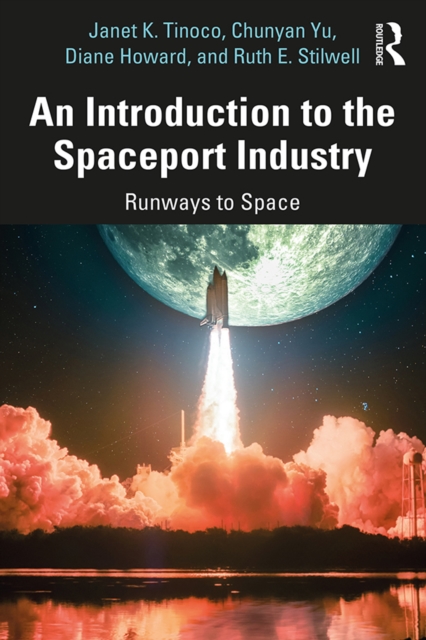
An Introduction to the Spaceport Industry
This book provides a contemporary look at spaceports, not only from relevant technological drivers, policies, and legal perspectives, but also from impacts associated with airspace use and aviation stakeholders. Economic, business, financial, and environmental considerations; issues facing airports transitioning to air and space ports; and spaceport planning are discussed.
Through case and event studies, research and analysis, along with information obtained through professional experience, this book provides an overview of the many benefits, unique challenges, and issues facing commercial spaceports and spaceport operators. Each chapter is a standalone key topic such that the reader can focus on the most compelling issues relevant for them or can view the book as an integrated whole for a full perspective. While examples and case studies come largely from the United States, the reader can draw conclusions that are independent of country and situation. Information on other nation-state policies and advancements, among other topics, is provided to give a global perspective, further expanding the relevancy and benefits of the book to both domestic and international audiences.
An Introduction to the Spaceport Industry: Runways to Space fills a gap in the literature, providing professionals, government officials, researchers, professors, and students deep insights into the fast-growing commercial spaceport industry.
eBook
The scramble for the Moon
NASA’s plan to return to the Moon is probably familiar to most. Former US President Donald Trump set a very ambitious goal: to have American women and men stepping on the Moon by 2024. Many consider that an unrealistically short timescale. But international competition to go back to the Moon is fierce. It is not just the United States and China competing to send humans there again. Many other countries have plans, not just giants like Russia, India or the European Union. Japan, Israel, the United Arab Emirates, Canada, the United Kingdom, Turkey and even tiny Luxemburg also have plans.
Journal Article
Rarefied Gas Flows and Dynamic Plasma Phenomena in Electric Propulsion Systems
Zu den aktuellen Entwicklungen in der Raumfahrtindustrie zählen das stetig wachsende Interesse an miniaturisierten Satelliten sowie der immer häufigere Einsatz elektrischer Antriebssysteme zu allgemeinen Lage- und Bahnregelungszwecken. Die Entwicklung miniaturisierter Satelliten erfordert ihrerseits den Einsatz von Antriebssystemen, die sehr kleine und präzise zu steuernde Schubkräfte erzeugen. Vor diesem Hintergrund stellen elektrische Triebwerke eine attraktive Option dar, die Antriebsanforderungen von Satelliten sowohl in herkömmlichen als auch in miniaturisierten Größen langfristig zu erfüllen. Bei miniaturisierten Satelliten sind die Schubanforderungen oft mit niedrigen Treibstoff-Massenstromwerten und verhältnismäßig kleinen geometrischen charakteristischen Längen verbunden. Dies kann zu verdünnten Gaszuständen innerhalb der Triebwerksdüsen führen. Wegen der hohen Komplexität der Plasmaphänomene innerhalb elektrischer Triebwerke sowie der typischerweise hohen Rechenanforderungen, die mit der Plasmamodellierung einhergehen, werden elektrische Antriebssysteme oft auf Basis empirischer Modelle und experimenteller Daten entwickelt. Der Fokus der vorliegenden Arbeit liegt auf den oben beschriebenen Herausforderungen und den dazugehörigen Forschungsfeldern: der Untersuchung verdünnter Gaszustände in transsonischen Strömungen sowie der Entwicklung numerischer Modellierungsansätze zur Beschreibung des Plasmaverhaltens innerhalb elektrischer Antriebssysteme.New trends regarding fundamental design approaches of orbital spacecraft have been developing in the space industry in recent years. They include an increased interest in miniaturized satellites as well as a general rise in the use of electric propulsion systems for orbit and attitude control. The successful implementation of miniaturized satellites requires the use of propulsion devices able to provide small and precise thrust and impulse levels. One technical solution able to meet the requirements of both standard-sized as well as miniaturized spacecraft involves the use of highly efficient and precise electric propulsion systems. In the particular case of miniaturized satellites, the propulsion requirements are often associated with low propellant mass flow rates and small characteristic geometrical lengths, potentially leading to the appearance of rarefied conditions inside the nozzles of the propulsion devices. Because of the high complexity of the plasma phenomena taking place inside such systems and the usually very high computational requirements associated with their numerical modelling, electric propulsion systems for space applications are usually designed based on empirical models and experimental data. The present work focuses on two key aspects outlined above: rarefied gas conditions in transonic micronozzle flows as well as the numerical modelling of plasma phenomena inside electric propulsion systems.
eBook
Why would NASA outsource missions to SpaceX?
When it comes new PR disasters, NASA isn't taking any risks.
Streaming Video
Sooner than you think. Space on demand
Sep.13 -- The economics of getting to space are about to undergo a massive change. A new breed of rocket scientists have arrived with small, low-cost spaceships. In this episode of Sooner Than You Think, Bloomberg's Ashlee Vance explains when a trip to space will become a everyday event.
Streaming Video
Will Elon Musk or NASA get humans to space first?
One small step for man costs a lot of money. Who's going to help pay the bill for the next bout of space exploration?
Streaming Video
Colonize Mars? Elon Musk, SpaceX and NASA are making big plans
NASA's Michelle Thaller shares her prediction of what it will take to get people to Mars, including what role Elon Musk will play in that effort.
Streaming Video