
Catalogue Search | MBRL


Are you sure you want to remove the book from the shelf?

{{itemTitle}}
18,583
result(s) for
"Space medicine"
Sort by:

Rethinking the concept of 'healing settlements' : water, cults, constructions and contexts in the ancient world : Roman Archaeology Conference 2016 : proceedings of the session of study (nr. 27), Sapienza University, Aula 'Partenone,' 17th March 2016
This volume brings together papers dealing with therapeutic aspects connected to thermo-mineral sites both in Italy and in the Roman Provinces, as well as cultic issues surrounding health and healing. The first part of the book consists of contributions that are focused on the numerous problems concerning the exploitation of curative springs and the settlement patterns at spa sites in terms of topography, infrastructure, architecture, cult, society and economy, emphasizing the particularities accompanying the use of beneficial sources and comparing them to that of common sweet waters. The papers in the second part of the volume are concentrated on religious aspects connected to health, fertility and healing, focusing especially on sites located at particular natural surroundings such as caves and water sources. Together, the contributions in this book give us an idea of the amount and quality of research currently being undertaken in different parts of the Roman world (and complemented by one paper on the Greek world) on the topic of health and healing associated with cults and salutiferous waters.
Book

Space surgery: a SAGES’ white paper
BackgroundSpace travel is experiencing a renaissance with expanding commercial and international efforts. Space surgery will have growing relevance as mission frequency and distances increase beyond low Earth orbit.MethodsThis white paper from the SAGES Space Surgery Task Force raises awareness among the SAGES membership regarding the challenges and opportunities surrounding this emerging field that anticipates surgical care in the most extreme, austere environments.ResultsInnovation in technology and preventive medicine principles will enhance the effectiveness of space surgical care when the need arises. The impact of advancements in space and terrestrial medicine to support space exploration indicates the need for a surgeon to oversee medical/surgical invasive treatment to ensure astronaut health and mission success. Advanced technology, including semi- and autonomous robotic systems, may be a preferred way to deliver this care in the foreseeable future. There is currently a need to develop training curricula and flight-compatible supplies and technology for physicians that deliver surgical care to this special patient population. The protocols and technology developed to address the unique challenges of space travel will provide value for care in space as well as in extreme, austere terrestrial environments on Earth.ConclusionSpace surgery will continue to evolve as commercial and government programs explore further into space. The SAGES Space Surgery Task Force is favorably positioned to significantly contribute to addressing some capability gaps in delivering surgical care in space.
Journal Article


Review of NASA's Evidence Reports on Human Health Risks
This is the fourth in a series of five letter reports that provide an independent review of the more than 30 evidence reports that NASA has compiled on human health risks for long-duration and exploration spaceflights.This letter report reviews eight evidence reports and examines the quality of the evidence, analysis, and overall construction of each report; identifies existing gaps in report content; and provides suggestions for additional sources of expert input.
eBook
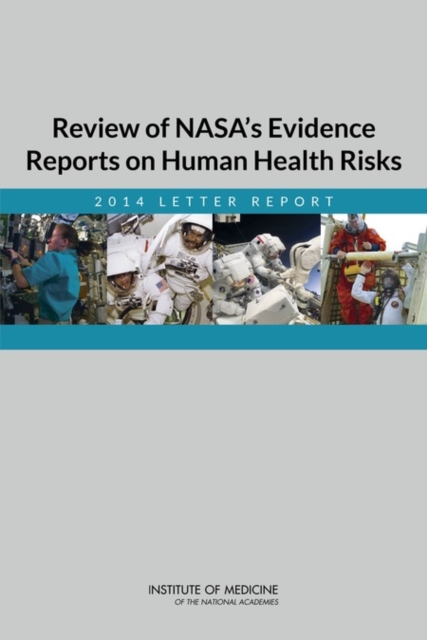
Review of NASA's Evidence Reports on Human Health Risks
Review of NASA's Evidence Reports on Human Health Risks 2014 Letter Report is the second in a series of five reports from the Institute of Medicine that will independently review more than 30 evidence reports that the National Aeronautics and Space Administration has compiled on human health risks for long-duration and exploration space flights. This report builds on the 2008 IOM report Review of NASA's Human Research Program Evidence Books: A Letter Report , which provided an initial and brief review of the evidence reports.
This letter report reviews seven evidence reports and examines the quality of the evidence, analysis, and overall construction of each report; identifies existing gaps in report content; and provides suggestions for additional sources of expert input. The report analyzes each evidence report's overall quality, which included readability; internal consistency; the source and breadth of cited evidence; identification of existing knowledge and research gaps; authorship expertise; and, if applicable, response to recommendations from the 2008 IOM letter report.
eBook
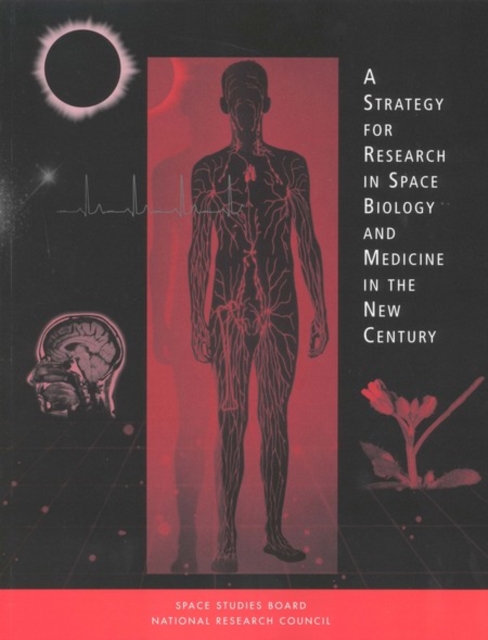
A Strategy for Research in Space Biology and Medicine in the New Century
Construction of the international space station, scheduled to start in late 1998, ushers in a new era for laboratory sciences in space. This is especially true for space life sciences, which include not only the use of low gravity as an experimental parameter to study fundamental biological processes but also the study of the serious physiological changes that occur in astronauts as they remain in space for increasingly longer missions.
This book addresses both of these aspects and provides a comprehensive review of ground-based and space research in eleven disciplines, ranging from bone physiology to plant biology. It also offers detailed, prioritized recommendations for research during the next decade, which are expected to have a considerable impact on the direction of NASA's research program. The volume is also a valuable reference tool for space and life scientists.
eBook

Infection Prevention and Control During Prolonged Human Space Travel
Prolonged human spaceflight to another planet or an asteroid will introduce unique challenges of mitigating the risk of infection. During space travel, exposure to microgravity, radiation, and stress alter human immunoregulatory responses, which can in turn impact an astronaut's ability to prevent acquisition of infectious agents or reactivation of latent infection. In addition, microgravity affects virulence, growth kinetics, and biofilm formation of potential microbial pathogens. These interactions occur in a confined space in microgravity, providing ample opportunity for heavy microbial contamination of the environment. In addition, there is the persistence of aerosolized, microbe-containing particles. Any mission involving prolonged human spaceflight must be carefully planned to minimize vulnerabilities and maximize the likelihood of success.
Journal Article

Noise characteristics in spaceflight multichannel EEG
The cognitive performance of the crew has a major impact on mission safety and success in space flight. Monitoring of cognitive performance during long-duration space flight therefore is of paramount importance and can be performed using compact state-of-the-art mobile EEG. However, signal quality of EEG may be compromised due to the vicinity to various electronic devices and constant movements. We compare noise characteristics between in-flight extraterrestrial microgravity and ground-level terrestrial electroencephalography (EEG) recordings. EEG data recordings from either aboard International Space Station (ISS) or on earth’s surface, utilizing three EEG amplifiers and two electrode types, were compared. In-flight recordings showed noise level of an order of magnitude lower when compared to pre- and post-flight ground-level recordings with the same EEG system. Noise levels between ground-level recordings with actively shielded cables, and in-flight recordings without shielded cables, were similar. Furthermore, noise level characteristics of shielded ground-level EEG recordings, using wet and dry electrodes, and in-flight EEG recordings were similar. Actively shielded mobile dry EEG systems will support neuroscientific research and neurocognitive monitoring during spaceflight, especially during long-duration space missions.
Journal Article


Pharmacological Innovations in Space: Challenges and Future Perspectives
PurposeSince the first human experience in space, the interest in space research and medicine to explore universe is growing day by day. The extreme space conditions mainly radiation and microgravity effects on human physiology, antimicrobial susceptibility, and efficacy, safety, and stability of drugs. Therefore, the aim of this review is to address the impact of extreme space conditions, mainly microgravity and radiation, on human physiology and highlights the need for future approaches by evaluating the effectiveness of strategies to prevent or mitigate health problems.MethodsPublished papers and NASA technical documents were searched in Pubmed and Google Scholar databases using the keywords ‘‘antimicrobial susceptibility or drug resistance or drug stability or innovations or pharmacokinetic or pharmacodynamics’’ and ‘‘radiation or microgravity or space environments or space medicine or space pharmacy’' to prepare this review.ResultsIn this review, the challenges regarding physiological effects and drug-related problems are examined through the evaluation of extreme conditions in space. Medications used in spaceflight are summarized, and the role of pharmacists specializing in space medicine is briefly explained. Last but not least, to overcome the aforementioned issues, novel approaches have been addressed, such as personalised treatments, development of space-resistant formulations and various microbial applications.ConclusionsFurther research in the space medicine is required to facilitate the safe and healthy travel of humans to the Moon, Mars and other extraterrestrial destinations. One bear in mind that space research will contribute not only to the exploration of the universe, but also to the advancement of health and technological discoveries on Earth.
Journal Article