
Catalogue Search | MBRL


Are you sure you want to remove the book from the shelf?

{{itemTitle}}
4,080
result(s) for
"Space sciences Europe."
Sort by:


U.S.-European Collaboration in Space Science
U.S.-European Collaboration in Space Science reviews the past 30 years of space-based research across the Atlantic. The book, which was prepared jointly with the European Space Science Committee (under the aegis of the European Science Foundation) begins with a broad survey of the historical and political context of U.S.-European cooperation and collaboration in space.
The focus of the book is a set of 13 U.S.-European missions in astrophysics, space physics, planetary sciences, earth sciences, and life and microgravity research that illustrate \"lessons learned\" on the evolution of the cooperation, mission planning and scheduling, international agreements, cost-sharing, management, and scientific output.
These lessons form the basis of the joint committee's findings and recommendations, which serve to improve the future conduct and enhance the scientific output of U.S.-European cooperation and collaboration in space science.
eBook


The Power of Place : Rulers and Their Palaces, Landscapes, Cities, and Holy Places
\"The Power of Place explores the nature of power--the power of kings, emperors, and popes--through the places that these rulers created or developed, including palaces, cities, landscapes, holy places, inauguration sites, and burial places. Ranging across all of Europe from the first to the sixteenth centuries--from Prague and Seville to Palermo and the Oslo Fjord--David Rollason examines how these places conveyed messages of power and what those messages were. Rollason draws on the latest research in a range of disciplines--principally archaeology, and the histories of art, architecture, and landscape, as well as historical and literary studies--to investigate what the power of rulers consisted of. Was their power based on impersonal bureaucratic mechanisms, on personal relationships between rulers and subjects, or on strong beliefs in the quasi-divine status of rulers? How did impressive edifices support and emphasize these practices of power? Rollason takes readers to spectacular sites, including the remarkable remains of the tenth-century city of Madinat al-Zahra near Cordoba, the remarkably preserved palace-church of the emperor Charlemagne in Aachen, and the soaring shrine-church of the Saint-Chapelle of King Louis IX. Giving readers the tools to analyze rulers' palaces, landscapes, cities, and holy places, The Power of Place offers a fascinating perspective on the development of power throughout history\"-- Provided by publisher.
Book
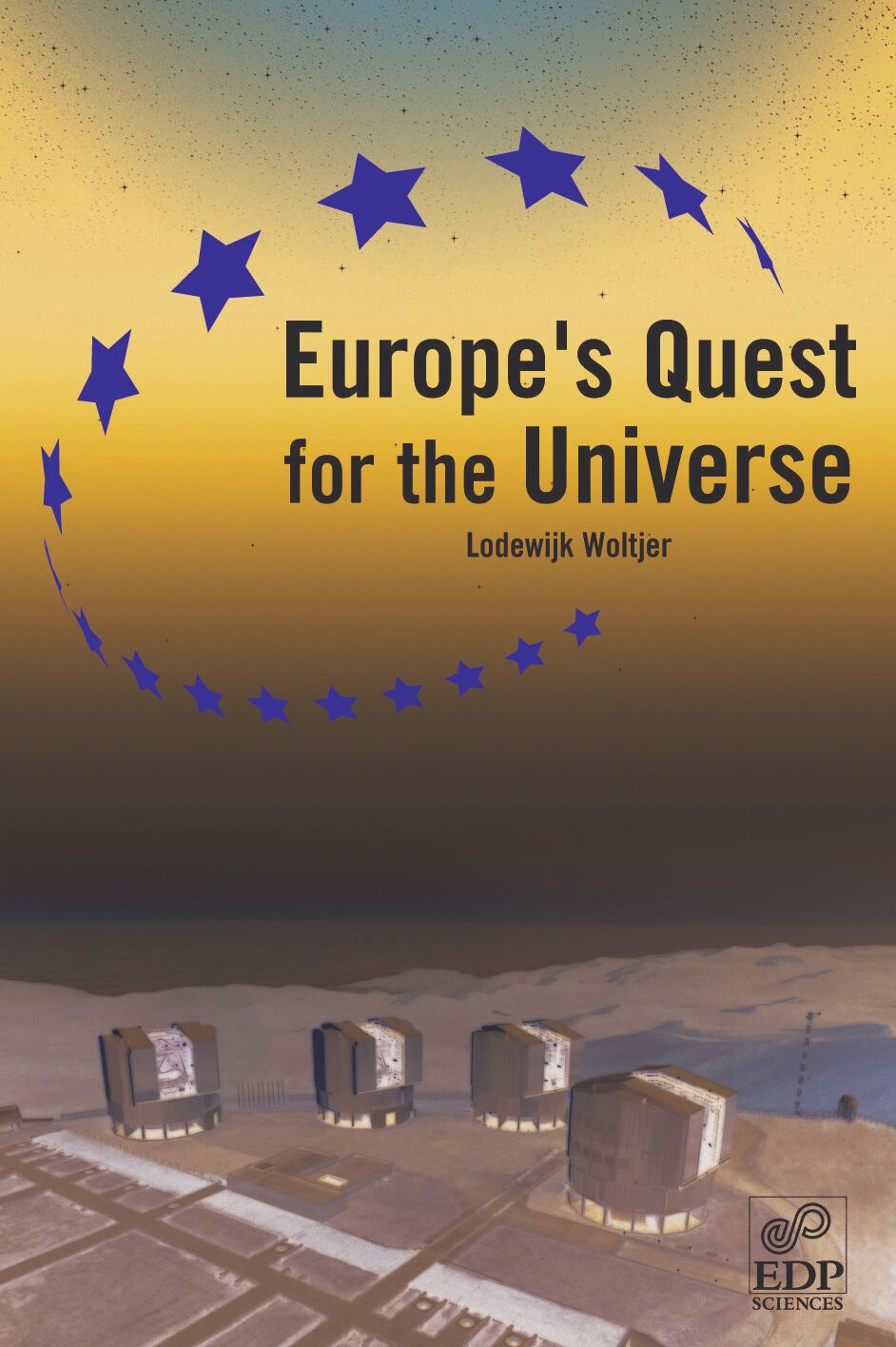
Europe 's Quest for the Universe
Some of the more striking results obtained or anticipated on the ground or in space at radio, infrared and visible wavelengths and in X-, gamma-ray and cosmic-rays are covered. The roles of the European Southern Observatory (ESO) and the European Space Agency (ESA) are stressed, but national initiatives are also touched upon. Input into the rese.
eBook

Hemispheres and Stratospheres
Recognizing distance as a central concern of the Enlightenment, this volume offers eight essays on distance in art and literature; on cultural transmission and exchange over distance; and on distance as a topic in science, a theme in literature, and a central issue in modern research methods.
eBook

Conceptual History in the European Space
The result of extensive collaboration among leading scholars from across Europe, Conceptual History in the European Space represents a landmark intervention in the historiography of concepts. It brings together ambitious thematic studies that combine the pioneering methods of historian Reinhart Koselleck with contemporary insights and debates, each one illuminating a key feature of the European conceptual landscape. With clarifying overviews of such contested theoretical terrain as translatability, spatiality, and center-periphery dynamics, it also provides indispensable contextualization for an era of widespread disenchantment with and misunderstanding of the European project.
eBook

Global increase in record-breaking monthly-mean temperatures
The last decade has produced record-breaking heat waves in many parts of the world. At the same time, it was globally the warmest since sufficient measurements started in the 19th century. Here we show that, worldwide, the number of local record-breaking monthly temperature extremes is now on average five times larger than expected in a climate with no long-term warming. This implies that on average there is an 80 % chance that a new monthly heat record is due to climatic change. Large regional differences exist in the number of observed records. Summertime records, which are associated with prolonged heat waves, increased by more than a factor of ten in some continental regions including parts of Europe, Africa, southern Asia and Amazonia. Overall, these high record numbers are quantitatively consistent with those expected for the observed climatic warming trend with added stationary white noise. In addition, we find that the observed records cluster both in space and in time. Strong El Niño years see additional records superimposed on the expected long-term rise. Under a medium global warming scenario, by the 2040s we predict the number of monthly heat records globally to be more than 12 times as high as in a climate with no long-term warming.
Journal Article

The role of urban trees in reducing land surface temperatures in European cities
Urban trees influence temperatures in cities. However, their effectiveness at mitigating urban heat in different climatic contexts and in comparison to treeless urban green spaces has not yet been sufficiently explored. Here, we use high-resolution satellite land surface temperatures (LSTs) and land-cover data from 293 European cities to infer the potential of urban trees to reduce LSTs. We show that urban trees exhibit lower temperatures than urban fabric across most European cities in summer and during hot extremes. Compared to continuous urban fabric, LSTs observed for urban trees are on average 0-4 K lower in Southern European regions and 8-12 K lower in Central Europe. Treeless urban green spaces are overall less effective in reducing LSTs, and their cooling effect is approximately 2-4 times lower than the cooling induced by urban trees. By revealing continental-scale patterns in the effect of trees and treeless green spaces on urban LST our results highlight the importance of considering and further investigating the climate-dependent effectiveness of heat mitigation measures in cities.
Urban trees influence temperatures in cities. The authors here investigate in spatio-temporal variations in their cooling effect and find 8-12 K decreased temperatures for tree-rich urban areas in Central Europe during hot summers, and up to 4 K for Southern Europe, respectively.
Journal Article