
Catalogue Search | MBRL


Are you sure you want to remove the book from the shelf?

{{itemTitle}}
47,393
result(s) for
"Space sciences Research."
Sort by:

Star Ark : a living, self-sustaining spaceship
\"As space ventures have become more numerous, leading scientists and theorists have offered ways of building a living habitat in a hostile environment, taking an 'ecosystems' view of space colonization. The contributors to this volume take a radical multi-disciplinary view of the challenge of human space colonization through the ongoing project Persephone. This book fundamentally challenges prevalent ideas about sustainability and proposes a new approach to resource austerity and conservation and providing truly sustainable approaches that are life-promoting\"-- Provided by publisher.
Book

Sharing the Adventure with the Student
On December 2-3, 2014, the Space Studies Board and the Board on Science Education of the National Research Council held a workshop on the NASA Science Mission Directorate (SMD) education program - \"Sharing the Adventure with the Student.\" The workshop brought together representatives of the space science and science education communities to discuss maximizing the effectiveness of the transfer of knowledge from the scientists supported by NASA's SMD to K-12 students directly and to teachers and informal educators. The workshop focused not only on the effectiveness of recent models for transferring science content and scientific practices to students, but also served as a venue for dialogue between education specialists, education staff from NASA and other agencies, space scientists and engineers, and science content generators. Workshop participants reviewed case studies of scientists or engineers who were able to successfully translate their research results and research experiences into formal and informal student science learning. Education specialists shared how science can be translated to education materials and directly to students, and teachers shared their experiences of space science in their classrooms. Sharing the Adventure with the Student is the summary of the presentation and discussions of the workshop.
eBook

Discovering the cosmos with small spacecraft : the American Explorer Program
Explorer was the original American space program and Explorer 1 its first satellite, launched in 1958. It introduces the launchers (Juno, Thor, etc.), the launch centers, the ground centers and key personalities like James Van Allen who helped develop and run the spacecraft's exciting programs.
Book

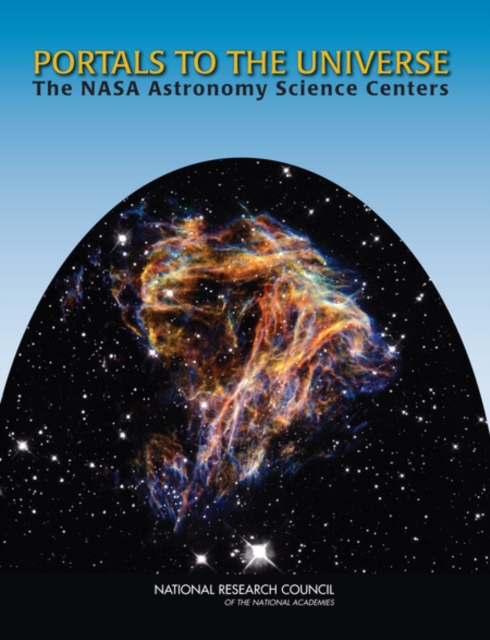
Portals to the Universe
The astronomy science centers established by the National Aeronautics and Space Administration (NASA) to serve as the interfaces between astronomy missions and the community of scientists who utilize the data have been enormously successful in enabling space-based astronomy missions to achieve their scientific potential. These centers have transformed the conduct of much of astronomical research, established a new paradigm for the use of large astronomical facilities, and advanced the science far beyond what would have been possible without them. Portals to the Universe: The NASA Astronomy Science Centers explains in detail the findings of this report.
eBook
Science Opportunities Enabled by NASA's Constellation System
To begin implementation of the Vision for Space Exploration (recently renamed \"United States Space Exploration Policy\"), NASA has begun development of new launch vehicles and a human-carrying spacecraft that are collectively called the Constellation System. In November 2007, NASA asked the NRC to evaluate the potential for the Constellation System to enable new space science opportunities. For this interim report, 11 existing \"Vision Mission\" studies of advanced space science mission concepts inspired by earlier NASA forward-looking studies were evaluated. The focus was to assess the concepts and group them into two categories: more-deserving or less deserving of future study. This report presents a description of the Constellation System and its opportunities for enabling new space science opportunities, and a systematic analysis of the 11 Vision Mission studies. For the final report, the NRC issued a request for information to the relevant communities to obtain ideas for other mission concepts that will be assessed by the study committee, and several issues addressed only briefly in the interim report will be explored more fully.
eBook
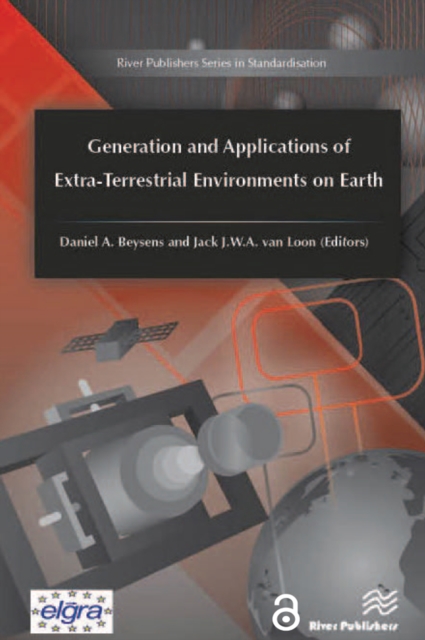
Generation and Applications of Extra-Terrestrial Environments on Earth
This book has been prepared under the auspice of the European Low Gravity Research Association (ELGRA). The main task of ELGRA is to foster the scientific community in Europe and beyond in conducting gravity and space-related research.This publication is dedicated to the science community, and especially to the next generation of scientists and engineers interested in space research and in the means to use Earth to reproduce the space environment. ELGRA provides a comprehensive description of space conditions and the means that have been developed on Earth to perform space environmental and (micro-) gravity related research. .The book covers ground-based research instruments and environments for both life and physical sciences research. It discusses the opportunities and limitations of protocols and instruments to compensate gravity or simulate microgravity, such as clinostats, random positioning machines, levitating magnets, electric fields, vibrations, tail suspension or head down tilt, as well as centrifuges for hyper-g studies. Other space environmental conditions are addressed too, like cosmic radiation or Mars atmospheric and soil properties to be replicated and simulated on Earth. Future long duration of manned missions, personal well-being and crew interaction are major issues dealt with.
eBook
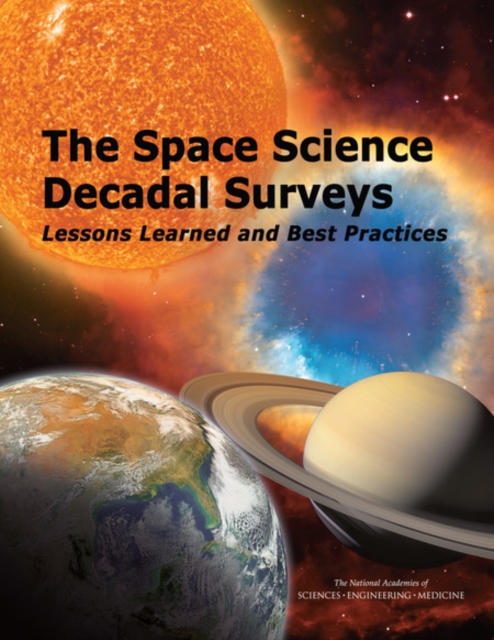
The Space Science Decadal Surveys
The National Research Council has conducted 11 decadal surveys in the Earth and space sciences since 1964 and released the latest four surveys in the past 8 years. The decadal surveys are notable in their ability to sample thoroughly the research interest, aspirations, and needs of a scientific community. Through a rigorous process, a primary survey committee and thematic panels of community members construct a prioritized program of science goals and objectives and define an executable strategy for achieving them. These reports play a critical role in defining the nation's agenda in that science area for the following 10 years, and often beyond.
The Space Science Decadal Surveys considers the lessons learned from previous surveys and presents options for possible changes and improvements to the process, including the statement of task, advanced preparation, organization, and execution. This report discusses valuable aspects of decadal surveys that could taken further, as well as some challenges future surveys are likely to face in searching for the richest areas of scientific endeavor, seeking community consensus of where to go next, and planning how to get there. The Space Science Decadal Surveys describes aspects in the decadal survey prioritization process, including balance in the science program and across the discipline; balance between the needs of current researchers and the development of the future workforce; and balance in mission scale - smaller, competed programs versus large strategic missions.
eBook

Generation and Applications of Extra-Terrestrial Environments on Earth
This book has been prepared under the auspice of the European Low Gravity Research Association (ELGRA). The main task of ELGRA is to foster the scientific community in Europe and beyond in conducting gravity and space-related research.This publication is dedicated to the science community, and especially to the next generation of scientists and engineers interested in space research and in the means to use Earth to reproduce the space environment. ELGRA provides a comprehensive description of space conditions and the means that have been developed on Earth to perform space environmental and (micro-) gravity related research. .The book covers ground-based research instruments and environments for both life and physical sciences research. It discusses the opportunities and limitations of protocols and instruments to compensate gravity or simulate microgravity, such as clinostats, random positioning machines, levitating magnets, electric fields, vibrations, tail suspension or head down tilt, as well as centrifuges for hyper-g studies. Other space environmental conditions are addressed too, like cosmic radiation or Mars atmospheric and soil properties to be replicated and simulated on Earth. Future long duration of manned missions, personal well-being and crew interaction are major issues dealt with.
eBook