
Catalogue Search | MBRL


Are you sure you want to remove the book from the shelf?

{{itemTitle}}
2,932
result(s) for
"Space suits"
Sort by:

Spacesuits
\"From helmet to space boots, every part of an astronaut's spacesuit is designed for survival. This reader, developed with Smithsonian's popular Air and Space Museum, provides a close look at the suits, boots, helmets, gloves, and other gear astronauts have worn into space, from the early days of space exploration to the present-day\"--Amazon.com.
Book


Space survival guide
Imagine you're an astronaut living in space. What do you need to do to survive? Find out how a space suit protects you, what it's like to be weightless, and how it affects how you eat, walk, and talk.
Book

Numerical Modeling of the Thermal Insulating Properties of Space Suits
The purpose of this study was to model the thermal insulating properties in an exemplary multi-layer layup of space suits utilizing computer simulation techniques and physics and mathematical models. The main system responsible for thermal insulation is the Thermal Micrometeoroid Garment (TMG) material layup. Its structure consists of eight layers with different functions. The utilized textile materials are Rip-Stop-type fabrics, strengthened with the addition of a stronger fiber at fixed intervals. The state variable in thermal problems is the temperature field inside the analyzed TMG. The results obtained from the computer simulation were compared to verification calculations from the mathematical model, which allowed for an assessment of the models’ quality and the obtained results. Two numerical models were analyzed in Ansys Workbench software. This enabled an assessment of the model’s quality and the possible discrepancies. The modeling of the structure was carried out using the Finite Element Method. The possibility of using this exemplary material layup for a suit was verified using normalized data for an adult in outer space.
Journal Article


Haptic Systems: Trends and Lessons Learned for Haptics in Spacesuits
Haptic technology uses forces, vibrations, and movements to simulate a sense of touch. In the context of spacesuits, proposals to use haptic systems are scant despite evidence of their efficacy in other domains. Existing review studies have sought to summarize existing haptic system applications. Despite their contributions to the body of knowledge, existing studies have not assessed the applicability of existing haptic systems in spacesuit design to meet contemporary challenges. This study asks, “What can we learn from existing haptic technologies to create spacesuits?”. As such, we examine academic and commercial haptic systems to address this issue and draw insights for spacesuit design. The study shows that kinesthetic and tactile haptic systems have been effectively utilized in various domains, including healthcare, gaming, and education to improve the sense of touch and terrain and reduce sensory deprivation. Subjective and objective evaluation methods have been utilized to assess the efficacy and safety of haptic systems. Furthermore, this study discusses the usefulness, safety, and applicability of haptics in spacesuits and the implications for research into space haptics.
Journal Article
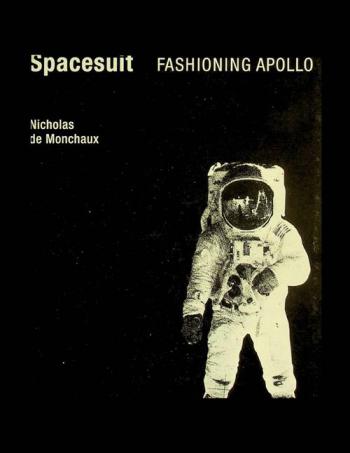
Spacesuit : fashioning Apollo
Chronicles the creation of the Apollo 11 spacesuits worn by Neil Armstrong and Buzz Aldrin, which were designed by the women's undergarment-maker Playtex and consisted of 21 specialized layers, in a book that includes 140 full-color illustrations.
Book

The case of the stolen space suit
When the spacesuit of famous astronaut Sally Ride disappears from a traveling exhibit, Amal Farah, daughter of the Air and Space Museum's archivist, and her three friends, are determined to find the culprit before the exhibit is cancelled.
Book
Relationships between morphological factors and heat extraction from the upper arm using liquid cooling garment
Astronauts wear liquid perfused garments inside their outer spacesuits for regulating body temperature. The present study explored relationships between local heat production from the upper arm and body morphology while wearing liquid perfused sleeve. Heat extraction from the upper arm of 19 subjects (8 males and 11 females) during three different exercise modes (running at 6–8 km∙h−1, cycling at 40–55 W, and arm ergometer at 10–20 W) and rest has been investigated. The total body fat (27.5 ± 7.2%), body mass index (24.4 ± 2.7 kg·m−2), arm surface area (589 ± 90 cm2), and arm volume (1300 ± 300 mL) were considered as covariates. Subjects wore a liquid perfused sleeve over the upper arm (left) with the water inlet temperature of 24.0 ± 0.3 °C and the heat extraction was calculated using the water flow rate and temperature differences. Heat extraction from the upper arm showed no significant differences among the three exercises. During cycling, there was a negative relationship between heat extraction and total body fat (r = − 0.527, P < 0.05). Heat extraction was more related to the arm volume (P < 0.05) than the surface area of the upper arm, which was significant only for the male group in the cycling mode. For the female group, heat extraction was related to upper arm temperature in the cycling and arm exercise modes (for both exercises P < 0.05). These results can be applied to improve liquid cooling garments for astronauts, considering their body morphology and sex.
Journal Article