
Catalogue Search | MBRL


Are you sure you want to remove the book from the shelf?

{{itemTitle}}
26
result(s) for
"Spain -- History -- House of Austria, 1516-1700"
Sort by:

Spain, Europe and the Wider World 1500-1800
When J. H. Elliott publishedSpain and Its World, 1500-1700some twenty years ago, one of many enthusiasts declared, \"For anyone interested in the history of empire, of Europe and of Spain, here is a book to keep within reach, to read, to study and to enjoy\" (Times Literary Supplement). Since then Elliott has continued to explore the history of Spain and the Hispanic world with originality and insight, producing some of the most influential work in the field. In this new volume he gathers writings that reflect his recent research and thinking on politics, art, culture, and ideas in Europe and the colonial worlds between 1500 and 1800.
The volume includes fourteen essays, lectures, and articles of remarkable breadth and freshness, written with Elliott's characteristic brio. It includes an unpublished lecture in honor of the late Hugh Trevor-Roper. Organized around three themes-early modern Europe, European overseas expansion, and the works and historical context of El Greco, Velázquez, Rubens, and Van Dyck-the book offers a rich survey of the themes at the heart of Elliott's interests throughout a career distinguished by excellence and innovation.
eBook


A Companion to the Spanish Renaissance
A Companion to the Spanish Renaissance makes a renewed case for the inclusion of Spain within broader European Renaissance movements. This interdisciplinary volume offers a snapshot of the best new work being done in this area.
eBook

A Companion to Early Modern Spanish Imperial Political and Social Thought
This volume offers an account from a legal, theological and philosophical point of view of the historical and conceptual intricacies of the debates about the imperial expansion of the early modern Spanish monarchy.
eBook

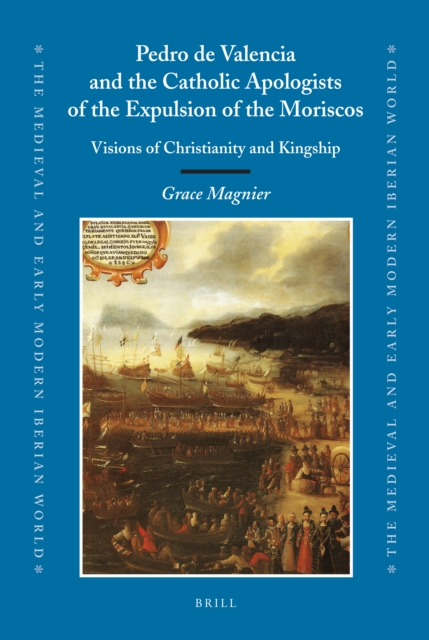
Pedro de Valencia and the Catholic Apologists of the Expulsion of the Moriscos
Drawing on arguments for and against the expulsion of the Moriscos, and using previously unpublished source material, this book compares the case against banishment made by the Christian humanist Pedro de Valencia with that in favour pleaded by Catholic apologists.
eBook

The early modern Hispanic world : transnational and interdisciplinary approaches
\"Iberia stands at the center of key trends in Atlantic and world histories, largely because Portugal and Spain were the first European kingdoms to 'go global.' The Early Modern Hispanic World engages with new ways of thinking about the early modern Hispanic past, as a field of study that has grown exponentially in recent years. It focuses predominantly on questions of how people understood the rapidly changing world in which they lived--how they defined, visualized, and constructed communities from family and city to kingdom and empire. To do so, it incorporates voices from across the Hispanic World and across disciplines. The volume considers the dynamic relationships between circulation and fixedness, space and place, and how new methodologies are reshaping global history, and Spain's place in it\"-- Provided by publisher.
Book
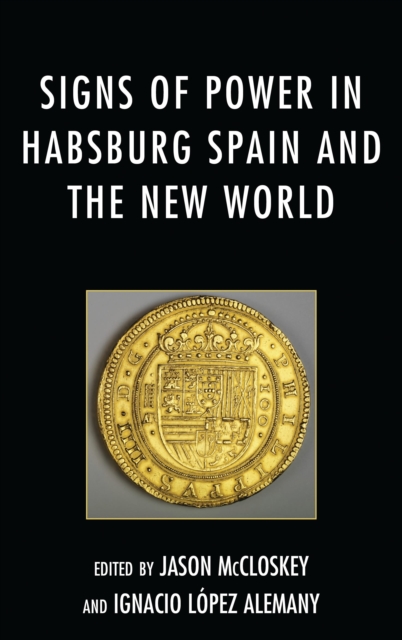
Signs of power in Habsburg Spain and the New World
Signs of Power in Habsburg Spain and the New World explores the representation of political, economic, military, religious, and juridical power in texts and artifacts from early modern Spain and her American viceroyalties. In addition to analyzing the dynamics of power in written texts, chapters also examine pieces of material culture including coats of arms, coins, paintings and engravings. As the essays demonstrate, many of these objects work to transform the amorphous concept of power into a material reality with considerable symbolic dimensions subject to, and dependent on, interpretation. With its broad approach to the discourses of power, Signs of Power brings together studies of both canonical literary works as well as more obscure texts and objects. The position of the works studied with respect to the official center of power also varies. Whereas certain essays focus on the ways in which portrayals of power champion the aspirations of the Spanish Crown, other essays attend to voices of dissent that effectively call into question that authority.
eBook