
Catalogue Search | MBRL


Are you sure you want to remove the book from the shelf?

{{itemTitle}}
450
result(s) for
"Spain Andalusia."
Sort by:

Andalucâia
Lonely Planet Andalucia is your passport to the most relevant, up-to-date advice on what to see and skip, and what hidden discoveries await you. Experience Alhambra's perfect blend of architecture and nature, visit the Spanish Royals' residence at the Alcazar, or hike to the rugged clifftop town of Ronda; all with your trusted travel companion.
Book

Baetica felix : people and prosperity in southern Spain from Caesar to Septimius Severus
Baetica, the present-day region of Andalusia in southern Spain, was the wealthiest province of the Roman Empire. Its society was dynamic and marked by upward social and economic mobility, as the imperial peace allowed the emergence of a substantial middle social and economic stratum. Indeed, so mutually beneficial was the imposition of Roman rule on the local population of Baetica that it demands a new understanding of the relationship between Imperial Rome and its provinces. Baetica Felix builds a new model of Roman-provincial relations through a socio-economic history of the province from Julius Caesar to the end of the second century A.D. Describing and analyzing the impact of Roman rule on a core province, Evan Haley addresses two broad questions: what effect did Roman rule have on patterns of settlement and production in Baetica, and how did it contribute to wealth generation and social mobility? His findings conclusively demonstrate that meeting the multiple demands of the Roman state created a substantial freeborn and ex-slave middle stratum of the population that outnumbered both the super-rich elite and the destitute poor.
eBook

The rough guide to Andalucâia
\"The fully updated Rough Guide to Andalucâia is the ultimate guide to this autonomous region in southern Spain; an exciting blend of fiestas, sherry, Roman ruins and whitewashed villages ... provides comprehensive coverage of all major sights and towns, with incisive reviews of the best places to eat, sleep and drink in every price range as well as insider tips on the best tapas bars, clubs and beaches\"--Publisher's description.
Book

Metaphors of Masculinity
In the Andalusian communities throughout the olive-growing region of southeastern Spain men show themselves to be primarily concerned with two problems of identity: their place in the social hierarchy, and the maintenance of their masculinity in the context of their culture.
In this study of projective behavior as found in the folklore of an Andalusian town, Stanley Brandes is careful to support psychological interpretations with ethnographic evidence. His emphasis on male folklore provides a timely complement to current research on women.
eBook
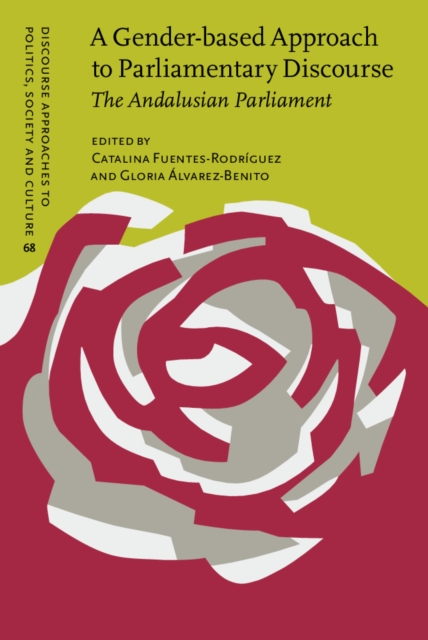
A Gender-based Approach to Parliamentary Discourse
Does gender condition politicians’ discourse strategies in parliament? This is the question we try to answer in A Gender-based Approach to Parliamentary Discourse: The Andalusian Parliament. This book, written by experts in the field of discourse analysis, covers key aspects of political discourse such as gender, identity and verbal and nonverbal strategies: intensification, enumerative series, non-literal quotations, pseudo-desemantisation, lexical colloquialisation, emotion, eye contact and time management. It provides a large number of examples from a balanced gender parliament, the Andalusian Parliament, and it focuses mainly on argumentation, since parliamentary discourse is above all argumentative. This book will prove invaluable to students and teachers in the field of discourse analysis, and more specifically of political discourse, and will also be very useful to politicians and anyone interested in communication strategies.
eBook

Andalucia : a literary guide for travellers
Andalucia is the quintessence of Spain and yet, historically and culturally, it is surprisingly unlike the rest of the country. Its literary history began to develop with the Romans and reached an early flowering when Arabic poets drew on centuries of literary tradition, together with the landscapes and passions of Moorish Spain. Later, Prosper Mâerimâee, Byron and Washington Irving forged legends of exotic southern Spain that persist to this day and Spanish writers themselves captured the rich tapestry of Andalucian culture, from Cervantes' Seville to the Câordoba of Baroque poet Luis de Gâongora and Lorca's 'hidden Andalucia'. With the advent of the Civil War, a new generation flocked to Andalucia and were inspired to write some of the Twentieth Century's most iconic works of literature, from Hemingway's For Whom the Bell Tolls to Gerald Brenan's The Spanish Labyrinth and Laurie Lee's trilogy of books. As vibrant and compelling as the region itself, Andalucia: A Literary Guide for Travellers illuminates the very soul of Spain.
Book

Defining Boundaries in al-Andalus
Al-Andalus, the Arabic name for the medieval Islamic state in Iberia, endured for over 750 years following the Arab and Berber conquest of Hispania in 711. While the popular perception of al-Andalus is that of a land of religious tolerance and cultural cooperation, the fact is that we know relatively little about how Muslims governed Christians and Jews in al-Andalus and about social relations among Muslims, Christians, and Jews. InDefining Boundaries in al-Andalus, Janina M. Safran takes a close look at the structure and practice of Muslim political and legal-religious authority and offers a rare look at intercommunal life in Iberia during the first three centuries of Islamic rule.
Safran makes creative use of a body of evidence that until now has gone largely untapped by historians-the writings and opinions of Andalusi and Maghribi jurists during the Umayyad dynasty. These sources enable her to bring to life a society undergoing dramatic transformation. Obvious differences between conquerors and conquered and Muslims and non-Muslims became blurred over time by transculturation, intermarriage, and conversion. Safran examines ample evidence of intimate contact between individuals of different religious communities and of legal-juridical accommodation to develop an argument about how legal-religious authorities interpreted the social contract between the Muslim regime and the Christian and Jewish populations. Providing a variety of examples of boundary-testing and negotiation and bringing judges, jurists, and their legal opinions and texts into the narrative of Andalusi history, Safran deepens our understanding of the politics of Umayyad rule, makes Islamic law tangibly social, and renders intercommunal relations vividly personal.
eBook


Power in the Portrayal
Power in the Portrayalunveils a fresh and vital perspective on power relations in eleventh- and twelfth-century Muslim Spain as reflected in historical and literary texts of the period. Employing the methods of the new historical literary study in looking at a range of texts, Ross Brann reveals the paradoxical relations between the Andalusi Muslim and Jewish elites in an era when long periods of tolerance and respect were punctuated by outbreaks of tension and hostility.
The examined Arabic texts reveal a fragmented perception of the Jew in eleventh-century al-Andalus. They depict seemingly contradictory figures at whose poles are an intelligent, skilled, and noble Jew deserving of homage and a vile, stupid, and fiendish enemy of God and Islam. For their part, the Hebrew and Judeo-Arabic texts display a deep-seated reluctance to portray Muslims in any light at all. Brann cogently demonstrates that these representations of Jews and Muslims--each of which is concerned with issues of sovereignty and the exercise of power--reflect the shifting, fluctuating, and ambivalent relations between elite members of two of the ethno-religious communities of al-Andalus.
Brann's accessible prose is enriched by his splendid translations; the original texts are also included. This book is the first to study the construction of social meaning in Andalusi Arabic, Judeo-Arabic, and Hebrew literary texts and historical chronicles. The novel approach illuminates nuances of respect, disinterest, contempt, and hatred reflected in the relationship between Muslims and Jews in medieval Spain.
eBook